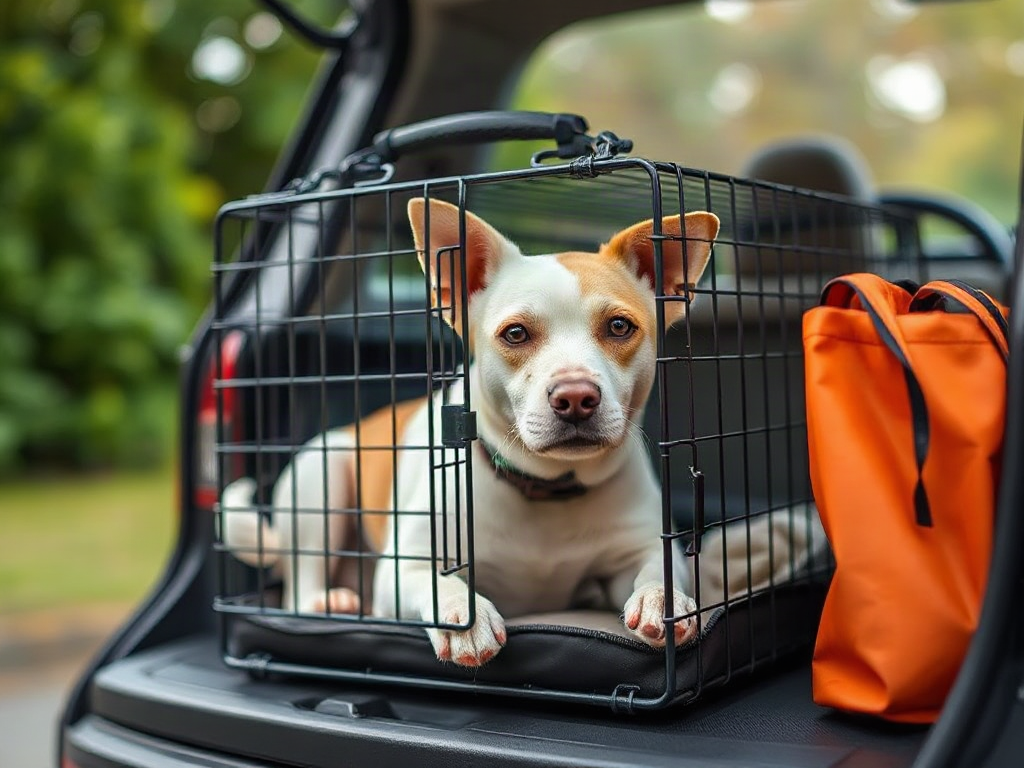
Portable dog crate options for travel days should match the trip type, the dog’s behavior, and the way the crate will be secured at each stop. Collapsible wire crates offer airflow and visibility, soft-sided models reduce carrying weight, and rigid plastic crates provide better containment for dogs that push, scratch, or chew. Measure the dog and the available vehicle or lodging space before buying, then check door access, ventilation, floor stability, and anchor points. A portable crate is working well when the dog can stand, turn, rest naturally, and remain contained without the crate sliding, bowing, or blocking safe vehicle use.
Match the Crate Style to the Trip
Crate construction determines how easily the unit moves, how securely it contains the dog, and where it can be used. A model that folds into a slim package may be convenient in a hotel but unsuitable for a dog that paws at mesh panels. A rigid crate may provide dependable containment yet consume too much cargo space for a compact vehicle. The useful question is not which style is universally best, but which design handles the hardest part of the planned trip.
Soft-Sided Folding Crates
Soft crates usually have a fabric shell stretched over a folding frame. Their low carrying weight makes them practical for moving between a parked vehicle, vacation rental, campsite, or event area. Mesh panels improve airflow and let the handler monitor the dog. Many models also collapse without tools, which matters when luggage space is limited.
The tradeoff is structural strength. Mesh, zippers, seams, and fabric floors are vulnerable to persistent scratching or chewing. A soft crate is generally more appropriate for a dog that already settles calmly in confinement than for an anxious dog being introduced to crating during departure. It should not be treated as protective vehicle restraint merely because it has straps or loops. Those fittings may stabilize the crate, but their presence alone does not establish crash performance.
Collapsible Wire Crates
Wire crates provide strong ventilation, broad visibility, and familiar surroundings for dogs that use the same style at home. They fold relatively flat and often include a removable floor tray. This design works well when the primary need is a temporary resting space at the destination rather than frequent carrying through terminals or long corridors.
Weight, rattling, exposed metal edges, and awkward folded dimensions are the main disadvantages. A wire crate can slide or vibrate on a hard cargo floor unless it is positioned carefully. Covers can reduce visual stimulation, but they must not obstruct airflow. Check that folding latches are fully seated after every setup; a partly opened side panel can shift when the dog leans against it.
Rigid Plastic and Portable Framed Crates
Rigid plastic shells offer more visual enclosure and resist ordinary pawing better than fabric. They are useful for dogs that need firmer boundaries or for trips involving repeated loading and unloading. Unlike a folding design, however, a rigid shell retains its full footprint when empty. Airline use introduces separate requirements set by the carrier and route, so a crate marketed as portable should not be assumed acceptable for a flight.
Portable framed crates made from reinforced fabric or lightweight panels sit between soft and rigid models. They may offer better shape retention than a basic soft crate, but hinges, connectors, and fabric sections still need inspection. Comparing Portable dog crate options for travel days by escape resistance and packed dimensions is more useful than comparing empty weight alone.
Measure the Dog, Vehicle, and Destination
Accurate sizing requires three measurements: the dog’s usable interior space, the crate’s exterior footprint, and the route through which the crate must pass. Product labels such as small, medium, or large are not standardized enough to replace dimensions. Measure the dog while standing naturally from the floor to the highest point of the head or ears, from the nose to the base of the tail, and across the widest part of the body. The interior should permit standing without forced crouching, turning around, and lying in a normal resting position.
Excess space is not automatically better. A very large crate occupies valuable room and allows more movement during abrupt vehicle maneuvers. A cramped crate creates pressure points, limits position changes, and may worsen heat buildup around a heavily coated dog. Bedding also reduces usable height and width. Measure with the mat or pad that will actually be used rather than assuming a thick bed has no effect on fit.
Vehicle measurements must reflect the real loading position. Record the width and height of the door or hatch, the depth of the intended placement area, and the clearance needed to close the hatch. Wheel wells, sloped rear glass, seatback angles, and raised cargo thresholds often make advertised cargo volume misleading. For example, a crate may fit within the floor dimensions of an SUV but fail to pass through the hatch because its assembled height is greater than the opening.
Test the surrounding functions as well. The installed crate should not interfere with the driver’s view, seat movement, airbag zones, gear storage, or access to a spare tire. In a hotel, verify that the assembled crate can pass through the room door and fit without blocking an exit. At a campsite, a low fabric floor may need a dry, level surface rather than direct placement on sharp gravel.
A compact measurement check prevents common purchasing errors:
- Dog: standing height, body length, shoulder width, and comfortable resting posture.
- Crate: interior dimensions, exterior dimensions, folded size, weight, and door swing.
- Vehicle: opening dimensions, usable floor area, overhead clearance, and secure placement points.
- Destination: doorway clearance, floor surface, ventilation, and any property rules.
A useful dry run places the empty crate in the vehicle, closes every door, and then loads the normal luggage around it. Next, have the dog enter while the vehicle remains parked. Failure signs include ears pressed against the roof, difficulty turning, unstable footing, blocked vents, or a door that cannot open fully. Those findings call for a different size or placement, not an improvised squeeze on departure morning.
Evaluate Containment, Ventilation, and Stability
Containment should be judged against the individual dog’s behavior, not the crate’s marketing language. A calm, crate-trained adult may rest reliably behind zipped mesh. A young dog that mouths fabric, a powerful dog that leans into doors, or a dog distressed by unfamiliar surroundings needs stronger materials and more secure closures. Portability has little value if the crate cannot remain closed under the pressure the dog actually applies.
Inspect every likely failure point before travel. On soft models, examine zipper tracks, stitching near handles, mesh attachment, and frame joints. Zipper clips may discourage a dog from nosing two sliders apart, but they do not strengthen damaged mesh. On wire crates, confirm that door latches engage fully and that the folding panels cannot separate at the corners. On rigid crates, look for cracked plastic, bent doors, loose fasteners, and worn connection points between the upper and lower shell.
Ventilation depends on more than the number of openings. Air must be able to reach those openings after the crate is placed among luggage. A mesh side pushed against a seatback or covered by a duffel no longer provides useful airflow. Sun through a vehicle window can also heat one side of a crate even when the cabin initially feels comfortable. Climate control should reach the dog’s position, and the dog should never be left in a parked vehicle where temperature can become unsafe.
Stability is a separate issue from containment. A closed crate that skids across a cargo floor still creates risk. Use manufacturer-provided attachment locations when available, keep straps away from vents and doors, and avoid routing a strap across a collapsible frame in a way that crushes it. A rubberized mat may reduce ordinary sliding, but it is not a substitute for suitable restraint. Claims about crash protection should be checked against specific test information rather than inferred from a rugged appearance.
Consider a typical weekend drive with a folding soft crate behind the front seats. The dog settles well, but the crate shifts whenever the vehicle turns because it rests on a smooth folded seat. Moving it to a flat surface and using appropriate attachment points may improve stability; adding loose pillows around it may instead obstruct airflow and create objects that move during hard braking. The practical priority is a level position, unobstructed ventilation, reliable closures, and a setup compatible with the vehicle.
The setup is succeeding when the frame keeps its shape, the floor stays flat, fasteners remain engaged, and the dog rests without sustained clawing, biting, panting unrelated to temperature, or repeated attempts to force the door. Damage, intense escape behavior, excessive drooling, or an inability to settle signals that the current crate or travel plan is failing. Address those signs before a longer trip, with veterinary or qualified behavioral guidance when distress is persistent.
Build a Reliable Travel-Day Setup
A dependable setup is assembled and tested before luggage is packed. Begin at home by opening the crate completely, locking its frame, and checking the floor for gaps or flex. Let the dog enter voluntarily and spend short, calm periods inside with the intended mat. This reveals whether the dimensions work and whether unfamiliar sounds—such as a wire tray rattling or fabric panels snapping into place—cause concern.
Move the test to the parked vehicle after the dog is comfortable with the crate indoors. Confirm that the crate sits level, the door is accessible, and ventilation openings remain clear. Then take a short drive under ordinary conditions. Listen for frame movement and check the dog at a safe stopping point rather than opening the crate beside moving traffic. Gradually longer practice trips provide better information than waiting for an all-day drive.
Pack the crate as a controlled resting area, not as storage. A fitted, washable mat is usually easier to manage than loose, bulky bedding. Water arrangements depend on trip length and the dog, but any attached bowl should be tested for spills before departure. Remove collars, tags, or harness components if they could catch on the specific crate interior, while keeping identification and walking equipment ready for controlled transfers. Discuss individual needs with a veterinarian when the dog has medical, mobility, breathing, or anxiety concerns.
Transitions deserve particular attention. Keep the crate closed until exterior vehicle doors are shut or the dog is otherwise protected from bolting. Attach the leash in a controlled space before allowing the dog to exit. At lodging, inspect the room for damaged screens, open balconies, exposed cords, and doors that staff could enter before relying on the crate as the dog’s resting station.
Carry a small repair and cleanup kit suited to the model: waste bags, absorbent material, cleaning supplies, spare bedding, and any manufacturer-specific clips or fasteners. Tape and improvised ties should not be relied upon to restore a broken structural component. If a latch, frame joint, or shell connection fails, replacing the crate or obtaining the correct part is safer than treating a temporary patch as normal containment.
People reviewing Portable dog crate options for travel days sometimes prioritize the fastest folding mechanism. Setup speed matters, but repeatable assembly matters more. Marking the correct panel order or practicing the fold can prevent pinched fabric, incomplete locks, and frustration at a busy stop. The best sign of readiness is uneventful repetition: the crate assembles the same way, stays stable in its assigned position, and gives the dog enough room to settle without testing its boundaries.
Frequently Asked Questions
Is a soft crate suitable for every dog?
No. Soft crates suit dogs that already remain calm when confined. Dogs that chew, scratch, push against panels, or panic may need a rigid plastic or sturdier framed option.
Can a portable crate be used as vehicle restraint?
Do not assume portability, straps, or a rugged frame indicate crash protection. Review the manufacturer’s stated use and specific testing information, then install the crate only in a vehicle-compatible position.
How much room should a dog have inside a travel crate?
The dog should be able to stand naturally, turn around, and lie in a normal position. Include the thickness of bedding when checking usable interior height and width.
Should the crate be introduced on the day of departure?
No. Assemble it at home, build positive familiarity, test it in the parked vehicle, and complete a short drive first. This exposes sizing, noise, stability, and behavior problems early.
What should be checked after each trip?
Inspect seams, mesh, zippers, latches, frame joints, fasteners, plastic shells, and the floor. Clean and dry the crate fully, then replace damaged structural parts before reuse.
Conclusion
Choose the crate around the dog’s actual confinement behavior and the most demanding travel setting. Soft-sided models reward calm dogs and frequent carrying, wire crates provide airflow and destination familiarity, and rigid designs offer firmer containment at the cost of bulk. Confirm interior room and exterior clearance with real measurements, including doors, hatch angles, bedding, and nearby luggage.
Before departure, inspect every closure and joint, place the crate on a level surface, preserve airflow, and use only suitable attachment locations. A short test drive should expose rattling, sliding, blocked access, or signs that the dog cannot settle. Resolve those problems before committing to a long travel day. The most practical option is the one that can be assembled correctly every time, fits the full route from vehicle to room, and remains dependable under the dog’s normal behavior.