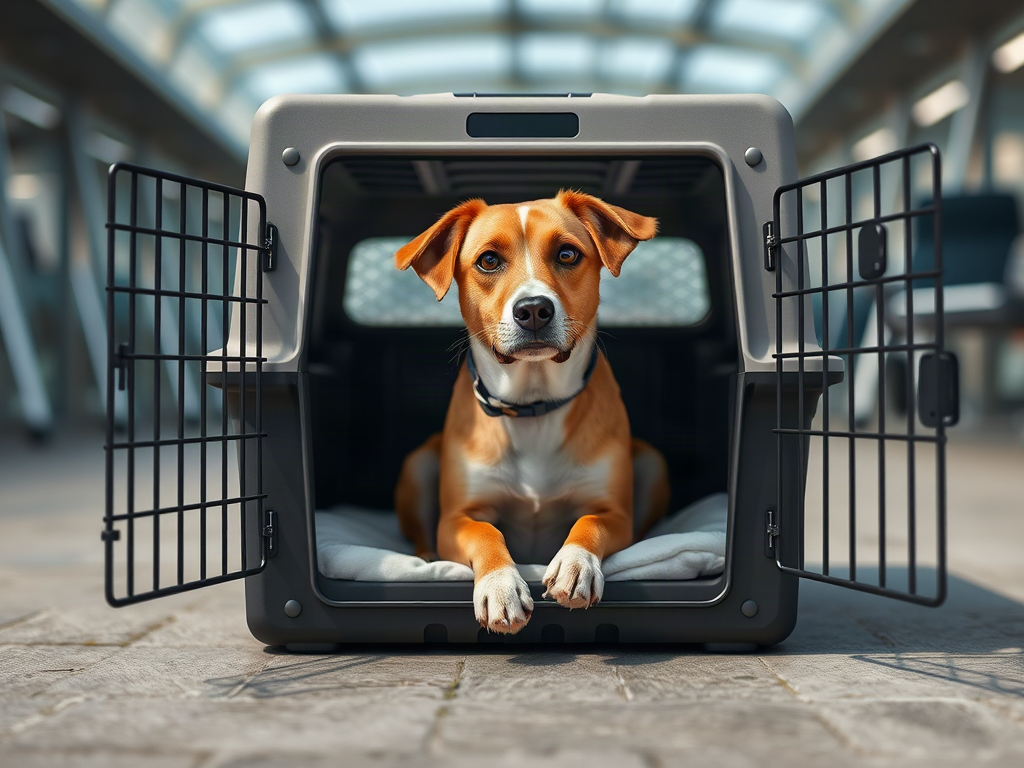
An IATA-compliant dog crate must be large enough for the dog to stand naturally, turn around, and lie down comfortably while also providing secure fasteners, adequate ventilation, a leak-proof floor, and durable construction suited to air transport. The International Air Transport Association publishes container standards, but the operating airline makes the final acceptance decision and may impose stricter rules. Crate size should be based on the dog’s body measurements rather than weight alone. Owners should confirm airline-specific restrictions, replace weak plastic clips with approved metal hardware when required, attach accessible food and water containers, and inspect every door, vent, and connection before departure.
What IATA Compliance Actually Means
IATA publishes the Live Animals Regulations used by airlines and cargo handlers to plan the safe transport of animals. These regulations include container specifications, handling principles, documentation requirements, and provisions for different species. A crate marketed as “IATA approved” has not necessarily been inspected or certified by IATA. The phrase generally means the manufacturer designed it with relevant container requirements in mind.
That distinction affects purchasing decisions. A product label cannot account for the dog’s measurements, the condition of the crate on departure day, route-specific restrictions, or an airline’s operating policy. An airline employee may reject a well-known crate model if it is too small, damaged, poorly assembled, or unsuitable for the individual animal. Conversely, a correctly sized and prepared crate may meet the applicable standard even when its packaging does not display a prominent compliance claim.
The operating carrier has the final say on acceptance. Airlines may require additional ventilation, metal fasteners, a particular door design, or restrictions on wheels. They may also limit certain breeds, crate sizes, aircraft types, destinations, or travel periods. Codeshare itineraries require extra attention because the airline selling the ticket may not be the airline physically carrying the dog. The rules of each operating carrier and transfer point need to be checked.
A useful verification sequence separates three different questions:
- Does the container follow the relevant IATA design principles? Check its material, ventilation, floor, door, fasteners, and interior space.
- Does it fit this dog? Measure the animal and assess its normal standing and resting positions inside the assembled crate.
- Will the airline accept it on this itinerary? Obtain the carrier’s current animal-transport instructions and confirm any route or aircraft limitations.
The common failure is treating the first question as proof of all three. Compliance is better viewed as a combination of suitable design, correct sizing, sound preparation, and carrier acceptance. Keep written airline instructions available during check-in, but do not assume an email or reservation note overrides a physical inspection. The broader principles in IATA-compliant dog crate requirements explained should always be reconciled with the airline’s current conditions of carriage.
Crate Size and Dog Measurement Rules
Correct sizing gives the dog enough room to stand in a natural posture, turn around, and lie down without being forced against the roof, door, or walls. Weight limits printed on retail packaging are not a reliable substitute for measurements. Two dogs of equal weight can differ substantially in leg length, body length, ear carriage, and head height.
Measure the dog while it is standing squarely on a level surface. Record the distance from the nose to the base of the tail, not the tip of the tail. Measure leg height from the floor to the elbow, body width across the widest area, and standing height from the floor to the highest natural point of the head or erect ears. Airline or shipper instructions may use these dimensions in a prescribed sizing formula, so follow the exact method provided rather than rounding down to match a convenient retail size.
Internal dimensions matter more than advertised external dimensions. Thick crate walls, a raised floor, door hardware, and sloped sides can reduce usable space. A dog whose ears clear the exterior roof measurement may still touch the interior ceiling. Before travel, place the fully assembled crate on a stable floor and watch the dog enter, stand, turn, and settle. Natural movement should not require crouching or twisting.
Oversizing is not an unlimited safety advantage. A slightly larger crate may improve posture and airflow, but a disproportionately large container can be harder to secure, may exceed aircraft hold or cargo-door limits, and gives the animal more room to be thrown off balance during handling. Added size also increases chargeable volume on cargo bookings. The best fit provides required movement without creating excessive unused space.
Breed anatomy changes the assessment. A tall, narrow dog may need greater height than its weight category suggests, while a long-bodied dog may require additional floor length. Dogs with erect ears need clearance above the ear tips in their normal position. Snub-nosed dogs can face special airline restrictions and may be subject to larger-crate or enhanced-ventilation requirements; a bigger container does not override a carrier’s breed embargo.
Do not rely on a dog squeezing into a crate because it has used that size for car trips. Cabin or road carriers serve different purposes and may permit a posture that is unsuitable for transport in an aircraft hold. If a measurement falls between standard sizes, the larger suitable model is generally the safer candidate, provided the airline confirms it can be loaded on the scheduled aircraft. Record both internal and external dimensions when discussing acceptance with the carrier.
Construction, Ventilation, and Door Requirements
A transport crate must retain its shape, contain the dog securely, and allow unobstructed airflow throughout normal handling. Rigid plastic crates are commonly used for dogs, but suitability depends on the strength of the shell and connections rather than the material name alone. Cracked panels, warped edges, missing bolts, or brittle plastic can turn an otherwise appropriate model into an unacceptable container.
The upper and lower sections should connect securely around the perimeter. Some airlines require metal nuts and bolts instead of plastic clips or twist latches, even when those latches came with the crate. Bolts must be correctly sized and tightened without deforming the shell. Cable ties can sometimes be used as secondary security where the airline permits them, but they should not replace required structural fasteners or block emergency access.
The door should be made from strong metal, resist accidental opening, and close so the dog cannot push its nose or paws through a dangerous gap. A central locking mechanism should engage the frame securely. Doors positioned in a lightweight plastic surround may be unacceptable if the surrounding frame can flex or pull away. Padlocks are usually a poor choice because handlers must be able to access the animal during an emergency; follow the carrier’s instructions for tamper-evident ties or other secondary restraints.
Ventilation openings must remain open after labels, document pouches, bedding, and accessories are installed. Openings are commonly required on multiple sides, with stricter ventilation arrangements possible for some routes or destinations. The dog must not be able to force its nose or paws through an opening. Interior spacers or projecting rims help prevent other cargo from sealing the vents, while exterior handles or handling points reduce the chance that staff place fingers near the animal.
The floor needs to be solid and leak-proof. Absorbent bedding should manage minor spills without creating loose material that can obstruct ventilation or be ingested. A fitted absorbent pad or thin approved bedding is generally more practical than a deep pile of blankets. Straw, hay, or other plant material may be restricted on international routes because of biosecurity controls. Wheels should be removed or made inoperable when required so the crate cannot roll during handling.
Food and water containers normally attach inside the door and must be refillable from outside without opening the crate. A bowl placed loose on the floor is likely to tip and may become a projectile. A funnel or external access arrangement can make watering easier, but projecting components must not interfere with the door or handling. Attach the required feeding instructions and any permitted food supply where airline staff can reach them. For a focused equipment review, use the inspection points in IATA-compliant dog crate requirements explained rather than relying on the manufacturer’s marketing label.
Airline Approval and Preflight Inspection Checklist
Airline confirmation should happen before buying a nonreturnable crate or finalizing a route. Ask whether the dog will travel as checked baggage, manifest cargo, or through a specialist animal shipper, because acceptance procedures can differ. Confirm the maximum external crate dimensions, acceptable construction, fastener rules, ventilation expectations, wheel policy, breed restrictions, and the documents required at origin, transfer points, and destination.
Aircraft compatibility can change the outcome even when the crate itself is suitable. A large container may fit the cargo facility but not the cargo door or hold of a smaller aircraft assigned to one segment. A schedule change can therefore affect animal acceptance. Provide the carrier with accurate external dimensions and total travel weight, then check the itinerary again if the flight number, aircraft, or operating airline changes.
Assemble and test the crate several days before departure rather than opening it for the first time at the terminal. Missing hardware is easier to replace at home. The dog should already be comfortable entering and resting inside; forced confinement on departure day adds stress and makes it harder to distinguish anxiety from a crate-fit problem. Sedation should not be treated as a workaround for inadequate acclimation or an unsuitable container. Medication decisions belong with a veterinarian who understands the dog and the planned transport.
Use this compact final inspection:
- Fit: The dog stands naturally, turns fully, and lies down without touching the roof or being compressed by the walls.
- Shell: No cracks, sharp edges, distortion, or repaired areas that weaken the structure.
- Connections: Every required bolt, nut, and secondary restraint is present and correctly secured.
- Door: The latch engages reliably, the frame does not flex, and emergency access remains possible.
- Airflow: Vents are clear on all required sides and cannot be covered by bedding, labels, or attached supplies.
- Interior: The floor is leak-proof, bedding is absorbent and restrained, and bowls are fixed to the door.
- Exterior: Wheels are removed or disabled, handling points are usable, and required labels and documents are legible.
A successful check ends with no movement at the shell joint, no door rattle suggesting incomplete engagement, and no contact between the dog’s head and roof. Failure signs include bowed panels, improvised repairs, blocked vents, loose bowls, or a dog that must lower its head to stand. Do not expect airport staff to supply replacement hardware or approve an exception under time pressure.
Photograph the assembled empty crate, its fasteners, and the dog standing inside. The images can help an airline representative answer advance questions, although they do not guarantee acceptance. Bring spare approved hardware, cable ties if permitted, absorbent material, and copies of the carrier’s instructions. The preparation sequence in IATA-compliant dog crate requirements explained is most useful as a preflight audit, not as a substitute for direct confirmation from the operating airline.
Frequently Asked Questions
Does IATA certify or approve individual dog crates?
IATA publishes live-animal transport standards but does not ordinarily certify individual retail crates. The airline evaluates the container, dog, route, and current operating rules before accepting transport.
Can a dog crate be too large for air travel?
Yes. Excessive size may exceed aircraft loading limits, increase cargo charges, or provide unnecessary room for movement. The crate should meet the dog’s posture needs without being disproportionately large.
Are plastic crate fasteners acceptable?
Some carriers require metal nuts and bolts even when a crate was sold with plastic fasteners. Check the operating airline’s written instructions and replace hardware before arriving at the terminal if required.
Can wheels remain attached to an airline dog crate?
Airlines commonly require wheels to be removed or rendered inoperable so the crate cannot roll. Confirm the specific policy and make sure removal does not leave sharp or projecting parts.
When should crate compliance be confirmed with the airline?
Confirm requirements before purchasing the crate and recheck after any itinerary, aircraft, or operating-carrier change. Conduct a final physical inspection several days before departure.
Conclusion
A reliable air-transport crate is selected by measurement, verified by physical inspection, and matched to the operating airline’s current rules. Prioritize usable interior space, an intact rigid shell, secure perimeter hardware, a dependable metal door, clear ventilation, and externally refillable bowls. Treat an “IATA-compliant” product claim as a starting point rather than guaranteed acceptance.
Measure the dog before comparing models, then test natural standing, turning, and resting positions inside the assembled crate. Contact every operating carrier with the external dimensions and itinerary details, especially when a codeshare, transfer, large crate, or breed restriction is involved. Several days before departure, correct loose fasteners, blocked vents, wheel issues, or damaged panels. If the airline’s instructions conflict with retail packaging or informal advice, follow the carrier’s documented requirements and request clarification before travel day.