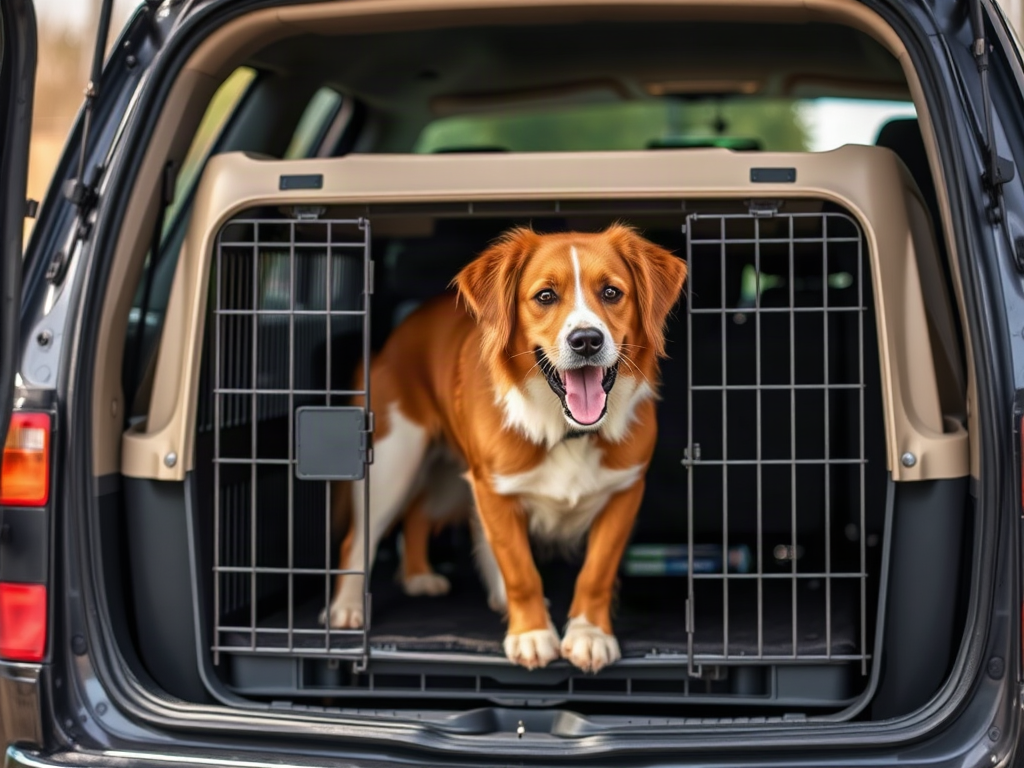
Durable dog crates for frequent transport should combine a rigid, correctly sized structure with secure door hardware, dependable vehicle attachment points, and components that tolerate repeated loading and cleaning. Rotomolded plastic and reinforced metal models usually withstand routine handling better than fabric crates, but weight, ventilation, corrosion, and transport mode affect the choice. Check hinges, latches, seams, fasteners, and tie-down points before every departure because small amounts of looseness can become structural failures. A long service life also depends on preventing the crate from sliding, keeping the dog’s weight within its rated capacity, and replacing damaged hardware rather than relying on improvised repairs.
Match Crate Construction to the Transport Routine
Transport frequency changes what durability means. A crate moved between a house and vehicle twice a day faces repeated lifting, doorway impacts, vibration, temperature changes, and contact with wet pavement. A crate used for occasional overnight trips may endure fewer handling cycles but spend longer periods loaded with bedding and exposed to moisture. The best construction is therefore the one that tolerates the owner’s actual routine without becoming too heavy to handle correctly.
Rotomolded plastic crates have thick, continuous shells with relatively few joined panels. That construction can resist flexing and routine knocks, while the enclosed lower portion helps contain dirt and spills. The tradeoff is bulk and weight. A heavy crate may be durable on paper but impractical if one person must lift it into an SUV several times each week. Dropping a heavy unit onto a corner or dragging it by the door opening can also damage hardware that would otherwise last for years.
Wire crates provide strong ventilation and broad visibility, and many fold for storage. Their durability depends heavily on wire gauge, weld quality, frame rigidity, and the folding mechanism. Repeated vibration can produce rattles or allow marginally fitted panels to shift. They also provide less containment from wind, sun, spilled water, and cargo around the dog. A wire model can be appropriate for a calm dog transported inside a climate-controlled vehicle, but it should not be chosen merely because metal appears stronger than plastic.
Aluminum or reinforced metal crates can offer a rigid structure and replaceable hardware, making them attractive for intensive road use. Owners should still inspect exposed edges, rivets, welds, and corrosion-prone fasteners. Metal also transfers heat and cold readily, so placement and cabin temperature matter. Soft-sided crates are lighter and easier to carry, but fabric, mesh, zippers, and internal frames generally make them a poor primary choice for dogs that scratch, chew, lean forcefully, or travel almost every day.
Start by mapping the complete handling sequence: where the crate is stored, who lifts it, which doors it must clear, how it sits in the vehicle, and whether it must be carried while occupied. Measure the vehicle opening as well as the cargo floor; a crate that fits the floor may not pass through a sloped hatch. Readers comparing Durable dog crates for frequent transport should prioritize manageable weight, structural rigidity, ventilation, and serviceable hardware over cosmetic thickness or an imposing appearance.
Inspect the Structural Details That Wear First
Doors, latches, hinges, panel joints, and handles usually reveal declining condition before the main shell does. These parts absorb concentrated force every time a crate is opened, lifted, braced, or bumped. A thick shell cannot compensate for a latch that only partially engages or a handle attached through weakened material.
Test the door while the empty crate rests on a level surface, then repeat the test after placing it in its normal vehicle position. The door should remain aligned and move without scraping, excessive play, or pressure against the latch. If it behaves differently in the vehicle, the cargo floor or tie-down arrangement may be twisting the crate. Tightening straps harder is not the answer; the base needs even support so the frame remains square.
Latch design deserves more attention than the number of locking points. A mechanism should be difficult for the dog to manipulate yet simple for an adult to verify visually and by touch. Look for full engagement rather than assuming a click means the door is secure. Spring-loaded pieces should return freely, and sliding bolts should enter their receivers without lifting or pushing the door into place. Carabiners and clips may serve as secondary retainers when compatible with the design, but they should not conceal a worn primary latch.
Handles are another common source of misuse. Some are intended for moving an empty crate only, while others are integrated into a load-bearing frame. Unless the manufacturer explicitly permits lifting with the dog inside, remove the dog before moving the crate. Carrying an occupied unit places the animal’s weight on attachment points and can cause a sudden drop if a handle or panel fails.
A compact pre-trip inspection should cover:
- Door operation: Confirm alignment, full latch engagement, and unrestricted hinge movement.
- Structure: Check cracks, bent bars, separated seams, sharp edges, loose rivets, and missing fasteners.
- Contact points: Examine the base, feet, handles, and strap locations for abrasion or distortion.
- Interior: Remove broken plastic, exposed wire, loose bedding, and objects the dog could chew or swallow.
Watch for changes rather than waiting for an obvious break. New rattling, rust-colored streaks, white stress marks in plastic, a door that needs extra force, or fasteners that repeatedly loosen all indicate developing wear. Cosmetic scratches alone may not affect function, but cracks extending from vents, bolt holes, or corners deserve immediate attention because those locations concentrate stress. Stop using a crate when damage compromises closure, containment, safe handling, or secure attachment.
Secure the Crate Without Creating New Weak Points
A durable crate still needs stable placement because uncontrolled movement accelerates wear and exposes the dog to avoidable forces during abrupt driving. The unit should sit flat, remain clear of loose luggage, and be restrained through points intended to accept a load. Threading a strap through a ventilation opening or around a door frame may deform the crate and obstruct access.
Use manufacturer-designated anchor points whenever they are provided, and connect them to suitable vehicle cargo anchors according to the instructions for both products. Keep straps away from sharp edges, hot surfaces, seat mechanisms, and areas where a dog can reach them. The goal is firm restraint without crushing the crate. If tightening a strap bows a panel, shifts the door, or narrows an opening, the routing or attachment point is wrong.
Vehicle layout creates practical constraints. In a hatchback, a tall crate may contact the rear glass or sloped hatch even though its footprint fits. In an SUV, folding seats can leave an uneven floor that rocks the crate from corner to corner. A van may provide more room but allow a poorly secured unit to slide farther. Test the installation empty by pushing it in multiple directions and operating nearby doors and seats. Then check that the dog has adequate ventilation and cannot be struck by shifting cargo.
Do not assume that any heavy crate provides crash protection. General sturdiness, escape resistance, and performance under collision forces are different claims. If collision-tested performance matters, examine the specific model’s published test information, installation method, orientation, dog-weight range, and required hardware. A test result for one size or configuration should not automatically be applied to every model in a product line. Airline acceptance is separate again: carrier rules, aircraft limitations, destination requirements, and crate construction criteria can differ, so verify the current requirements directly before each flight.
Correct sizing also affects durability and control. The dog needs enough room to stand naturally, turn around, and lie in a normal position, but an excessively large crate permits more body movement during ordinary braking and occupies more space that must be restrained. Measure the individual dog rather than choosing by breed label. Include the height of ears in their natural position and account for bedding without letting thick pads reduce usable headroom.
After installation, take a short local drive and listen for movement. Stop to check strap tension, door alignment, temperature, and the dog’s behavior. Persistent sliding, panel flex, new rattling, heavy panting unrelated to normal conditions, or attempts to attack the door indicate that the setup needs correction. A secure installation should remain stable without distorting the crate or blocking routine and emergency access.
Use a Repeatable Cleaning and Wear-Check Routine
Maintenance extends usable life by preventing moisture, grit, hair, and waste from hiding damage or degrading moving parts. Frequent transport carries road salt, sand, mud, and spilled water into seams and under floor trays. Left in place, that debris can abrade coatings, retain moisture around fasteners, and make latches feel stiff before visible corrosion appears.
Remove bedding and washable trays after messy trips rather than spraying the assembled crate indiscriminately. Follow the manufacturer’s cleaning directions, use a dog-appropriate cleaning product, and rinse away residue where required. Dry seams, hardware, hollow frame sections, and the underside before storage. A crate placed in a closed vehicle while damp can remain wet much longer than expected, particularly beneath a mat or around overlapping panels.
Cleaning is the best time to perform a hands-on examination. Run a cloth carefully along accessible edges; snagging can reveal a burr or damaged wire that is easy to miss visually. Move every latch and hinge through its full range, press gently around fastener holes, and compare opposite corners for new deformation. On folding crates, examine clips, pivot points, and panel intersections because repeated setup concentrates wear there. For plastic shells, inspect corners, ventilation openings, and bolt locations for spreading cracks or pale stress lines.
Repairs should preserve the original function rather than improvise around it. Replace lost bolts, latch components, trays, and door parts with manufacturer-approved items when available, using the specified size and arrangement. Duct tape, household wire, zip ties, or adhesive patches can introduce sharp edges, obstruct ventilation, or fail without warning. A superficial scrape may need no intervention, while a repaired structural crack may still be unsuitable for frequent transport. Ask the manufacturer whether the affected component is replaceable and whether the damage changes the crate’s rated use.
Keep a simple record for heavily used equipment. Note the purchase date, replacement parts, recurring loose fasteners, and any drop or impact. Photographing the same corners and latch points every few months makes gradual distortion easier to recognize. Owners reviewing Durable dog crates for frequent transport can also use those records to judge whether a heavier premium model actually reduces maintenance or merely adds lifting difficulty.
Signs that the routine is working include smooth closures, stable alignment, dry hardware, and no progressive cracks or corrosion. Repeated loosening, recurring odors beneath panels, widening gaps, or a dog escaping despite correct closure signals failure. Retire the crate when safe function cannot be restored with approved replacement parts. Durability means predictable service under proper use, not continuing to use damaged equipment until it breaks completely.
Frequently Asked Questions
Which crate material lasts longest under frequent handling?
Rigid molded plastic and reinforced metal often tolerate repeated transport well, but construction quality and handling matter more than material alone. Compare joints, door hardware, fasteners, base support, corrosion resistance, weight, and available replacement parts.
Can a wire crate be durable enough for daily vehicle use?
Yes, if it has a rigid frame, sound welds, dependable latches, and stable vehicle placement. Inspect folding joints and panel alignment regularly because vibration and repeated setup can loosen marginal connections.
Should a dog remain inside while the crate is carried?
Only if the manufacturer expressly states that the crate and its handles are designed for occupied lifting. Otherwise, remove the dog first to avoid overloading handles or dropping the occupied crate.
How often should transport-crate hardware be inspected?
Check the latch, door, structure, base, and attachment points before every trip. Perform a closer examination during cleaning and after any drop, collision, hard stop, escape attempt, or noticeable change in operation.
When should a damaged crate be replaced instead of repaired?
Replace or retire it when damage affects door closure, containment, ventilation, handling, or secure installation and approved parts cannot restore proper function. Structural cracks, failed welds, sharp edges, and distorted frames warrant particular caution.
Conclusion
Frequent transport rewards careful selection more than sheer crate weight. Match the construction to the vehicle, lifting routine, dog, climate, and required transport mode, then examine the door and hardware as closely as the shell. Proper base support and designated attachment points reduce movement without distorting panels or interfering with access.
Measure the dog and vehicle before buying, test the installation empty, and follow with a short local drive. Establish a pre-trip check for latch engagement, alignment, fasteners, edges, and strap condition, followed by thorough drying after cleaning. Treat new rattles, stress marks, corrosion, and recurring looseness as early warnings. Approved replacement parts may extend service life, but improvised structural repairs should not be mistaken for restored integrity. Retire equipment once reliable closure, containment, or attachment can no longer be maintained.