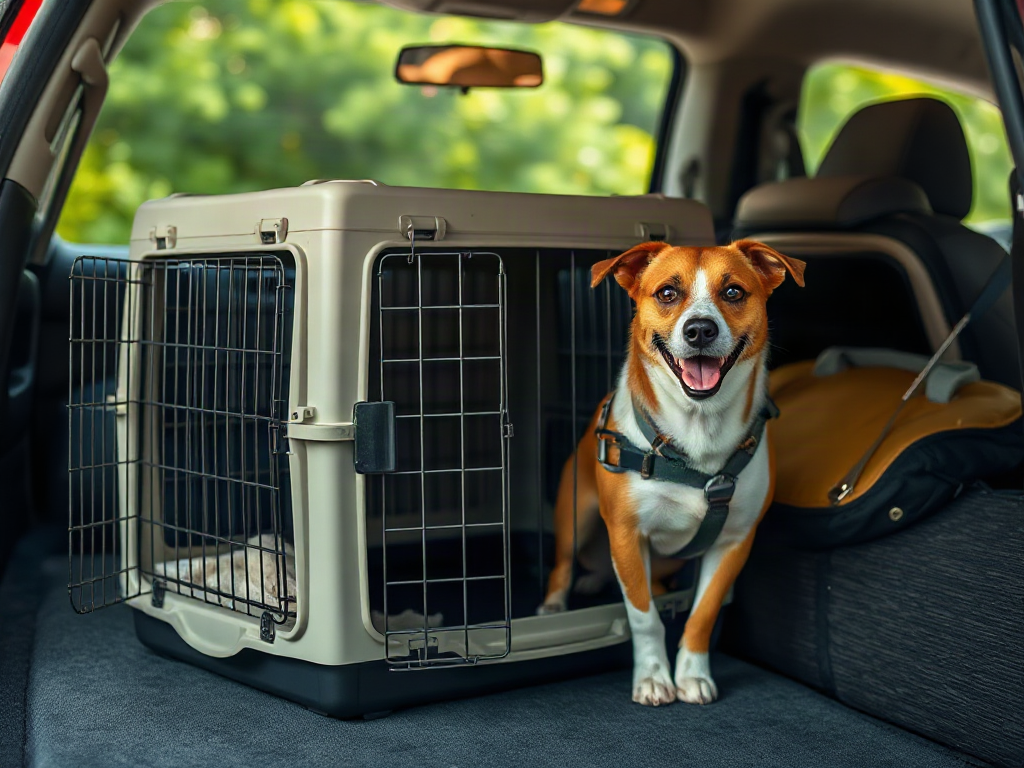
Dog crate cost factors for travel setups are driven mainly by crate materials, dog size, transport mode, construction strength, and trip-specific requirements. A basic wire model may suit stationary lodging or familiar car trips, while molded plastic, reinforced aluminum, or airline-compatible designs usually cost more because they require sturdier doors, secure hardware, ventilation, and easier handling. Oversized dimensions can raise both purchase and transport charges, especially for air travel. Budget decisions should account for replacement trays, bedding, tie-down equipment, and carrier rules—not merely the shelf price—because a cheap crate that fits poorly or cannot be accepted for the planned trip offers little value.
How Crate Type and Materials Affect Price
Construction type sets the starting price because each design solves a different transport problem. Folding wire crates are commonly economical and easy to store, but their open sides provide limited protection from weather, loose cargo, and busy surroundings. Molded plastic crates enclose more of the dog and are easier to carry through terminals, while reinforced metal models use stronger panels, hinges, and latches intended for demanding road use or dogs that damage lighter enclosures.
Material thickness matters as much as the material name. Two plastic crates of similar dimensions may differ in wall rigidity, door-frame strength, ventilation design, fastener quality, and whether replacement parts are available. A low initial price can reflect a thin tray, flexible shell, or simple latch rather than a genuine bargain. Conversely, paying for heavy-gauge metal is unnecessary when a calm, crate-trained dog only needs an enclosure for occasional hotel stays.
Soft-sided crates occupy another price band. Their low weight and collapsible frames are convenient for carrying and storage, but fabric and mesh can be damaged by persistent scratching or chewing. They also offer less structural protection around luggage and are not interchangeable with hard transport kennels. A soft crate may be sensible for supervised indoor use after arrival, yet unsuitable as the sole enclosure in a cargo area or anywhere the dog can push against flexible panels.
Compare the working components before judging price. Inspect how the door attaches, whether latch movement is protected from paws, how the base connects to the upper shell, and whether handles carry the load through reinforced areas. Removable wheels can be useful with a large dog, but they add cost and may need to be removed during transport. Decorative finishes and accessory pockets rarely deserve priority over reliable hardware.
The common mistake is buying by category alone—assuming every plastic model is suitable for flight or every metal crate is secure in a vehicle. Product construction, carrier acceptance, and installation method remain separate questions. Readers comparing Dog crate cost factors for travel setups should first identify the environment the enclosure must tolerate, then pay for material strength that addresses that environment.
Why Size, Fit, and Dog Behavior Change the Budget
Crate size affects price through material quantity, shipping volume, storage demands, and handling equipment. A larger enclosure uses more plastic, wire, or aluminum and may require reinforced corners or a stronger door. The price jump between sizes can therefore be uneven rather than proportional. Very large models may also incur costly delivery because the packaged dimensions exceed ordinary parcel limits.
Correct fit means the dog can stand naturally without pressing its head into the roof, turn around, and lie in a normal position. Breed labels and body weight are weak substitutes for measurement. Measure standing height to the relevant highest point, body length from the nose to the base of the tail, and width at the broadest area. Then compare those measurements with the manufacturer’s interior dimensions, not merely the exterior size printed in a product name.
Buying excessive space “for comfort” can create different problems. An oversized crate occupies more vehicle room, weighs more, and may increase airline-related charges or fail to fit through a planned cargo opening. Extra empty space can also allow greater movement during abrupt braking. A crate that is too small creates obvious welfare and acceptance concerns. The economical choice is the smallest model that still provides proper usable space and satisfies the applicable transport operator’s criteria.
Behavior changes which construction features are worth funding. A settled dog accustomed to confinement may use a conventional molded or wire model without damaging it. A dog that bites bars, bends doors, or paws forcefully may require stronger hardware, but purchasing a reinforced crate does not resolve panic or confinement distress. Training, veterinary input where appropriate, and gradual acclimation may be more relevant than escalating to increasingly heavy products.
Consider a medium-sized dog that rests quietly during two-hour drives but scratches at mesh in unfamiliar rooms. A soft-sided enclosure may be easy to pack yet require replacement after one trip. A folding wire crate with a secure tray could have a higher purchase price but lower repeat cost for hotel use. The opposite may be true for a calm small dog when carrying weight and limited storage matter more than resistance to scratching.
A frequent failure is measuring the dog once while it is curled up or relying on an old crate size. Recheck measurements before purchase, particularly for a growing dog or one whose posture has changed. Confirm door clearance and the available vehicle footprint at the same time; good canine fit is not useful if the crate cannot pass through the hatch.
Transport Mode and Trip Requirements
The intended transport mode determines whether a low-cost crate is usable at all. A model appropriate for a living room may not meet an airline’s current conditions, and a product described as suitable for travel does not automatically satisfy a particular carrier. Airlines can set route, aircraft, weather, breed, hardware, and kennel conditions, so travelers should obtain the current requirements directly from the operating airline before ordering.
Air transport can add expenses for metal fasteners, bowls, absorbent material, identification, documentation holders, and size-related handling. Airline acceptance should never be inferred solely from a marketing phrase such as “airline approved.” Approval occurs in a specific travel context, and requirements may differ between in-cabin carriage and transport outside the passenger cabin. Codeshare itineraries deserve extra scrutiny because the company selling the ticket may not operate every flight.
Road travel shifts the priorities. The enclosure must fit the vehicle without obstructing visibility, interfering with passengers, or sitting where luggage can fall against it. Secure placement also matters: a crate sliding across a cargo floor is not made safe by thick walls alone. Check the vehicle manual and crate manufacturer’s instructions for permitted installation points or restraint methods. Improvised straps around weak wire sections or plastic handles can damage the crate rather than secure it.
Hotels, campgrounds, ferries, and trains can impose separate practical constraints. A folding model may be valuable when the crate is carried upstairs or stored in a small room. A rigid shell may be easier to wipe clean after muddy stops. On a multi-stage trip, the most expensive option is not necessarily the most useful; the preferred design must work at the most restrictive stage without becoming unmanageable everywhere else.
For example, a traveler driving to an airport, flying, and then renting a compact car must account for airline dimensions, terminal handling, and rental-vehicle cargo space. A large crate that meets one stage may be impossible to load at the destination. Checking dimensions in advance can prevent emergency replacement purchases, rebooking costs, or an unusable reservation.
The mistake to avoid is purchasing before confirming the itinerary. Keep screenshots or copies of current operator instructions, verify the exact aircraft or service when possible, and ask how external crate dimensions are assessed. The trip rules should shape the product shortlist—not be checked after a nonrefundable crate arrives.
The Full Cost Beyond the Crate
Total ownership cost includes accessories, transport charges, maintenance, storage, and the likelihood of replacement. A modestly priced crate can become expensive if its tray cracks, the door corrodes, or proprietary clips cannot be sourced. A higher-priced model may offer better long-term value when wear parts are sold individually and the crate will be used often.
Accessories should solve a defined need. A washable pad can improve comfort, but it must not reduce usable headroom or become a shredding hazard for the individual dog. Spill-resistant bowls may be required or useful on longer routes. Covers can reduce visual stimulation in some settings, although they must not block ventilation or trap heat. Wheels ease terminal movement but add another component to store, maintain, or remove.
Delivery cost is easy to miss when comparing online prices. Large rigid crates may carry substantial shipping charges, while local pickup can make a more expensive listed product cheaper overall. Used crates can reduce acquisition cost, but inspect the shell for cracks, bent panels, sharp edges, missing fasteners, door misalignment, and odors or residue that cannot be removed. Confirm that discontinued hardware is still obtainable before relying on a secondhand unit for a fixed departure date.
Storage has a real cost in small homes and vehicles. Wire and fabric models often collapse, whereas molded shells consume their full volume unless designed to nest when disassembled. Repeated assembly can wear fasteners, so a crate stored flat is not automatically the better long-term purchase. Estimate how often it will be assembled and whether all loose hardware can be kept together.
Use a compact cost check before paying:
- Purchase: crate, tax, delivery, and any required assembly hardware.
- Trip preparation: bedding, bowls, labels, tie-down equipment, and cleaning supplies.
- Transport: operator fees or charges affected by external dimensions and weight.
- Ownership: replacement parts, storage space, cleaning, and likely service life.
A common budgeting error is spending the full allowance on the enclosure and leaving nothing for secure installation or trip requirements. Comparing Dog crate cost factors for travel setups on a total-cost basis exposes products that are inexpensive only at checkout.
A Practical Buying Plan by Travel Pattern
Start with the recurring trip pattern rather than the product catalog. Occasional hotel stays, weekly road travel, and a scheduled flight impose different demands. Write down the longest normal use period, how the crate will be carried, available storage, vehicle opening dimensions, and whether any transport operator will inspect it. This turns an open-ended shopping decision into a constrained comparison.
For occasional local trips with a calm, crate-trained dog, prioritize correct fit, sound latches, ventilation, and manageable storage. Premium finishes or maximum-strength panels may offer little return. Frequent drivers should place more weight on durable joints, easy cleaning, replacement parts, and a secure vehicle-placement plan. Air travelers must begin with the operating carrier’s current instructions and leave time to replace incompatible hardware or change crate size.
Compare at least two realistic options using the same cost horizon. A cheaper crate replaced twice can exceed the cost of a serviceable model with available trays and hinges. Yet durability should not become an excuse to buy excessive weight. Owners who move the crate alone must be able to lift or roll it safely, and the loaded enclosure may be much harder to handle than the empty product suggests.
Test the setup before departure. Assemble the crate, check every fastener, place it in the intended vehicle location, and let the dog use it during calm practice sessions. Watch for door rattling, tray movement, persistent contact with the roof, overheating, chewing, or attempts to force the latch. A successful setup remains stable, allows normal posture, maintains airflow, and can be handled without improvised repairs.
Failure signs should trigger reassessment rather than accessory purchases. If the dog cannot turn comfortably, choose another size. If a crate shifts in the vehicle, revisit placement and manufacturer-supported restraint options. If the dog panics, address acclimation and seek appropriate professional guidance instead of assuming stronger walls alone will fix the behavior. If airline instructions conflict with product marketing, the operator’s current conditions control the travel decision.
The smartest budget preserves room for corrections. Buy early enough to return an unsuitable model, verify measurements twice, and avoid irreversible modifications until acceptance requirements are clear. A price ceiling remains useful, but it should be applied only after eliminating crates that do not fit the dog, itinerary, or installation space.
Frequently Asked Questions
Why do large dog crates cost disproportionately more?
Large crates require more material, stronger structural components, bulkier packaging, and costlier shipping. Their dimensions may also increase transport fees and limit vehicle compatibility.
Is a plastic crate always more expensive than a wire crate?
No. Price varies with size, material thickness, door construction, hardware, brand, and replacement-part support. Compare specific models and their intended use rather than material labels alone.
Should I buy a crate advertised as airline approved?
Treat that phrase as a starting point, not acceptance. Confirm the operating airline’s current crate, hardware, size, route, and animal requirements before purchasing.
Can a used travel crate be a good value?
Yes, if the dimensions are correct and the shell, door, ventilation openings, fasteners, and handles are undamaged. Check whether missing or worn components can still be replaced.
Which crate extras are worth paying for?
Prioritize features required by the trip or dog: reliable hardware, washable bedding, suitable bowls, supported restraint equipment, and obtainable replacement parts. Skip decorative extras that do not improve function.
Further Reading
Authoritative Sources
- USDA APHIS Pet Travel
aphis.usda.govOfficial information on animal travel requirements can help owners identify documentation and destination conditions that may affect the total setup cost
- IATA Traveler’s Pet Corner
iata.orgThis resource explains air-travel planning considerations and why travelers must confirm kennel conditions with their airline
Conclusion
A useful crate budget begins with measurements, itinerary restrictions, and the dog’s actual behavior. Eliminate models that fail those tests before comparing prices. Then assess construction, handling weight, cleaning, replacement parts, shipping, accessories, and operator charges across the expected period of ownership.
Confirm airline or other transport conditions directly, measure vehicle openings as well as interior cargo space, and test the assembled setup well before departure. Choose enough strength for the expected environment without paying for weight or reinforcement that creates new handling problems. The best-value crate is not the least expensive model or the strongest available one; it is the option that fits correctly, functions throughout the planned route, and can be maintained without repeated emergency purchases.