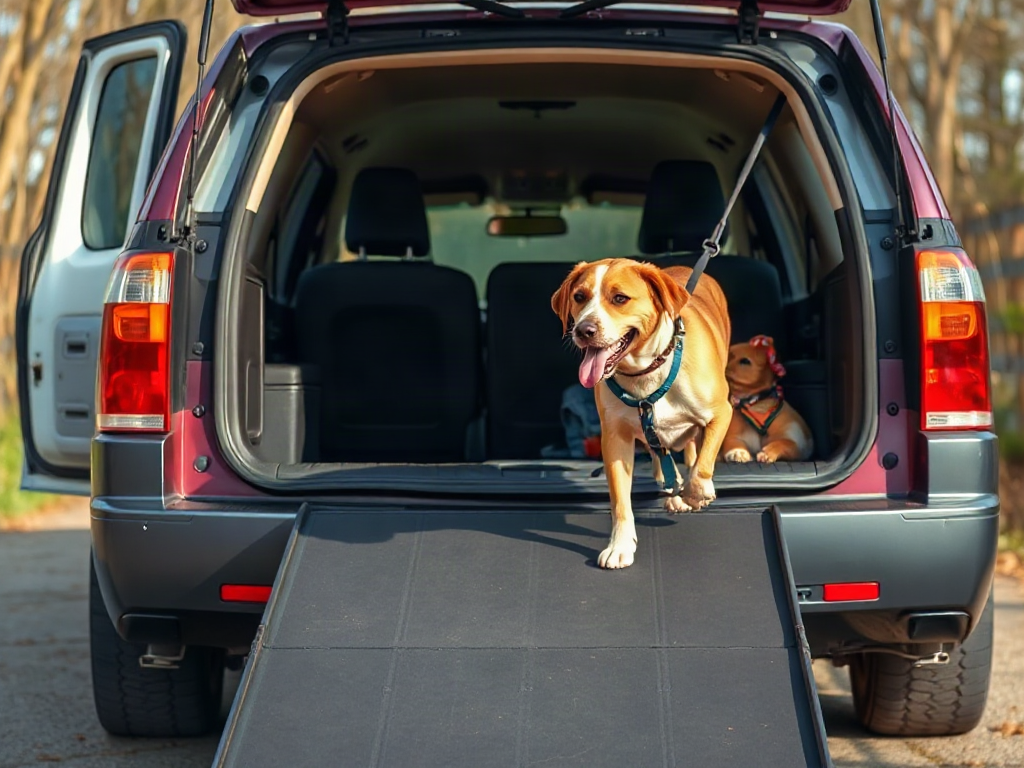
Travel ramps that help dogs enter vehicles work best when the walking surface is long enough to create a gentle slope, wide enough for confident footing, and secured against the bumper or cargo sill. Measure the loading height before buying, then check the ramp’s usable length, weight rating, traction, edge rails, and folded storage size. A ramp should not bow, slide, or create a large step at either end. Introduce it flat on the ground before raising it gradually, using a harness and rewards rather than pulling the dog up a steep or unfamiliar surface.
How Ramp Length and Vehicle Height Determine the Slope
A vehicle’s loading height and the ramp’s usable length determine how demanding the climb will be. Measure vertically from level ground to the exact surface the dog must reach, such as a rear seat threshold, cargo floor, or side-door sill. Do not rely only on a vehicle class such as sedan, crossover, or SUV; tire size, suspension, parking angle, and the chosen door can substantially change the height.
Longer ramps generally create gentler approaches when used at the same loading height. A short panel may appear convenient in a product photo yet become steep when placed against a tall cargo opening. That angle asks the dog to push harder through the rear legs on ascent and control more body weight on descent. It may be especially awkward for a senior dog, a short-legged breed, a large dog with limited mobility, or an animal recovering under veterinary direction.
Usable length matters more than the advertised folded dimensions. Hinges, overlap between telescoping sections, attachment lips, and handles can reduce the portion available for walking. Confirm both the extended walking length and the amount of level ground needed behind or beside the vehicle. A long ramp that creates an excellent angle may be impractical in a narrow garage, crowded parking space, or roadside pull-off.
Test the intended position before routine use. Park on firm, level ground, set the ramp where it will contact the vehicle, and inspect both transitions. The upper end should meet the sill without leaving a gap that can catch a paw. The lower end should rest flat rather than forming a raised lip. If the ramp remains visibly steep or the dog scrambles, pauses, or rushes downward, greater length or a lower entry point may be preferable.
Some vehicles offer more than one workable route. A crossover’s side door may have a lower sill than its rear cargo floor, while a pickup may require a staged platform rather than one very steep ramp. Compare the complete path, including door width and landing space, instead of assuming the rear hatch is automatically the safest entrance. More information about Travel ramps that help dogs enter vehicles should always be interpreted in relation to the specific loading height.
Traction, Width, Stability, and Weight Capacity
A manageable angle cannot compensate for poor footing or an unstable frame. The walking surface should provide grip under dry paws and remain predictable if dampened by rain, snow, mud, or wet grass. Carpet may feel familiar but can retain water or wear smooth. Molded ridges are easy to clean, although shallow patterns may offer limited purchase. Grit-style coatings can provide stronger grip but may feel abrasive to sensitive paws.
Width affects confidence as well as physical access. A narrow track can work for a small, steady dog, but larger dogs and animals that sway, turn, or place their feet unevenly need more lateral room. Raised side edges help a dog identify the boundary; they should not reduce the usable walking width so much that paws land against them. Measure the dog at its widest point and allow room for natural foot placement rather than choosing by body weight alone.
Weight ratings require context. The listed capacity should exceed the dog’s weight, but the ramp must also resist flexing under movement. A dog does not load a ramp as evenly as a static object: paws strike different points, weight shifts downhill during descent, and a hesitant dog may pivot in place. Notice whether the center bows, joints move, or feet lift from the ground during a controlled test. Any repeated bouncing can undermine confidence even if the structure remains below its stated limit.
Secure contact at both ends is equally important. Rubber feet need clean, firm pavement to grip; they may slide on loose gravel, sand, ice, or polished garage floors. At the top, a lip, strap, hook, or manufacturer-designed attachment should match the vehicle surface. Do not place a hard attachment over fragile trim or assume a closed tailgate edge can support a configuration not described for the ramp.
Use this compact pre-use check:
- Upper contact: fully seated, centered, and unable to slip sideways.
- Lower contact: flat on stable ground with no rocking feet.
- Walking surface: dry enough for traction and free of grit, oil, or ice.
- Structure: locks engaged, hinges open, and no cracks or loose hardware.
- Path: door held open and the landing area clear.
A common mistake is checking only the maximum capacity printed on the label. Surface grip, lateral stability, attachment design, and the dog’s gait often determine whether the equipment feels secure in actual use.
Choosing Between Folding, Telescoping, and Fixed Ramps
Ramp style changes storage, setup time, carrying effort, and movement underfoot. Folding models typically open in two or more panels. They can be compact relative to their extended length, but hinge locations may introduce slight movement or raised seams. Confirm that every hinge locks as intended and that the folded unit fits where it will be stored without becoming an unsecured object inside the cabin.
Telescoping ramps slide to different lengths, making them useful when one dog enters vehicles with different loading heights. Extending the ramp farther can soften the angle where space permits. Their overlapping sections add weight, however, and sliding tracks must remain clean enough to move and lock correctly. Fingers and loose fur should stay clear while the sections are extended or collapsed.
Fixed one-piece ramps have fewer joints and may feel especially solid, but their full length makes transport difficult. They are often more practical for a permanent home setup than for a compact vehicle. A lightweight ramp is easier for a person to position, yet lower weight should not be confused with better stability. Material thickness, reinforcement, foot design, and how the ramp connects to the vehicle all influence movement.
Consider a realistic use case. An owner loading a medium-sized dog into a low station wagon may prioritize a lightweight folding model that opens quickly. Someone helping a heavy senior dog into a tall SUV may accept a bulkier telescoping unit to obtain more length and a wider surface. A person with limited grip strength must also be able to lift, unfold, and secure the equipment without losing control of the dog.
Storage measurements should be taken before purchase. Check the folded length, width, thickness, and product weight against the cargo area available after carriers, luggage, and other supplies are loaded. The ramp should be restrained so it cannot shift during braking or become a barrier to opening the crate or door. Placing it loosely beside the dog creates avoidable noise and movement that may increase anxiety.
Portability claims can obscure operational details. Ask who will handle the ramp, where the dog waits during setup, and whether enough room exists to deploy it. A design is only convenient if one person can manage the equipment and the animal without leaving either in an unsafe position. When comparing Travel ramps that help dogs enter vehicles, prioritize a usable slope and reliable attachment before compact folding size.
Setting Up the Ramp and Teaching a Dog to Use It
Initial training should happen away from traffic and without a steep incline. Lay the ramp flat on a stable floor or short grass so the dog can inspect it without also confronting a vehicle opening. Prevent the panel from shifting, allow voluntary investigation, and reward calm steps near and onto the surface. Pulling a reluctant dog forward can cause scrambling and create a lasting association between the ramp and loss of control.
Once the dog walks across the flat surface comfortably, raise one end by a small amount. Progress gradually rather than moving directly to the vehicle’s full loading height. A well-fitted harness gives the handler a way to steady the dog without applying pressure to the neck. Stand beside the ramp where possible, keeping the leash short enough to prevent jumping off but loose enough to permit balanced movement.
Practice ascent and descent separately. Going down often feels harder because the dog sees the drop, carries weight toward the front limbs, and must regulate speed. Reward slow, straight movement. If the dog crouches, spreads its toes, repeatedly steps off the edge, or rushes to escape the surface, reduce the incline and reassess traction. Those behaviors are signs that the task is too difficult, not evidence that the dog needs to be forced through it.
Vehicle practice should begin with the engine off, the parking brake engaged, and the door or hatch secured against movement. Let the dog reach a stable landing area rather than stepping immediately onto luggage, a loose seat cover, or the edge of a carrier. If the destination is a secured travel crate, leave enough room for the dog to turn and enter without trapping the handler between the ramp and vehicle.
Short sessions are usually more productive than repeated climbs after the dog becomes tired or frustrated. End after a controlled success, then repeat in slightly different safe locations so the skill does not depend on one driveway. Before an actual trip, practice with the same vehicle configuration and cargo arrangement that will be used on departure day.
Pain, weakness, or sudden refusal deserves caution. A ramp reduces the need to jump, but it does not make every incline appropriate for every dog. Seek veterinary guidance when mobility changes, an animal cries out, drags a limb, falls, or cannot bear weight normally. Equipment should support a mobility plan rather than substitute for assessment of a new physical problem.
Mistakes That Make Vehicle Ramps Unsafe or Difficult
The most consequential setup error is allowing either end to move. Leaning a ramp against painted trim without a secure attachment may look stable until the dog’s weight shifts toward one side. Likewise, rubber feet that hold on dry concrete can slide on gravel or wet pavement. Apply controlled downward pressure before each use and stop if the unit rocks, twists, or creeps away from the vehicle.
Choosing solely by the dog’s weight is another weak shortcut. A ramp can support the stated load yet still be too narrow, too steep, or too flexible for that dog’s movement. Body length, stance, vision, confidence, and joint mobility affect usability. A long-bodied dog may need extra turning space at the top, while a dog with reduced vision may depend more heavily on side boundaries and consistent surface texture.
Handlers sometimes raise the ramp angle to save parking space. That compromise defeats much of the benefit when the dog must scramble upward or brake sharply on descent. If there is not enough deployment room, look for a lower door, reposition the vehicle, or use a carefully selected alternative such as stable pet steps. Steps can suit small, agile dogs familiar with stairs, but they still require repeated joint flexion and provide less continuous footing. Lifting may be practical for a light dog if the handler can do it safely; it is rarely a dependable plan for a heavy or painful animal.
Skipping maintenance creates gradual hazards. Inspect traction coverings for worn smooth areas, lifting corners, and trapped debris. Check telescoping tracks, locks, hinges, fasteners, straps, and rubber feet according to the product instructions. Clean the surface with materials compatible with its coating and allow it to dry before folding. Replace the ramp if structural damage, unreliable locks, or persistent flex cannot be corrected through manufacturer-approved service.
Do not leave the dog unattended on the incline or permit jumping from the side. Keep other animals and children clear during loading, and avoid positioning the ramp where passing vehicles can enter the working area. At night, illuminate the full surface and both transitions rather than relying on cabin light alone.
Signs of a successful setup include deliberate foot placement, a straight path, minimal ramp movement, and similar confidence in both directions. Repeated hesitation, slipping paws, avoidance of one edge, frantic speed, or a new reluctance to approach the vehicle signals a need to stop and adjust. A closer review of Travel ramps that help dogs enter vehicles is more useful than assuming the dog will simply adapt to poor geometry or unstable footing.
Frequently Asked Questions
How long should a dog ramp be for an SUV?
The appropriate length depends on the measured cargo or door-sill height. Choose enough usable length to create a manageable incline while still fitting the space available behind or beside the SUV.
Is a ramp better than steps for an older dog?
A gently inclined, stable ramp often requires less repeated joint flexion than steps, but the better option depends on the dog’s mobility, confidence, size, and veterinary guidance.
How can I stop a vehicle ramp from sliding?
Use the manufacturer’s intended upper attachment, place the lower feet on firm level ground, and verify that both ends remain stationary under controlled pressure. Do not use the ramp on ice, loose gravel, or an incompatible sill.
Why will my dog walk up the ramp but not down it?
Descent shifts weight toward the front limbs and makes the height more visible. Lower the incline, improve traction, support the dog with a harness, and reward slow practice on a small slope.
Can a dog ramp be used with a travel crate?
Yes, if the ramp reaches a stable vehicle floor and leaves enough room for a straight, unobstructed approach to the secured crate. The crate door should not interfere with the ramp or handler.
Conclusion
A useful vehicle ramp must suit the measured entry height, the available deployment area, and the dog’s actual movement—not merely a broad vehicle type or printed load rating. Compare extended walking length, usable width, traction, structural movement, upper attachment, and folded storage dimensions before buying. Introduce the surface flat, increase the slope gradually, and treat hesitation or slipping as feedback about the setup rather than disobedience. Before each ride, confirm that the ground is firm, all locks are engaged, both transitions are flush, and the landing area is clear. If a dog develops pain, weakness, falls, or a sudden change in mobility, pause ramp practice and seek veterinary advice before asking for another climb.