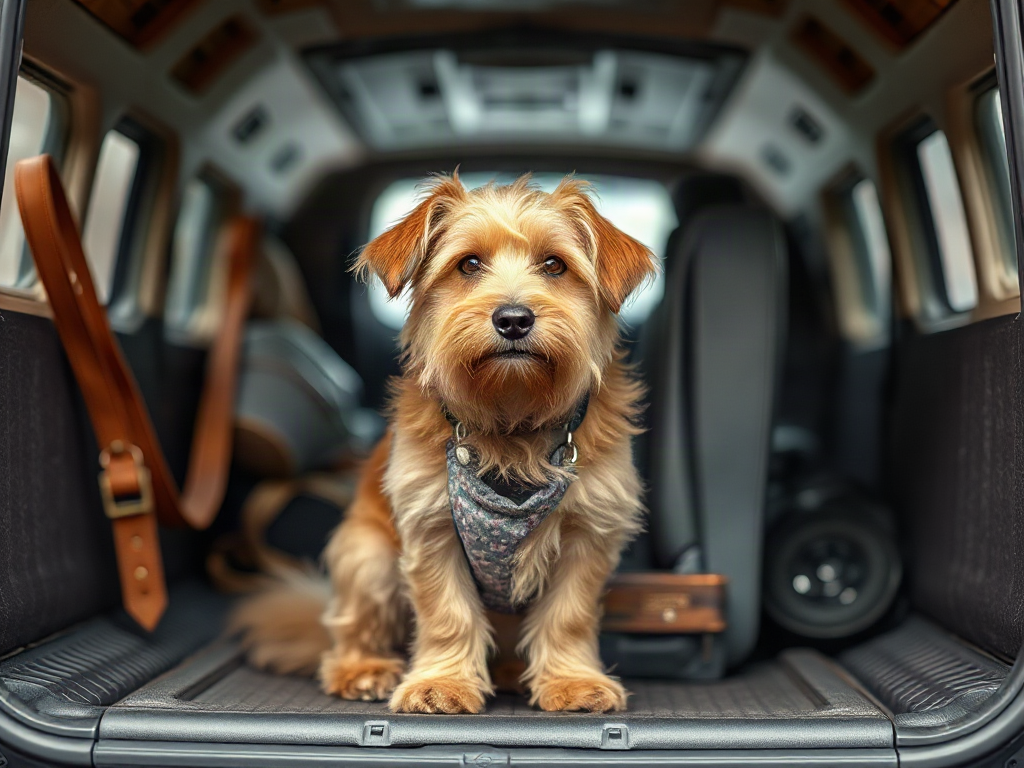
Moving abroad with a dog requires carrier planning that matches the airline’s current acceptance rules, your dog’s standing and turning space, the aircraft route, and the destination’s entry schedule. Confirm whether the dog may travel in the cabin, as checked baggage, or as manifest cargo before buying a carrier, because each method can impose different dimensions, construction standards, and booking procedures. Measure the dog rather than relying on breed or weight alone, then allow time for carrier conditioning and document deadlines. Recheck every flight segment before departure, since an approved kennel may still be rejected for poor fit, weak hardware, ventilation obstructions, or a route-specific restriction.
Match the Carrier to the Actual Transport Method
The correct carrier category is determined by how the airline agrees to transport the dog, not simply by the animal’s weight. Cabin transport generally calls for a compact carrier that fits beneath the assigned seat, while transport in an aircraft hold normally requires a rigid kennel meeting the operator’s construction, ventilation, access, and hardware conditions. Some airlines accept pets as accompanied checked baggage on selected routes; others require a separate cargo booking or do not transport animals at all.
Confirm the permitted method directly with every operating airline before purchasing equipment. A ticket sold under one airline’s name may contain a flight operated by another carrier, and the operating carrier’s animal policy is usually the decisive one. Connections can introduce another set of restrictions, particularly when the dog changes airlines, terminals, or countries. A carrier accepted for the first flight is not automatically accepted for the remaining segments.
Cabin and hold kennels solve different physical problems. A soft-sided cabin model may flex slightly beneath a seat, but it must still contain the dog securely without blocking required ventilation. A hold kennel usually needs a rigid shell, secure door, ventilation on the specified sides, and hardware that cannot loosen during handling. Wheels, decorative covers, lightweight plastic fasteners, top-opening doors, or collapsible panels may be unacceptable even when they are convenient for ordinary trips.
For example, a small dog may meet an airline’s published weight limit yet be too tall to occupy the airline’s permitted under-seat carrier comfortably. Conversely, a medium dog may fit a rigid kennel but face an embargo tied to aircraft type, weather, destination, or route. Buying based on a product label such as “airline approved” does not resolve either issue. That phrase is not a universal certification, and final acceptance rests with the airline handling the specific departure.
Create a written route record containing the flight numbers, operating airlines, aircraft changes if available, transport method, reservation confirmation, and carrier limits supplied by the airline. Save dated copies of the relevant policy pages and note the contact channel used to confirm the booking. The broader process of Moving abroad with a dog: carrier planning works best when the itinerary is fixed before equipment decisions become difficult to reverse.
Measure Your Dog and Evaluate Usable Space
Carrier fit should be assessed from the dog’s body dimensions and natural posture. Record the dog’s length from the nose to the base of the tail, standing height from the floor to the highest relevant point, shoulder width, and weight. Follow the airline’s own measurement method when it publishes one, because required allowances and reference points can differ. Measure while the dog is standing squarely rather than curled up or sitting.
A suitable kennel should permit the movements the transport provider expects: standing without the head or ears pressing against the roof, turning around, and lying in a natural position. Thick bedding, internal bowls, and raised floor features reduce usable space, so exterior dimensions alone can be misleading. Rounded corners and sloped walls can further narrow the area available at shoulder or head height.
Evaluate the carrier with a short fit check before committing to the route:
- Posture: Watch whether the dog lowers its head, crouches, or folds its ears to stand.
- Turning: Confirm that the dog can reverse direction without becoming wedged.
- Resting: Check that the normal lying position does not press the nose or hindquarters into the walls.
- Ventilation: Keep openings clear of bedding, labels, sleeves, and attached supplies.
- Structure: Inspect the door, shell, seams, fasteners, and handles for movement or damage.
A larger kennel is not automatically the safer choice. Excess unused space can make the enclosure harder to handle, may exceed aircraft loading limits, and can allow the dog to slide farther during movement. An undersized kennel creates the more immediate welfare and acceptance problem, but oversizing without checking airline limits can make the planned flight impossible. The goal is adequate functional room within the operator’s permitted range.
Flat-faced breeds, very large dogs, puppies, senior animals, and dogs with medical or mobility needs may face additional limitations. Some airlines restrict particular breeds or decline certain animals under specified conditions. A veterinarian can assess whether an individual dog is medically fit for the planned transport, but veterinary clearance does not compel an airline to accept the booking.
Test the complete setup, including the absorbent liner and any permitted water container, while the dog is inside. Signs of a poor fit include persistent crouching, blocked vents, difficulty turning, contact between the head and roof, or a door that flexes under light pressure. Replace an unsuitable kennel early; last-minute improvisations with cable ties, drilled holes, or unapproved extensions may weaken the structure or lead to rejection.
Build Carrier Training Into the Relocation Schedule
Carrier conditioning should begin while there is enough time to change the setup if the dog struggles. International relocation can involve airport handling, waiting periods, unfamiliar sounds, and a longer total confinement period than the scheduled flight suggests. A dog that tolerates ten minutes in a kennel at home has not yet demonstrated comfort during check-in, loading, a connection, and destination processing.
Place the assembled carrier in a familiar room with the door secured open. Let the dog investigate it without being pushed inside, then use meals, chews, or calm resting opportunities to create voluntary entry. Once the dog enters readily, close the door briefly and reopen it before distress escalates. Extend duration gradually, adding normal household movement and short periods when the handler is out of sight.
The next phase should make practice resemble the travel setup without attempting to simulate an aircraft. Use the same liner, water attachment, and bedding thickness expected on departure day. Move the closed carrier a short distance using its intended handles, then practice calm waiting in a vehicle or another safe, temperature-controlled location. Success looks like voluntary entry, normal posture, the ability to settle, and recovery soon after ordinary movement or noise.
Repeated escape attempts, heavy drooling unrelated to heat, self-injury, prolonged vocalization, refusal to enter, or elimination during brief sessions indicate that progression is too fast or that the carrier may be uncomfortable. Do not respond by scheduling one very long confinement session. Shorter sessions below the dog’s distress threshold provide more useful information and reduce the chance that the enclosure itself becomes a warning signal.
Sedation should not be treated as a routine substitute for conditioning. Medication can affect balance, temperature regulation, or physiological responses, and transport providers may impose their own restrictions. Discuss health concerns and any medication plan with the dog’s veterinarian well before departure, then disclose relevant information as required by the carrier. Never give a new sedating product on travel day without veterinary direction.
Training also exposes practical faults. A dog that catches a collar tag on the door, pushes bedding over a vent, or tips an attached bowl during practice is identifying a problem that can be corrected at home. Remove unnecessary snag hazards according to airline instructions and keep accessories minimal. A staged Moving abroad with a dog: carrier planning schedule should reserve several weeks for acclimation when possible, rather than treating training as the final weekend’s task.
Coordinate the Carrier With Documents and Flight Logistics
The kennel plan and the import plan must operate on the same timeline. Destination authorities may require identification, vaccinations, laboratory work, health certification, permits, endorsements, or advance notice, with exact rules varying by country and sometimes by transit location. These requirements can change, so use official destination-government instructions and obtain professional veterinary assistance where the process calls for it.
Work backward from the proposed arrival date. First identify the destination’s entry sequence and any waiting periods. Next confirm appointment availability, laboratory or endorsement processing where applicable, airline booking windows, and carrier preparation. Only then should you treat the flight date as dependable. A carrier may be physically ready while a certificate is too old, a required waiting period is incomplete, or the animal reservation has never been confirmed.
Transit deserves separate attention. A connection that appears simple on a passenger itinerary may require an animal transfer service, an import or transit permit, a minimum layover, or collection and recheck. Self-transfer itineraries are particularly risky because the owner may need legal permission and enough time to enter the connecting country with the dog. A nonstop flight can reduce transfers and handling, but it is not always preferable if the operating airline cannot accommodate the kennel or destination conditions.
Prepare the exterior only as the airline directs. Identification and contact details should be legible and resistant to moisture. Required document pouches, feeding declarations, water dishes, or live-animal labels should be positioned without covering ventilation. Avoid taping original documents permanently to the kennel unless instructed; officials may need to remove and inspect them. Keep copies accessible to the traveler and store digital backups separately.
Several days before departure, reconfirm the animal reservation and ask whether schedule, aircraft, check-in location, or weather-related acceptance conditions have changed. On the day, arrive at the location and time specified for animals rather than assuming ordinary passenger check-in applies. Bring permitted spare fasteners, a replacement absorbent liner, cleaning supplies, and copies of booking and entry records, but do not attach loose luggage or bulky supply bags to the kennel.
A useful final review separates controllable readiness from airline discretion. You can verify dimensions, hardware, documents, labels, conditioning, and arrival arrangements. You cannot guarantee acceptance if weather, aircraft substitution, operational disruption, or an inspector’s fit assessment changes the situation. Maintain a backup plan covering a later flight, temporary lodging that accepts the dog, local ground transport, and the contact details for the airline’s animal desk. That contingency is part of Moving abroad with a dog: carrier planning, not evidence that the primary plan is weak.
Frequently Asked Questions
When should I buy a carrier for an international move?
Confirm the operating airline, transport method, route, and size rules first. Buy early enough to allow exchanges and gradual conditioning, ideally before veterinary and departure deadlines become compressed.
Does “airline approved” mean a carrier will be accepted?
No. It is usually a marketing description rather than universal approval. The operating airline evaluates the kennel, dog, route, and current policy at check-in or cargo acceptance.
Can my dog travel in the cabin on an international flight?
Possibly, but eligibility depends on airline policy, route, destination, available pet space, and whether the dog can remain comfortably inside the permitted under-seat carrier.
Should I choose the largest kennel the airline allows?
Choose a kennel that provides required standing, turning, and resting room without unnecessary excess. Confirm both internal usable space and the airline’s external size or aircraft-loading limits.
What should I do if the airline changes the aircraft?
Contact the airline’s animal desk immediately. A different aircraft may alter kennel capacity or acceptance, so verify every segment and activate a flexible-flight or lodging backup if necessary.
Further Reading
Authoritative Sources
- USDA APHIS Pet Travel
aphis.usda.govProvides official U.S. departure and destination resources for researching international animal health documentation
- IATA Traveler’s Pet Corner
iata.orgExplains airline animal-transport concepts and directs travelers to carrier-specific requirements
- Your Europe: Travelling With Pets
europa.euSummarizes official European Union rules for pet movement and links to relevant requirements
- Bringing Your Pet Dog, Cat or Ferret to Great Britain
gov.ukDetails the official entry process, approved routes, documentation, and carrier responsibilities for Great Britain
Conclusion
A dependable relocation plan links the dog’s measured space needs to a confirmed transport method, a specific operating airline, and the destination’s entry calendar. Verify the route before buying equipment, judge internal room rather than trusting a size label, and use conditioning sessions to uncover stress or hardware problems while changes remain possible. Keep the kennel simple, structurally sound, ventilated, and configured exactly as the airline requires.
Before departure, recheck each flight segment, document deadline, transit condition, and animal reservation. Prepare for operational changes with flexible lodging and transport options instead of assuming acceptance is guaranteed. The next practical step is to obtain written route requirements, measure the dog in a natural standing position, and build a dated plan covering equipment, veterinary work, training, and final reconfirmation.