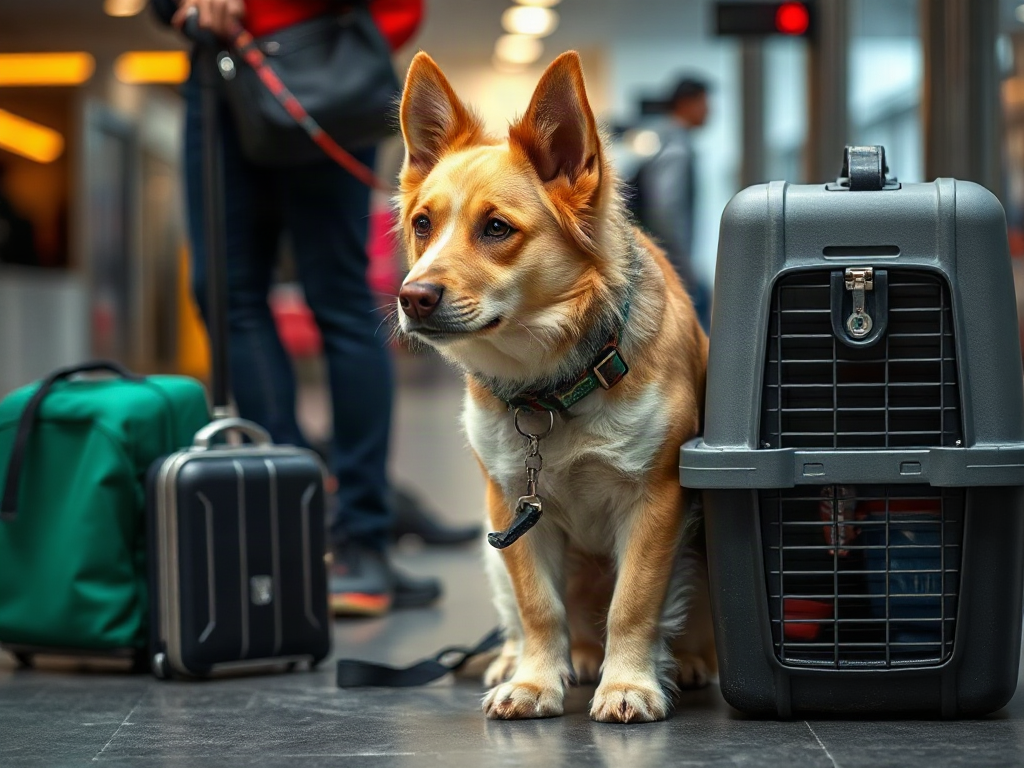
Mexico travel requirements for dogs and carriers vary by departure country, airline, route, and the dog’s condition at inspection. Travelers should verify Mexico’s current animal-health rules, carry rabies and veterinary records even when a health certificate is not required for their origin, and expect the dog and its bedding to be checked for parasites or contamination. The carrier must separately satisfy the airline’s size, ventilation, closure, and weight limits; government admission does not guarantee boarding. Confirm the return-country requirements before departure as well, because vaccination records, microchip details, forms, or arrival restrictions may be stricter than Mexico’s entry process.
Separate Mexico’s Entry Rules From Airline Rules
Three independent authorities can affect a dog’s trip to Mexico: the Mexican animal-health authority, the transportation provider, and the government controlling the return journey. Their requirements overlap, but they are not interchangeable. A dog may qualify for admission at the border yet be refused by an airline because its carrier is oversized, the route has an animal embargo, or the aircraft cannot accommodate pets.
Mexico’s federal animal-health authority, SENASICA, controls inspection and import conditions. Requirements may depend on where the dog begins its trip, whether the movement is personal or commercial, and the animal’s apparent health. Advice written specifically for dogs arriving from the United States or Canada should not automatically be applied to a departure from Europe, Central America, or another region. Travelers connecting through a third country must also consider whether transit rules apply there.
Airlines make a separate operational decision. Their policies determine whether a dog can travel in the cabin, as checked baggage where offered, or through a cargo service. Aircraft type, temperature restrictions, breed policies, destination station capabilities, and the combined weight of dog and carrier can all change the available option. Codeshare flights deserve special attention: the company selling the ticket may not operate the aircraft, and the operating carrier’s animal policy commonly governs the flight.
Return requirements can create the most expensive surprise. A traveler focused only on entering Mexico may later discover that the destination country requires a specific rabies record, microchip information, advance form, veterinary endorsement, or approved arrival route. For a round trip to the United States, review current federal rules and any state or territorial conditions before leaving. Other countries may require longer preparation.
Treat the rules as three files rather than one. Save the current Mexican entry instructions, written confirmation of the airline reservation and carrier allowance, and the return-country instructions. The practical value of this separation is accountability: if an agent questions the carrier, airline policy is relevant; if an inspector questions the dog’s health status, official import documentation matters. A broad article about Mexico travel requirements for dogs and carriers cannot replace route-specific confirmation close to departure.
Documents and Health Checks to Prepare
A compact document packet is useful even when a particular route does not require every record at the Mexican border. Carry the dog’s rabies vaccination certificate, recent veterinary information, microchip number if applicable, owner contact details, airline confirmation, and copies of any health certificate or import form required for the country of origin. Keep paper copies with the traveler rather than inside checked luggage, and store digital copies offline in case mobile service is unavailable.
Do not assume that a routine vaccination invoice is equivalent to a formal rabies certificate. A stronger record identifies the dog, vaccine product, administration date, validity period, veterinarian, and clinic. Names and identifying details should match across the booking and veterinary papers. If a record lists a microchip, scan the chip before travel and confirm that its number was transcribed correctly. A single incorrect digit can make an otherwise useful document difficult to connect to the animal.
Inspection is not solely a paperwork exercise. Mexican officials may assess whether a dog appears healthy and whether the carrier, bedding, or animal shows external parasites, fresh waste, or material that could present an animal-health concern. Groom the dog, inspect the coat and ears, wash reusable bedding, and clean the enclosure before departure. Do not conceal illness with sedatives or rely on a flea product applied at the last moment as a substitute for veterinary evaluation. A dog with coughing, diarrhea, skin lesions, visible parasites, or unusual lethargy should be assessed before travel.
Food creates another point of confusion. The amount, packaging, ingredients, and origin of animal-based food can affect whether it is permitted. Rather than packing an opened bulk bag, check SENASICA’s current traveler guidance and carry only an allowed quantity in its original, labeled packaging when permitted. Plan where an equivalent diet can be purchased in Mexico. Prescription diets require additional care because an abrupt substitution may cause digestive problems.
A common weak assumption is that a health certificate is universally required—or universally unnecessary. Both claims can be wrong when detached from the departure country and current official instructions. Ask the relevant veterinary authority or Mexican consular channel what applies to the exact origin and travel date. When a certificate is required, confirm its timing window, required statements, language expectations, and whether government endorsement is needed before scheduling the appointment. A standard wellness note may not satisfy an official certificate format.
Carrier Requirements for Cabin, Cargo, and Road Travel
The correct carrier is determined by the transportation method, not by the border alone. For cabin travel, the enclosure generally must fit completely beneath the assigned seat while allowing the dog to remain safely contained. Airlines publish their own dimensional and weight limits, and usable under-seat space can vary by aircraft and seat location. Measure the carrier when packed, including protruding wheels, pockets, handles, bedding, and flexible sides.
A soft-sided carrier can be practical in the cabin because it may compress slightly within an airline’s stated limits. That flexibility should not collapse ventilation panels onto the dog or let the animal push through the closure. Look for secure zippers, adequate airflow, a leak-resistant base, and enough structure to prevent the roof from resting on the dog. Attach identification without blocking ventilation. A collar or harness should not be tethered to the interior in a way that creates a strangulation risk.
Hard-sided kennels are commonly associated with checked-animal or cargo movement where those services are available. The airline may require a rigid shell, secure hardware, ventilation on specified sides, accessible handles, absorbent lining, food and water containers, and enough internal space for the dog to stand naturally, turn, and lie down. Requirements can be based on industry standards but still differ by carrier. Substituting clips, zip ties, or aftermarket fasteners without approval may lead to rejection at acceptance.
For example, a traveler might book a medium soft carrier based on a retailer’s “airline approved” label. At check-in, the bag exceeds the operating airline’s height limit when the dog is inside and cannot fit beneath the aircraft seat. The marketing label provides no waiver. The safer method is to obtain the operating carrier’s current dimensions, measure the loaded bag, and confirm that the dog fits without forcing its body into an unnatural posture.
Road entry removes airline dimensions from the equation but not containment and border-readiness concerns. Use a secure crate or crash-conscious vehicle restraint appropriate to the dog and vehicle, keep the inspection area accessible, and avoid packing household goods around the enclosure so tightly that officials cannot examine it. Never leave a dog unattended in a hot vehicle while completing border formalities. Review Mexico travel requirements for dogs and carriers again if the route changes from air to land, because the inspection location and transportation constraints will differ.
A Departure-to-Return Verification Plan
A reliable plan works backward from the return date, not merely from departure. Requirements involving vaccination validity, microchip sequencing, veterinary appointments, or advance forms may be impossible to correct at the airport. Begin with official government sources for Mexico, the origin country, any transit country, and the final destination; then compare those instructions with the operating airline’s rules.
Use this compact sequence to identify conflicts before money and travel time are committed:
- Confirm eligibility: Check current import, transit, and return conditions for the dog’s origin, travel history, age, health, and purpose of movement.
- Confirm transportation: Obtain the operating carrier’s pet reservation, route availability, seasonal restrictions, enclosure limits, fees, and check-in location.
- Verify the records: Match the dog’s name or description, rabies information, microchip number, owner details, and certificate dates.
- Test the loaded carrier: Weigh and measure it with bedding and supplies, inspect every closure, and allow the dog to spend calm practice periods inside.
- Recheck near departure: Revisit official pages and ask for written clarification if current wording conflicts with earlier instructions.
Carrier training should begin before the final packing day. Feed treats or meals near the open enclosure, progress to short closed-door periods, and practice carrying or rolling it without rushing. Signs of workable preparation include the dog entering voluntarily, settling after movement, and remaining comfortable with normal ventilation. Persistent frantic escape attempts, heavy stress panting in a cool environment, self-injury, or inability to turn and rest indicate that the setup or acclimation plan needs reassessment.
Discuss motion sickness, anxiety, respiratory disease, age-related limitations, and medication with the dog’s veterinarian. Sedation is not a routine solution for airline travel and may introduce medical or acceptance concerns. The veterinarian can evaluate the individual animal, while the airline can explain its medication documentation policy; neither source replaces the other.
Build a disruption plan as well. Know who can collect the dog if the animal is refused, where a larger compliant enclosure could be obtained, and which nearby veterinary clinic can update eligible paperwork if timing allows. Avoid tight international connections because pet acceptance, inspection, relief, and terminal transfers take time. Before leaving home, photograph the dog, carrier, labels, and documents. That record does not create compliance, but it can help identify possessions and explain the prepared setup during a disruption.
Frequently Asked Questions
Does Mexico require a health certificate for every dog?
Not necessarily. The applicable rule can depend on the departure country and current SENASICA instructions. Verify the exact route before arranging paperwork, and do not apply U.S.- or Canada-specific guidance to another origin.
Should I carry my dog’s rabies certificate?
Yes. A clear rabies certificate is useful for airline questions, veterinary care, and return-country compliance even when it is not requested during Mexican entry inspection.
Does an “airline approved” label make a carrier acceptable?
No. Airlines set route-, aircraft-, and service-specific limits. Compare the loaded carrier’s dimensions, construction, ventilation, and weight with the operating airline’s current policy.
Can dog food be taken into Mexico?
Permission can depend on ingredients, origin, quantity, and packaging. Check current SENASICA traveler guidance and avoid assuming that an opened or homemade product will be admitted.
What should I check before returning home from Mexico?
Review the destination country’s dog-import rules before the trip begins. Confirm rabies documentation, microchip or form requirements, travel-history restrictions, airline acceptance, and any state or local conditions.
Further Reading
Authoritative Sources
- SENASICA
gob.mxMexico’s federal animal-health authority publishes current traveler and pet-entry information
- USDA APHIS Pet Travel
aphis.usda.govThis official portal helps U.S.-based travelers check destination requirements and prepare applicable veterinary documents
- CDC Bringing a Dog Into the United States
cdc.govThe CDC explains current federal conditions for dogs entering or returning to the United States
- IATA Traveler’s Pet Corner
iata.orgIATA provides transportation context for pet containers while directing travelers to confirm requirements with their airline
Conclusion
Successful entry depends on matching the dog, route, paperwork, and enclosure to separate government and transportation rules. Check SENASICA for the origin-specific admission conditions, then obtain the operating airline’s written carrier limits rather than trusting a product label or ticket seller’s general advice. Keep veterinary and rabies records accessible, present a clean carrier and healthy animal for inspection, and verify restrictions on food and bedding.
The return plan deserves equal priority. Review destination-country requirements before departure, resolve microchip or vaccination timing issues early, and recheck official sources near the travel date. If the route, airline, connection country, or method of transportation changes, repeat the verification rather than assuming the original plan remains valid.