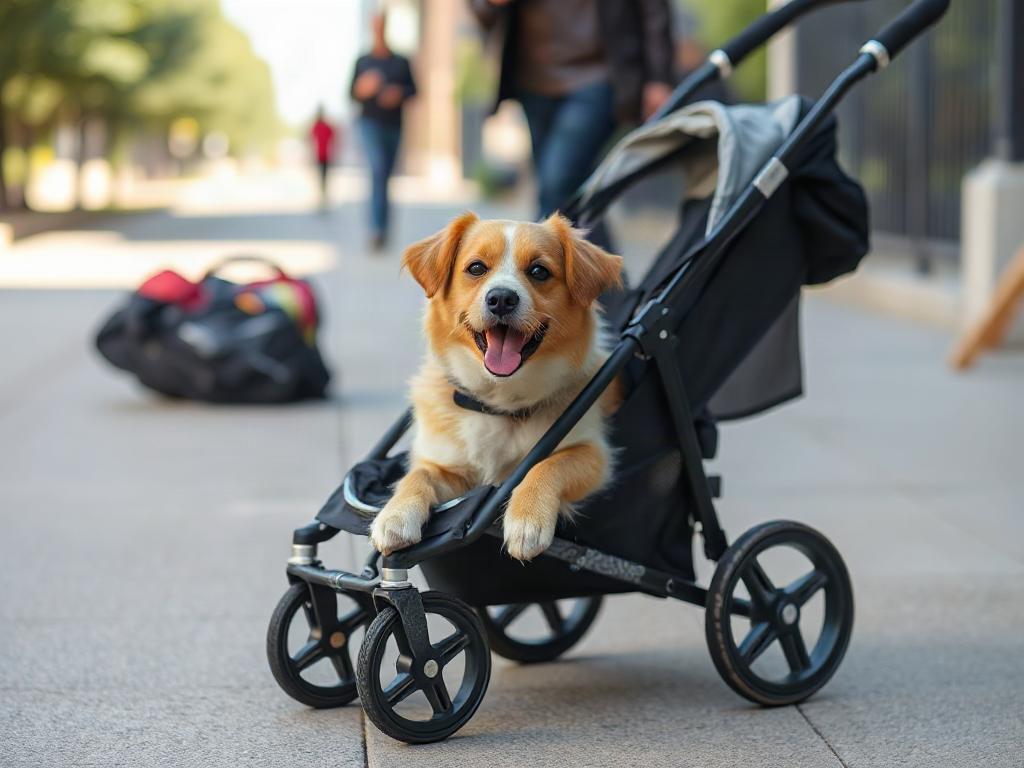
Dog strollers under fifty dollars usually trade carrying capacity, wheel quality, frame rigidity, and long-term durability for a lower purchase price. They can suit a small, calm dog on smooth sidewalks, but listed weight limits do not guarantee adequate cabin space or stable handling. Check the interior dimensions, wheel attachment points, brake engagement, folding latch, ventilation panels, and tether before buying. Small plastic wheels may vibrate or bind on cracked pavement, while light frames can become unstable when bags hang from the handle. Choose one only if the dog fits comfortably and the intended route matches the stroller’s modest construction.
What a Sub-$50 Stroller Can Realistically Handle
A stroller below fifty dollars is generally built for limited-duty transport rather than repeated use over demanding surfaces. The strongest use case is a small dog taking short rides across level sidewalks, indoor shopping areas where pets are permitted, paved event grounds, or the distance between a parking space and a destination. Light tubing, compact wheels, simple hinges, and thin fabric help manufacturers reach the price point, but those choices narrow the conditions in which the stroller performs comfortably.
Surface quality changes the experience more than many buyers expect. A model that rolls acceptably across a store floor may rattle on sidewalk joints, stop abruptly at a raised edge, or require extra effort on rough asphalt. Small wheels meet obstacles at a steeper angle than larger wheels, so cracks and gravel exert more stopping force. A nervous or mobility-limited passenger can be unsettled by that vibration even when the stroller remains structurally intact.
Short, occasional outings place less stress on wheel axles, folding joints, stitching, and canopy zippers than daily multi-mile walks. For example, carrying a 10-pound senior dog through a paved outdoor market twice a month is a much more realistic assignment than pushing a dog close to the published limit over uneven neighborhood paths every morning. The price alone does not make the first scenario unsafe or the second impossible, but wear and handling problems are more likely as load, distance, and surface difficulty increase together.
Weather protection is similarly modest. A canopy can provide shade and reduce visual stimulation, yet mesh-sided cabins are not sealed against wind-driven rain or cold air. Thin floors may also transmit heat from pavement. Owners should treat the stroller as a mobility aid, not as a climate-controlled enclosure or vehicle restraint.
A common mistake is assuming that a low-cost model is merely a premium stroller without cosmetic features. The differences often affect steering precision, wheel diameter, bearing smoothness, frame stiffness, brake design, padding, replacement-part availability, and quality consistency. Readers comparing Dog strollers under fifty dollars: key tradeoffs should first define the route, frequency, dog size, and storage limits. If the route includes gravel, steep slopes, curbs, or long distances, saving longer for stronger running gear may be more economical than replacing an unsuitable stroller.
Capacity Labels Versus a Dog’s Actual Fit
A weight rating describes only one boundary; it does not confirm that the cabin accommodates the dog’s body. A compact stroller might claim a capacity above the dog’s weight while offering too little floor length for the dog to turn around or lie naturally. Measure the dog from the front of the chest to the base of the tail, then note shoulder height and the width occupied while lying down. Compare those figures with the usable interior—not the stroller’s overall exterior dimensions.
Leave enough room for position changes without creating a cabin so oversized that the dog slides around at every turn. An arthritic dog may need to lie with a leg extended, while a stocky dog may require more width than a taller dog of the same weight. Two dogs add another complication: their combined weight may fall below the limit, but crowding can produce overheating, tangled tethers, or conflict when one tries to reposition.
Weight distribution also affects handling. A dog sitting upright near the rear or leaning against one side shifts the center of mass away from the stroller’s intended position. A light frame may then feel twitchy during a turn or lift a wheel on a sloped driveway. Test stability with the dog in its usual posture rather than relying on a bag or other dead weight, because a live passenger moves unpredictably.
The floor deserves close inspection. A removable pad is convenient, but it cannot compensate for a flexible base that sags between frame supports. Sagging reduces usable space and may leave a senior dog standing on an uneven surface. If the base panel bends easily by hand, verify that it sits on adequate supports and remains level under the dog’s weight. Added homemade boards can change folding clearance and create hard edges, so modifications should not obstruct latches or press against fabric.
Do not select a model with a capacity exactly matching the dog’s weight and assume the number provides a comfort margin. Published limits may address structural loading under expected conditions, not cabin comfort, braking performance on a slope, or the forces produced by hitting a crack. A smaller dog with ample interior room is the better budget-stroller candidate. When fit is marginal, a correctly sized carrier, wagon, or higher-capacity stroller may be the more practical alternative.
Wheels, Brakes, and Frame Stability
Wheel construction is often the most noticeable compromise at this price. Small hard-plastic wheels keep cost and folded bulk down, but they transmit vibration and can struggle when debris wedges near an axle. Before committing to a model, look closely at how each wheel attaches, whether front wheels swivel freely, and whether the rear wheels show side-to-side play. Photos should reveal the mechanism, while customer-supplied images may expose proportions that polished product images obscure.
Swiveling front wheels make tight indoor turns easier, yet loose swivel assemblies can wobble when pushed quickly. Fixed or lockable wheels track more predictably over uneven ground, but that feature is uncommon on the least expensive models. A practical test is to push the empty stroller in a straight line, then repeat with the dog aboard. Pulling to one side, repetitive wheel flutter, grinding sounds, or a frame that twists under normal steering are signs that the stroller should be adjusted, exchanged, or returned.
Brakes on inexpensive strollers are usually parking devices, not speed-control brakes. Engage them whenever the stroller is stationary, then apply gentle forward and backward pressure before letting go of the handle. Both rear sides should resist movement. Never depend on a parking brake to hold a loaded stroller unattended on a slope, and do not assume that pressing a pedal halfway has locked it.
Handle height and frame geometry matter as well. A low fixed handle can force a tall user to shorten each stride and kick the rear axle. Hanging a purse, shopping bag, or leash from the handle may feel convenient, but weight behind the rear axle can tip the stroller backward—especially when the dog moves toward the rear. Store only light items in a low basket if the manufacturer permits it, and keep the load within any stated basket limit.
During inspection, open the frame fully and confirm that its main locks engage without forcing parts into place. Uneven legs, a folding joint that does not seat, or a handle with unusual movement should not be dismissed as normal budget construction. The useful distinction is between basic materials and faulty assembly: modest wheels may be acceptable on smooth routes, while an unreliable latch or brake is a reason not to use the stroller.
Fabric, Closures, Folding Parts, and Useful Extras
Cabin materials determine containment and cleanup, not just appearance. Mesh should be fine enough to discourage a dog from pushing its nose or claws through, with seams that remain flat and fully stitched around openings. Inspect the lower corners, zipper ends, tether anchor, and places where fabric wraps around tubing. Those areas receive concentrated force when a dog shifts, scratches, or leans against the enclosure.
Zippers are a frequent point of frustration because curved canopy tracks place sideways pressure on inexpensive sliders. Operate every closure several times with the cabin empty, then again after the dog is inside and the fabric is under normal tension. Teeth that separate behind the slider, tracks that require two hands, and gaps a paw can widen indicate poor containment. A calm dog may tolerate a partially open canopy, but an excitable dog needs a secure closure rather than owner supervision as the sole barrier.
An internal tether can discourage jumping, although it should attach to a well-fitted harness rather than a neck collar. Keep it short enough to prevent the dog from reaching a wheel or exiting over the side, but long enough to sit and lie down. A tether is not proof that its anchor can withstand a determined lunge, and it does not make the stroller appropriate as a car restraint. Fold and secure the stroller separately in a vehicle while the dog travels in a suitable travel setup.
Convenience features should be judged by their effect on the main structure. Cup holders and trays add little value if the frame flexes, the cabin is cramped, or the brake is awkward to operate. A removable washable liner, accessible low basket, and canopy that stays in position usually provide more day-to-day value. Check whether the basket remains reachable when the dog is aboard and whether stored items can rub against the wheels.
Folding performance matters for owners using a small trunk or carrying the stroller upstairs. Verify the folded dimensions rather than trusting labels such as compact, and note whether wheels must be removed. Practice the fold without the dog nearby so fingers, paws, fabric, and the tether stay clear of hinge points. The cheapest acceptable model is one whose basic containment, fit, and operating parts work consistently; extra accessories should never offset a questionable latch or damaged seam.
A Prepurchase and First-Use Checklist
A disciplined inspection prevents the low price from becoming the only decision criterion. Return policies matter because fit and steering cannot be confirmed from a listing. Before ordering, retain the interior measurements, stated load limits, folded size, wheel diameter if supplied, and assembly instructions. Avoid treating sparse specifications as proof that dimensions do not matter; missing information is a reason to ask the seller or choose a better-documented model.
Use this compact priority order:
- Confirm fit: compare usable cabin length, width, and height with the dog’s resting and sitting dimensions.
- Match the route: reserve small-wheel models for smooth, mostly level surfaces.
- Inspect operating parts: check frame locks, wheel retention, brakes, zippers, seams, and tether anchoring.
- Load conservatively: include the dog, liner, supplies, and any basket contents when considering total load.
- Run a controlled trial: begin indoors, then use a short level route before attempting a longer outing.
Introduce the cabin while the stroller is parked with its brakes set. Let the dog enter without forcing it, reward calm settling, close the canopy briefly, and then move a short distance at walking speed. The process is working when the dog can change position comfortably, the floor stays level, all wheels track predictably, and the frame remains quiet and rigid enough for the route. Panting unrelated to temperature, repeated escape attempts, inability to lie down, wheel wobble, loosening fasteners, or a brake that slips are reasons to stop.
Recheck fasteners and wheel attachments after the first few outings because initial use can reveal assembly errors. Clean hair and grit from axle areas, dry fabric before folding, and inspect stitching where the cabin joins the frame. Do not lubricate parts unless the product instructions allow it; some lubricants attract grit or affect plastic components.
The sensible cutoff is not simply fifty dollars. It is the point where the available products cannot meet the dog’s size, temperament, route, and frequency of use without relying on workarounds. A calm toy-sized dog on smooth flooring may be well served by a basic model. A heavier dog, frequent user, forceful jumper, or owner navigating broken pavement should treat stronger wheels, a stiffer frame, and more dependable closures as functional requirements. That distinction anchors a useful comparison of Dog strollers under fifty dollars: key tradeoffs without mistaking the lowest checkout price for the lowest long-term cost.
Frequently Asked Questions
Are dog strollers under fifty dollars safe?
They may be suitable for a small, calm dog on smooth surfaces if the cabin fits, the frame locks fully, and the brakes, wheels, seams, zipper, and tether pass inspection before each outing.
Can I use a cheap dog stroller on gravel?
Small hard wheels commonly sink, vibrate, or stop on loose gravel. Choose a model intended for uneven terrain or use a smoother route rather than forcing a basic stroller beyond its design.
Should I trust the advertised weight limit?
Treat it as one screening measure, not proof of fit or stability. Check interior dimensions, the dog’s posture, total carried load, floor support, and handling with the dog aboard.
Can the stroller tether attach to my dog’s collar?
Attach it to a well-fitted harness instead. A collar can concentrate force on the neck if the dog jumps, while the tether should be adjusted to prevent escape without restricting normal positioning.
When should I spend more than fifty dollars?
Increase the budget when the dog is near the capacity limit, the route is rough or hilly, outings are frequent, or dependable wheels, stronger closures, greater cabin space, and better frame rigidity are necessary.
Conclusion
A low purchase price makes sense only when the stroller’s limits align with the dog and the route. Start with measured cabin fit, then evaluate wheel behavior, frame locks, parking brakes, floor support, mesh, zipper operation, and tether placement. Give more weight to these functional details than to trays, cup holders, or decorative padding.
Test the assembled stroller indoors and on a short, level path while the return window remains open. Stable tracking, comfortable positioning, secure closures, and predictable braking support continued use; wobble, sagging, loosening parts, crowding, or persistent distress call for an exchange or a different design. If the dog is heavier, highly active, or regularly transported over broken pavement, a sturdier model is not an indulgence—it is a better match for the required workload.