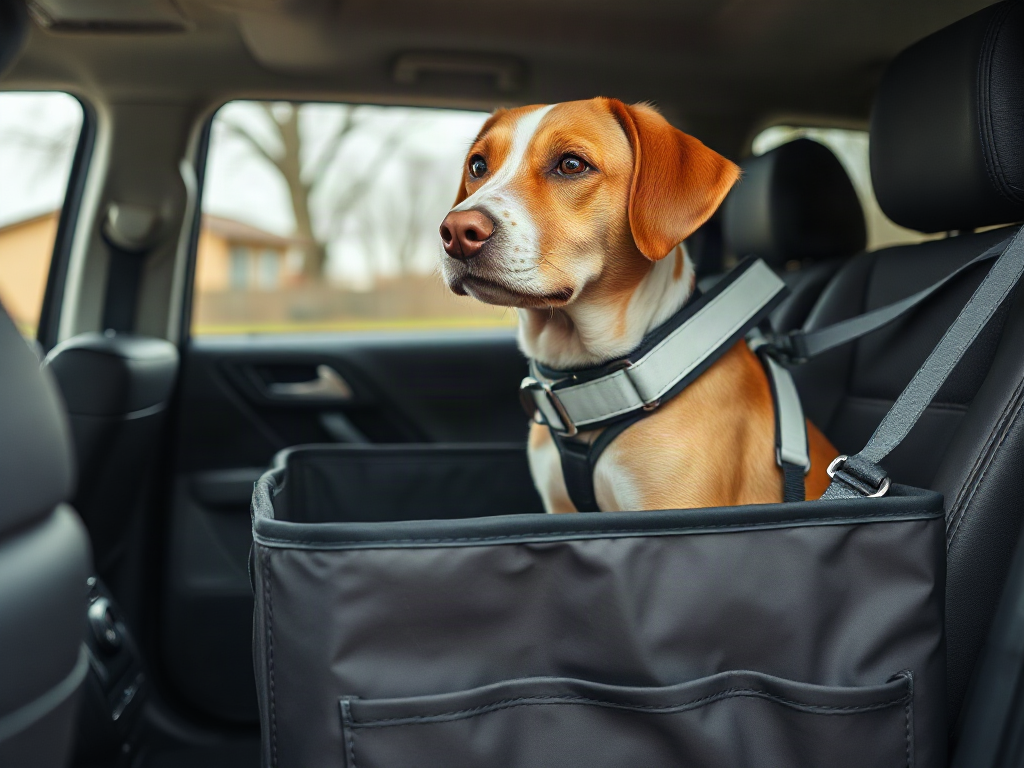
Dog car seats for medium-sized pets should provide enough interior space for a natural sitting or lying posture, secure attachment to the vehicle seat, and a short tether connected to a well-fitted body harness rather than a collar. Check the product’s weight limit, usable interior dimensions, sidewall support, anchor routing, and compatibility with the intended seating position. A raised booster may suit a calm dog that remains seated, while an enclosed carrier or secured crate may better contain an active or anxious passenger. Reject any setup that slides, tips, compresses the dog’s body, or allows the dog to reach the driver.
Match the Seat to the Dog’s Body and Riding Style
A medium-size label is not a reliable fit measurement. Dogs within the same general weight range can have very different body lengths, chest depths, shoulder widths, and sitting heights. A compact, stocky dog may need more floor width than a taller dog of similar weight, while a long-backed dog may need extra usable length to lie down without curling tightly.
Measure the dog in the positions it commonly uses in the vehicle. Record the length from the chest to the base of the tail while the dog is standing, the width across the shoulders, and the height from the floor to the top of the shoulders while sitting. Compare those figures with the seat’s interior dimensions rather than its outside footprint. Thick bolsters and padded walls can reduce the usable area substantially.
The seat should allow the dog to sit upright without being forced against a wall, turn around without climbing over the edge, and lie with the spine in a comfortable position. Oversizing has drawbacks, however. A very large compartment may allow excessive movement during sudden braking, particularly when the tether is long. The practical goal is supported space, not unrestricted space.
Riding behavior matters as much as body size. A calm dog that settles promptly may do well in a structured booster with supportive sides. A dog that repeatedly changes position, paws at windows, or attempts to climb forward needs greater containment. A soft, low-sided bed may look comfortable but does little to manage that movement. An enclosed design or properly secured crate may be the more workable choice.
Consider a 35-pound dog that sits quietly for short neighborhood drives but paces on highways. Choosing solely from the dog’s weight could lead to a shallow booster that works at low speed yet permits repeated stepping over the edge on a longer trip. Observing the dog on a stationary trial and a brief local drive reveals whether the design controls movement without crowding the body.
Weight limits still matter because they relate to the product’s structure and hardware, but they do not confirm that the interior fits. Stay within the manufacturer’s stated limit and verify physical fit separately. Readers comparing Dog car seats for medium-sized pets should treat weight, dimensions, posture, and behavior as four distinct checks rather than interchangeable specifications.
Evaluate the Restraint System and Vehicle Attachment
The restraint path determines whether a seat remains stable when the vehicle turns, stops, or travels over uneven pavement. Some models route the vehicle belt through reinforced loops, while others use straps around the seatback, head restraint, or lower anchorage area. Follow the product and vehicle instructions exactly; an improvised routing may place force on fabric, buckles, or vehicle components not designed for it.
After installation, press the seat from the front, sides, and upper edge. Minor cushion compression is expected, but the base should not skate across the upholstery or rotate easily. Recheck attachment straps after the dog enters because its weight can compress the vehicle cushion and introduce slack. A protective mat can manage dirt, but a slick cover may worsen movement unless the seat has an effective non-slip base and properly tightened anchors.
The dog-facing tether is a separate part of the system. It should connect to a correctly fitted body harness, not a neck collar. A collar connection can concentrate force on the neck during a sharp stop. The tether should be short enough to prevent the dog from leaving the seat or reaching the front seating area, yet long enough to permit a supported sit and lie-down position. More tether length is not automatically more comfortable; it increases the distance the dog can travel before restraint.
Inspect the attachment point rather than judging only the visible clip. A substantial metal clip attached to weak stitching or a lightly reinforced fabric tab does not create a strong system. Look for clear manufacturer instructions, reinforced connection areas, intact webbing, secure buckles, and hardware that closes completely. Claims such as “car ready” or “secure” are not substitutes for an explained installation method. If a maker publishes testing information, read what was tested, in which configuration, and whether the statement applies to the exact model and size under consideration.
Never assume that fastening the seat and fastening the dog are the same step. A booster can remain attached to the bench while an overly long tether lets the passenger climb out. Conversely, a dog can be clipped into a harness while the entire seat slides. Both attachment layers must work together.
Signs of failure include loosening straps, a base that rotates on corners, bent clips, torn anchor stitching, or a dog that can place both front feet outside the compartment. Stop using damaged hardware rather than tying knots or adding unapproved connectors. Guidance about Dog car seats for medium-sized pets should also be checked against the instructions for the specific seat, harness, and vehicle seating position.
Choose Between Booster Seats, Enclosed Seats, and Crates
Booster seats, enclosed car seats, and travel crates solve different problems. A booster raises the dog and creates a defined padded area, but it generally relies on the harness tether to limit movement. It tends to suit a dog that remains settled and does not chew straps or climb over bolsters. Raising a dog for a window view may reduce restlessness for some passengers, but it can stimulate others to bark, lunge, or remain standing.
An enclosed or high-sided seat provides more boundary control. Mesh or structured walls can discourage roaming while preserving visibility and airflow. This format may be useful for a smaller-framed medium dog that turns frequently or needs a den-like space. Its limitations include reduced usable room, warmer interior conditions, and more difficult entry for a dog with limited mobility. Flexible mesh should not be mistaken for rigid impact protection.
A secured travel crate offers fuller containment and separates the dog from doors, controls, and other passengers. It may be preferable for a dog that chews tethers, repeatedly escapes open seats, or cannot settle with unrestricted window views. The tradeoffs are a larger vehicle footprint and the need for a crate that fits both the dog and the available cargo or seating area. A crate should not be left loose in a rear cargo space merely because its base appears heavy.
Vehicle layout narrows the choice. A broad booster may fit a flat rear bench but sit unevenly across deeply sculpted cushions. Head-restraint straps cannot be used as directed in a position without a compatible head restraint. Cargo areas differ in anchor availability, climate control, and separation from passengers. Front-seat placement is generally a poor default because it places the dog near driver controls and may expose it to frontal airbag hazards; consult the vehicle manual for seating and airbag information.
For example, a 42-pound spaniel-type dog that sleeps through most drives may be comfortable in a wide, low booster secured on the rear bench. A similarly weighted young dog that circles, mouths webbing, and tries to follow the driver is a poor candidate for the same open design. Greater containment is justified even though both animals fit the same marketing size category.
Comfort features should follow, not lead, the decision. Removable liners, washable covers, firm base panels, and ventilation improve daily use, but they cannot compensate for inadequate restraint. Thick cushioning may also hide a flexible base that folds under the dog’s weight. Choose the containment format first, confirm the attachment method second, and compare convenience features only among models that satisfy those requirements.
Use a 7-Point Pre-Drive Fit Check
A stationary installation check exposes most fit and usability problems before the vehicle moves. Install the seat in the intended position using its supplied instructions, then place the harnessed dog inside while the vehicle is parked. Keep a hand on the dog during the first trial and do not close it inside an unfamiliar enclosed model without supervision.
- Confirm the limit: Verify that the dog’s current weight falls within the stated range for the exact model and size.
- Check usable space: Make sure the dog can sit, turn, and lie down without compressed shoulders, a sharply curved back, or pressure from a closing panel.
- Test the base: Push from several directions and tighten the installation if the seat slides, twists, or tips.
- Inspect every connection: Check belt routing, straps, buckles, stitching, clips, and the harness attachment point for wear or incomplete closure.
- Set tether length: Allow normal posture while preventing the dog from crossing the sidewall, contacting a door control, or moving toward the driver.
- Assess airflow and contact: Ensure vents remain open and that no hard edge, buckle, or folded base presses into the dog.
- Run a short trial: Drive locally with another adult observing when possible, then stop and check for loosened straps, panting, persistent standing, escape attempts, or motion-related distress.
A successful setup remains stable and lets the dog settle into more than one natural posture without reaching beyond the compartment. Mild investigation during a first use is different from continuous pacing, frantic digging, chewing at the tether, or repeated loss of balance. Those behaviors can indicate poor fit, excessive stimulation, inadequate containment, or discomfort. Do not respond simply by tightening the tether until the dog cannot move; reassess the seat style and interior space.
Conditioning should happen in small stages. Let the dog investigate the installed seat while parked, reward calm entry, fasten the harness connection briefly, and then attempt a short drive. A dog that tolerates a seat in the driveway may react differently once vibration, turns, and road noise begin. Extend trip length only after the dog can remain composed and the hardware stays tight.
Reinspect the system before every trip and more closely after washing, storage, or adjustment by another person. Fabric can conceal fraying near seams, and removable base panels may be replaced incorrectly. Growth, weight change, a thicker harness, or reduced mobility can also alter fit. A setup that worked months ago should not be assumed to remain suitable without another posture and stability check.
If the dog repeatedly defeats the same arrangement, the answer may be a different containment category rather than another accessory. Moving from an open booster to an enclosed option can be more sensible than adding extra straps that the manufacturer did not approve. Use the complete Dog car seats for medium-sized pets evaluation—body fit, behavior, attachment, and vehicle compatibility—to decide what to try next.
Frequently Asked Questions
What size car seat does a medium-sized dog need?
Use the dog’s weight to confirm the product limit, then compare sitting height, shoulder width, and body length with the seat’s usable interior. The dog should be able to sit, turn, and lie down without spilling over the sides.
Should a dog car-seat tether attach to a collar or harness?
Attach it to a properly fitted body harness, unless the product instructions specify another approved arrangement. A collar can concentrate stopping force on the neck and should not serve as the vehicle restraint point.
Can a medium-sized dog ride in the front passenger seat?
The rear seating area is generally the more appropriate default because front placement can interfere with the driver and introduce airbag concerns. Check the vehicle manual for instructions specific to passenger seating and airbags.
How tight should the car-seat tether be?
It should permit comfortable sitting and lying down while preventing the dog from climbing out, reaching the driver, or contacting nearby controls. Recheck it after the dog settles because cushion compression may change the effective length.
When is a crate better than a booster seat?
A secured crate may be more suitable when the dog chews tethers, escapes open seats, paces continuously, or needs fuller visual and physical containment. The crate must fit the dog, the vehicle, and the available secure attachment arrangement.
Conclusion
A useful car seat fits the individual dog and the specific vehicle rather than merely matching a medium-size label. Measure the dog’s natural postures, examine usable interior room, and choose a containment style that reflects actual riding behavior. Install the product only as directed, connect the dog through a fitted body harness, and test both the seat’s stability and the tether’s reach.
Before the next longer drive, complete the stationary seven-point check and follow it with a brief local trial. Sliding, tipping, damaged stitching, repeated escape attempts, restricted posture, or persistent distress all justify stopping and reassessing the arrangement. If adjustments cannot correct the problem within the approved configuration, move to a better-fitting seat or a more enclosed, securable option instead of improvising extra straps or connectors.
Further Reading
Authoritative Sources
- Best Dog Booster & Car Seats
amazon.comElevated Dog Car Seat for Small/Medium Dogs up to 35 lbs, rest Console seat with washable fluffy cushion, pillow & tether … for Medium Sized Dog, Storage ...
- Dog Car Seats & Booster Seats
chewy.comPetsfit Medium Dog Car Booster Seat, Black · Rated 4.7 out of 5 stars.4.7 279 Reviews. $61.99 Chewy Price ; Frisco Travel Dog Bucket Booster Seat, Gray/Teal, ...
- PETSFIT Booster Dog Car Seats | with safety belt ...
petsfit.comCrash-tested dog booster car seat with safety belt, reversible liner, Dog Booster Car Seat for Medium Dogs From $55.97
- Best Dog Car Seats, Carriers, and Restraints, Tested
caranddriver.comPets can be at risk if unrestrained in a moving car. We connected with the Center for Pet Safety to learn about their testing of pet car seats.