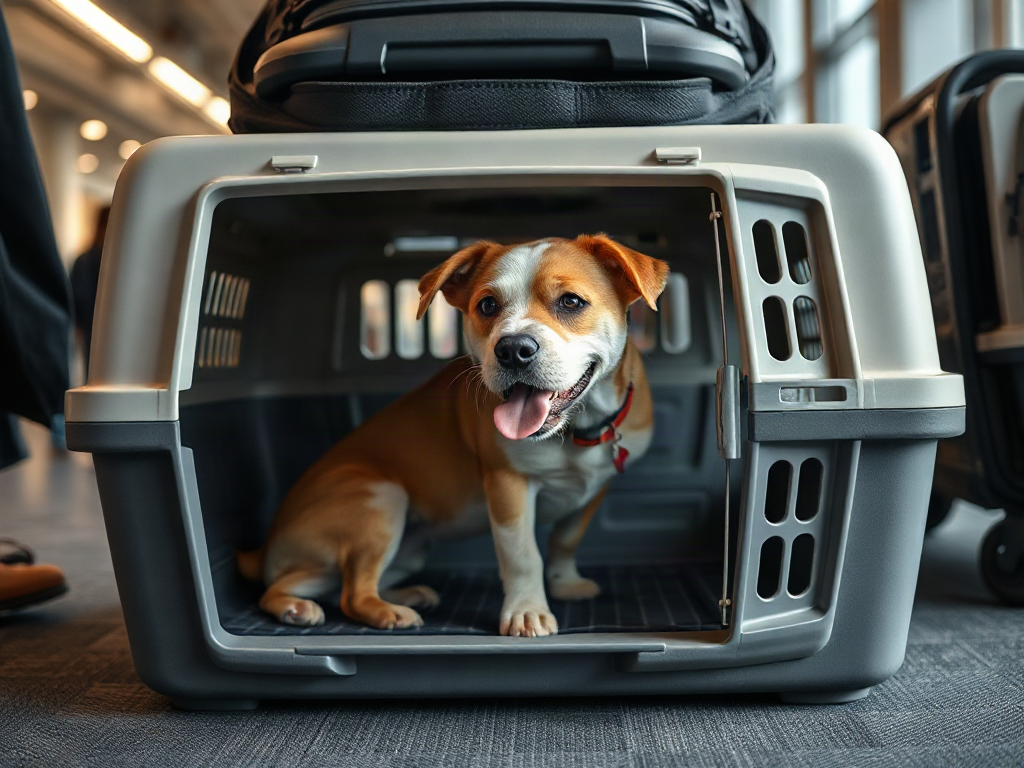
Travel pet crate features for international flights should satisfy the operating airline’s rules while protecting the animal through loading, transfers, and arrival handling. Prioritize a rigid shell, secure metal fasteners, ventilation on the required sides, a leak-resistant floor, and enough interior space for the pet to stand naturally, turn around, and lie down. The door must resist accidental opening without requiring a key or tool, while food and water dishes should be accessible from outside. Confirm every detail with the airline before departure because route, aircraft, pet species, and destination requirements can change whether a particular crate is accepted.
Crate Size and Structural Strength
An international flight crate must provide usable interior space without becoming unnecessarily large or difficult to handle. Airlines commonly assess whether the animal can stand without its head or ears pressing against the roof, turn around normally, and lie in a natural position. Measure the pet while standing rather than relying on weight, breed, or the crate manufacturer’s size label. Two dogs of equal weight can require different crates because leg length, body length, and ear position affect clearance.
Measure from the nose to the base of the tail, from the floor to the top of the head or erect ears, and across the widest part of the body. Leg measurements also matter because the animal needs room to reposition rather than remain fixed in one posture. Add only the clearance needed for normal movement. Buying the largest available model may seem safer, but excessive empty space increases the crate’s exterior dimensions, weight, and transport cost. It may also make the unit harder to accommodate on a particular aircraft.
A rigid shell is generally the practical choice when a pet travels as checked baggage or cargo. Hard plastic is widely used because it combines manageable weight with impact resistance, while metal or reinforced wooden enclosures may suit certain large, strong, or unusual animals. Soft-sided cabin bags serve a different purpose and should not be treated as substitutes for rigid cargo crates. A label such as “airline approved” is not proof that every carrier, route, or aircraft will accept the product.
Inspect the shell under light pressure. The roof, corners, and door frame should not buckle easily, and the upper and lower halves should meet evenly without pronounced gaps. Cracks around handle mounts, ventilation openings, and bolt holes are especially concerning because stress concentrates in those areas during lifting. Wheels should normally be removed or securely disabled before acceptance so the crate cannot roll on a belt or loading surface.
Breed and body shape can alter the decision. A broad-chested dog may need extra width even if its height fits, while a cat with upright ears may need more roof clearance than its curled resting posture suggests. Some airlines and destinations impose additional restrictions on short-nosed breeds or particular species. Use the sizing principles in this discussion of Travel pet crate features for international flights, then obtain route-specific confirmation from the operating airline rather than assuming a connecting carrier follows the same policy.
Door Security, Hardware, and Handling Features
The door and its surrounding hardware determine whether a structurally sound crate remains closed during handling. A strong door is usually metal, sits squarely in its frame, and engages at both the top and bottom when latched. Test it by closing the latch, pressing outward from several points, and gently moving the crate. The locking pins should stay fully seated rather than slipping free when the frame flexes.
A secure latch must still be operable without a key, padlock, or special tool. Personnel may need emergency access to the animal, so adding a conventional padlock can create an operational problem rather than improve safety. Cable ties may be permitted through designated door corners after inspection, but they should not replace a defective latch or block authorized access. Airline instructions take priority because tie placement and acceptance practices can vary.
Metal nuts and bolts are preferable where the top and bottom shell sections join. Plastic clips alone may look convenient at home but can release if the crate twists or receives a side impact. Check that every factory fastener position is occupied, tightened, and free of sharp projections inside the enclosure. Replacing only a few clips with bolts leaves weak points around the remaining perimeter.
Handles require similar scrutiny. A molded grip or fixed lifting point should allow handlers to move the unit without placing fingers near the animal. The crate should not depend on a loose shoulder strap, retractable handle, or removable accessory for safe lifting. Exterior rims or spacers can help preserve airflow when the enclosure rests near other cargo, but they must be integral, firmly attached, and free of snagging edges.
Door openings present another overlooked risk: a paw or muzzle may reach through widely spaced bars. Airline or species-specific rules may call for additional protective mesh, especially for small animals. Any mesh must be securely fixed, smooth on the inside, and unable to interfere with the latch. Improvised wire with cut ends can injure the pet or fail inspection.
Perform a hardware check several days before travel, not at the terminal. Assemble the exact crate, place the pet inside briefly, close every fastener, and watch for bowing, rattling, or attempts to manipulate the latch. A successful test means the door stays aligned and the pet cannot create a gap. Persistent flex, loose bolts, or chewing around the frame indicates that repair or replacement is needed before the flight.
Ventilation, Flooring, Food, and Water
Ventilation must remain effective when the crate is loaded beside other items, not merely when it sits in an open room. Openings are generally expected on multiple sides, with international movements often requiring ventilation on four sides. Exact requirements depend on the airline and transport arrangement. Openings should be high enough that bedding, the pet’s body, or an attached bowl cannot block them, and small enough to limit escape or protruding paws.
More holes are not automatically better. Removing material or drilling unauthorized openings can weaken the shell, create sharp edges, and cause rejection if the modification does not meet the carrier’s standard. Look for factory-designed ventilation backed by a firm structure. Exterior spacing rims are useful because they help keep openings clear when the crate is positioned near a wall or another enclosure.
The floor should be solid, leak-resistant, and free of cracks. Place a thin layer of absorbent material inside to manage minor spills or accidents, but avoid loose straw, deep bedding, or materials restricted by the destination’s biosecurity rules. A thick bed can reduce measured headroom and bunch against the door. The pet should have secure footing without loose fabric that can wrap around a leg.
Food and water containers should attach firmly inside the door and be refillable from outside. This arrangement lets authorized personnel provide water without opening the enclosure. Test filled dishes at home: a bowl that tilts when the door moves or detaches under light pressure is unsuitable. Funnel-style refill access may be useful if accepted by the airline, but protruding parts must not create handling hazards.
Attach a small quantity of food outside the crate only when directed by the carrier, along with clear feeding instructions. Do not leave loose food bags, toys, heavy dishes, or unsecured bottles inside. A familiar thin pad may aid comfort if permitted, but minimizing loose objects reduces choking, entanglement, and spill risks. Sedation is a separate veterinary matter and should never be treated as a substitute for acclimation or proper crate design.
Live-animal labels, orientation arrows, contact details, and document pouches need to remain readable and firmly attached. Keep ventilation holes clear when placing labels. A document envelope covering an entire side grille defeats the purpose of the opening. The broader comparison of Travel pet crate features for international flights should therefore include both the enclosure itself and the way bowls, bedding, labels, and paperwork alter its working configuration.
The 10-Point Preflight Acceptance Checklist
Final acceptance depends on the complete travel setup, not a product description or online badge. Contact the operating airline for every flight segment and identify the aircraft, route, animal species, and intended mode of transport. A codeshare itinerary is a common source of confusion: the company selling the ticket may not be the carrier physically transporting the pet, and the operating carrier’s rules typically control acceptance.
Use the following inspection sequence after assembling the crate exactly as it will travel:
- Measure the pet and interior: Confirm natural standing height, turning room, body width, and lying space.
- Check the shell: Reject cracks, warped seams, weakened modifications, or easily flexed corners.
- Verify every fastener: Fit metal nuts and bolts in all intended connection points and cover sharp interior ends where necessary.
- Test the door: Ensure the metal door remains seated at the top and bottom when pressure is applied.
- Confirm tool-free access: Do not add a lock that prevents emergency opening.
- Inspect ventilation: Match the carrier’s side requirements and keep every opening unobstructed.
- Prepare the floor: Use a solid, leak-resistant base with an accepted absorbent liner.
- Secure dishes: Attach food and water containers inside the door and confirm outside refill access.
- Remove mobility hazards: Take off or disable wheels and eliminate dangling straps or loose accessories.
- Apply labels and documents: Follow the airline’s instructions without covering ventilation or door hardware.
Run this check early enough to replace the enclosure. Airport staff may refuse a crate with missing bolts, inadequate clearance, blocked ventilation, or an unreliable latch even if the same model was accepted on a previous trip. Rules can differ by carrier, aircraft hold, destination, weather policy, and animal type. Prior acceptance is useful experience, not a guarantee.
Crate training should occur alongside equipment inspection. Leave the assembled enclosure in a familiar room, reward voluntary entry, and gradually extend calm periods with the door closed. Signs of progress include resting, turning without panic, and drinking from the attached bowl. Repeated forceful scratching, chewing at ventilation holes, heavy drooling, or attempts to defeat the latch call for more acclimation and, where appropriate, veterinary or qualified behavior guidance.
The final document review belongs in the same workflow. Crate compliance does not replace health certificates, import permits, identification requirements, vaccinations, customs procedures, or destination-specific arrival arrangements. Verify requirements with the destination authority and relevant official agencies well ahead of departure. Keep copies accessible to the traveler while attaching only the documents the airline requests to the enclosure.
Frequently Asked Questions
Does an “airline-approved” label guarantee crate acceptance?
No. It is a manufacturer claim, not universal approval. The operating airline assesses the crate against its current route, aircraft, species, size, and construction rules.
How much room should a pet have inside an international flight crate?
The pet should be able to stand naturally without touching the roof, turn around, and lie comfortably. Measure the standing animal rather than choosing by weight alone.
Can I use plastic clips to join the crate halves?
Do not assume clips are sufficient. Many carriers expect secure metal nuts and bolts at the shell’s designated connection points, so confirm the exact hardware requirement.
Should the crate door be padlocked?
Usually not, because personnel may need tool-free emergency access. Use the approved latch and follow the airline’s instructions regarding any permitted cable ties.
When should I confirm crate requirements with the airline?
Confirm before buying the crate, again after booking, and shortly before departure. Ask the operating carrier about every segment, especially on codeshare itineraries.
Further Reading
Authoritative Sources
- IATA Traveler’s Pet Corner
iata.orgProvides international air-transport context, traveler responsibilities, and guidance for confirming requirements with airlines
- USDA APHIS Pet Travel
aphis.usda.govExplains country-specific processes and official requirements for pets entering or leaving the United States
- European Union Rules for Travelling with Pets
europa.euSummarizes identification, documentation, and health conditions for relevant pet movements within or into the European Union
Conclusion
Choose the crate by matching the standing animal to the usable interior, then evaluate the assembled enclosure rather than trusting its packaging. Structural rigidity, complete metal fasteners, a reliably seated door, unobstructed ventilation, a leak-resistant floor, and externally refillable dishes deserve priority over convenience features. Test the latch and bowls under light movement, remove wheels or loose accessories, and give the pet time to become comfortable inside.
Before departure, obtain written or clearly documented requirements from each operating airline and review official destination rules for health records, permits, and identification. Finish the physical and document checks early enough to replace an unsuitable crate. That sequence reduces avoidable terminal surprises while recognizing that airline acceptance remains route- and carrier-specific.