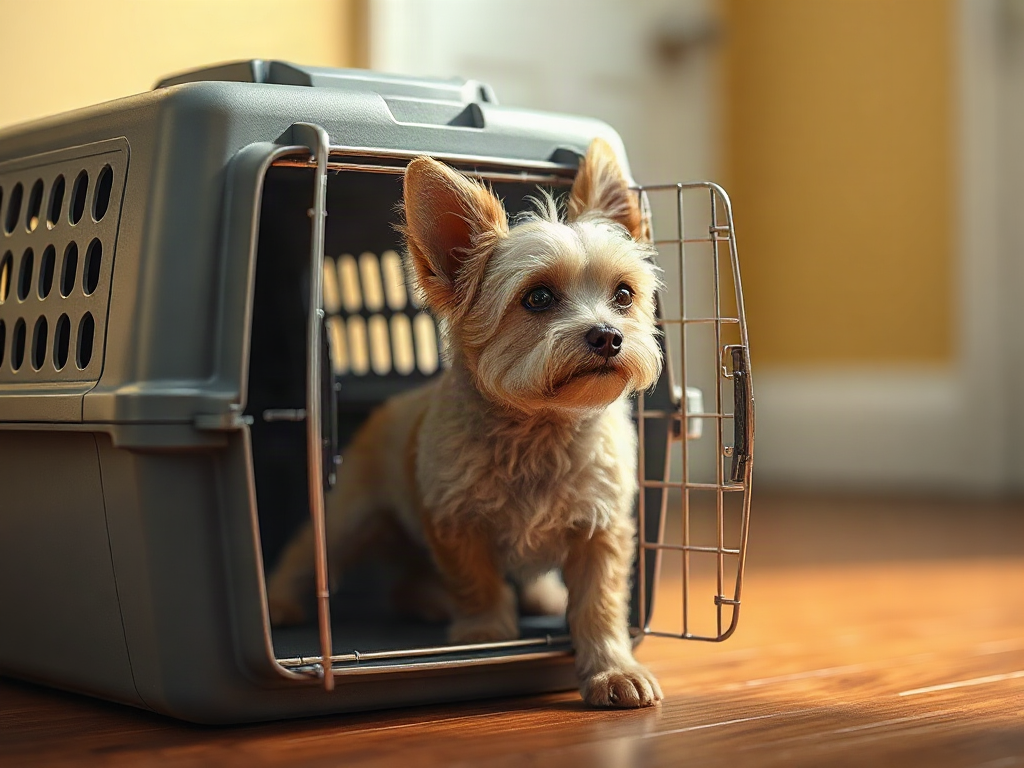
Pet carriers that prevent door scratching use rigid or tightly tensioned doors, claw-resistant surfaces, small ventilation openings, and enough interior space to keep paws from repeatedly reaching the closure. A hard plastic or metal door generally withstands persistent scraping better than exposed soft mesh, although reinforced coated mesh may suit calmer pets. Check for reachable zipper tape, loose seams, sharp wire ends, and openings large enough to catch a claw. Because scratching can reflect stress, confinement frustration, or poor fit, combine a durable carrier with gradual acclimation and stop travel if the pet injures a paw or becomes severely distressed.
Why Do Pets Scratch Carrier Doors?
Door scratching usually concentrates at the carrier’s most visible and physically accessible exit. A pet may paw there after seeing the owner, feeling the carrier move, encountering an unfamiliar setting, or learning that contact with the closure sometimes leads to release. The behavior can range from occasional repositioning to forceful, repeated scraping. Those patterns should not be treated as equivalent when choosing a carrier.
Fit strongly affects how much leverage an animal can apply. In an undersized carrier, the pet may be pressed close enough to rake the door without extending a leg. Excessively large interiors create a different problem: the animal can shift rapidly, brace against the rear wall, and strike the closure with more momentum. A suitable interior lets the pet stand in a natural posture, turn around, and settle without leaving enough empty room for uncontrolled movement during transport.
Visibility can either reduce or intensify scratching. A socially oriented pet may relax when it can see outside, while an easily stimulated animal may paw harder at people, passing luggage, or nearby animals. A partial privacy cover can reduce visual triggers, but it must not obstruct ventilation. Covering every opening is not a substitute for selecting a secure door, and a loose blanket can become a heat or snagging concern if it shifts.
Consider two cats using the same soft-sided model. One settles after a few minutes and touches the mesh only when the carrier is lifted. The other hooks claws into the door, pulls the panel inward, and chews the zipper seam. Reinforced mesh may be adequate for the first cat but a rigid shell with a metal or molded door is the more defensible choice for the second. Buying according to species or weight alone misses the more useful evidence: the pet’s actual behavior under confinement.
A common mistake is assuming a tougher door will resolve every cause. Durability limits damage, but it does not remove motion sensitivity, fear, frustration, or a negative association with loading. Before a trip, place the carrier in a familiar room, secure the door open, and allow voluntary investigation. Brief closed-door sessions can then reveal whether scratching declines as familiarity grows. Escalating pawing, panting unrelated to heat, drooling, frantic biting, or self-injury warrants stopping the session and discussing the behavior with a veterinarian rather than simply extending confinement.
Which Door Materials Resist Claws Best?
Rigid doors provide the clearest physical barrier when a pet persistently attacks the exit. Molded plastic doors have few fibers for claws to catch, while metal-wire doors resist tearing and permit substantial airflow. Both options depend on sound construction: a strong panel mounted to flexible hinges or a weak surrounding frame can still twist, gap, or detach under pressure.
Metal wire should have smooth joints, consistent spacing, and no bent ends. Openings must be small enough that the pet cannot push its muzzle through or trap a paw while scraping. A metal door is not automatically safer merely because it feels heavy. Check the perimeter while applying moderate hand pressure from inside; excessive movement at the corners suggests that the frame, hinge pins, or latch mounting may be the weak point.
Soft carriers require more careful distinction. Ordinary insect-screen-like mesh is vulnerable to claw punctures and pulled threads. Heavier coated mesh with tightly tensioned panels and protected seam edges offers better resistance, especially for pets that scratch briefly rather than dig continuously. The panel should return to shape when pressed and should not fold far enough for the pet to reach zipper tape or chew the binding. Marketing terms such as “anti-scratch” are less informative than inspecting thread density, seam placement, tension, and replacement options.
| Door Type | Best Fit | Main Strength | Primary Limitation |
|---|---|---|---|
| Molded plastic | Pets that scrape or rub at the exit | No exposed fabric for claws to hook | May offer less visibility or airflow |
| Metal wire | Persistent scratchers needing high airflow | Resists tearing and allows visual inspection | Spacing and unfinished edges require close checking |
| Reinforced coated mesh | Calmer pets and flexible under-seat designs | Lighter and more compressible | Can puncture, stretch, or separate at seams |
Scratch resistance also depends on the closure system. A door can remain intact while zipper sliders separate, latch tabs rotate open, or fabric beside the opening tears. Soft models benefit from paired zipper sliders that can be clipped together, provided the securing method does not create a dangling loop inside. Rigid models should have a latch that fully engages without relying on friction alone. Test every closure after assembly because a misaligned top shell can prevent the door from seating correctly.
The practical tradeoff is portability. A rigid carrier is often bulkier and less forgiving in tight spaces, while a soft model may fit beneath a seat or store more easily. Choose rigidity when escape attempts are forceful or prolonged. Choose reinforced mesh only when the pet’s behavior and the journey’s handling conditions make flexibility a reasonable compromise.
How Should You Inspect an Anti-Scratch Carrier?
A useful inspection follows the path a paw would take from the interior to the door edge. Product descriptions rarely show the inside seam, zipper backing, lower corners, or hinge attachment clearly, yet those are the places a confined pet repeatedly contacts. Examine the assembled carrier at floor level and from inside the opening rather than judging only its exterior finish.
Begin by pressing the center and corners of the door. A mesh panel should remain tensioned instead of collapsing onto the pet, and a rigid door should stay seated within its frame. Run a cloth over interior wire joints and molded edges; snagging suggests a rough point that could also catch a claw. Inspect the threshold for gaps where toes might enter when the animal digs downward. Removable pads should lie flat and should not lift into the door mechanism.
Use this compact pre-trip check:
- Load path: Confirm that the pet’s weight rests on a firm, level base rather than pulling the door panel out of shape.
- Door perimeter: Look for gaps, exposed binding, loose thread, cracked plastic, and bent wire.
- Closure: Operate every zipper or latch several times and verify that it cannot be nudged open from inside.
- Paw access: Check whether claws can reach zipper tape, ventilation holes, straps, clips, or dangling hardware.
- Travel readiness: Place the carrier on the intended vehicle surface and confirm that securing straps do not distort its frame.
A realistic test should be controlled rather than aggressive. Place the carrier on the floor, hold the frame steady, and apply firm hand pressure at the same areas the pet would push. Do not strike, hang from, or overload it; those actions do not represent normal use and may create hidden damage. If a zipper track separates, the mesh turns white at stress points, or the door corner opens visibly, return or replace the carrier rather than treating the weakness as cosmetic.
Inspection continues after purchase. Claw punctures can widen, coated mesh can abrade at folds, and plastic around screws may develop cracks. After a difficult trip, remove bedding and inspect under good light. Repairing a structural door panel with household tape, glue, or loosely sewn patches can introduce adhesive, sharp edges, or another snag point. Manufacturer-approved replacement components are preferable when available; otherwise, retirement may be safer than improvisation.
Do not overlook usability. A door that is technically strong but difficult to close encourages rushed handling and partially engaged latches. Practice loading without the pet first, especially with a top-and-front-opening model. The door should align without squeezing the shell, and the closure status should be easy to confirm at a glance and by touch.
Matching the Carrier Design to the Pet and Trip
The strongest practical choice reflects both the animal’s scratching pattern and the handling demands of the trip. A carrier used for a short drive to a veterinary appointment faces different constraints from one moved through terminals, elevators, security areas, and crowded waiting spaces. Durability remains important in both settings, but size limits, carrying weight, ventilation, and access method may change which design is workable.
For an animal that scratches only during loading, a top-opening carrier may reduce conflict because the pet does not have to pass through the door it has learned to resist. Once closed, however, the main exit still needs secure construction. A pet that paws whenever people pass may do better with a rigid carrier offering ventilation on the sides but less direct visibility through the front. By contrast, an animal that becomes unsettled when visually isolated may benefit from a wire door, assuming its paws cannot enter the openings.
Air travel adds non-negotiable dimensional and carrier rules set by the individual airline and itinerary. A strong carrier is not automatically accepted, and compressing a rigid frame to force it under a seat can damage the door alignment. Verify the airline’s current requirements directly before purchase and recheck them before departure. For road travel, consider how the carrier will be restrained without routing a belt through a weak handle or deforming a soft door. Follow the carrier and vehicle manufacturers’ instructions rather than assuming every strap arrangement is crash-protective.
Behavior during trial sessions should drive the final decision. Signs of a workable match include settling on the pad, normal repositioning, brief paw contact that does not escalate, and a door that remains aligned. Failure signs include hooked claws, repeated biting at one seam, a nose forced through openings, damaged nail tips, or closure hardware shifting under pressure. Record where contact occurs; a pet attacking only a low mesh corner presents a different design problem from one reaching upward to manipulate zipper sliders.
A weak assumption is that trimming nails converts a fragile carrier into a safe one. Shorter, smooth nails may reduce snagging, but they do not stop paw pressure, chewing, seam pulling, or latch manipulation. Nail care should remain appropriate for the individual pet and is not a structural fix. Similarly, sedating a pet solely to make an unsuitable carrier manageable should never be improvised; medication questions belong with a veterinarian who knows the animal and the planned journey.
Prioritize in this order: safe fit, an intact claw-resistant door, reliable closures, adequate ventilation, and compatibility with the trip. Convenience features such as pockets, expandable panels, and decorative fabric come afterward. Once selected, pair the carrier with short, calm practice sessions so that the door is both physically durable and less likely to become the focus of frantic escape behavior.
Frequently Asked Questions
Is metal mesh better than fabric mesh for a scratching pet?
Metal wire usually tolerates persistent clawing better than fabric mesh, but its spacing, joints, and attachment points must be safe. Reinforced coated mesh may be sufficient for a pet that paws only occasionally.
Can a pet scratch through an anti-scratch mesh door?
Yes. “Anti-scratch” does not mean claw-proof. Repeated digging can puncture mesh or separate it from the seam, so inspect the panel tension, binding, and zipper area before each trip.
Should the carrier door be covered to stop scratching?
A partial cover may reduce visual stimulation for some pets, but it must stay clear of ventilation openings and closures. Stop using it if the carrier becomes warm or the pet grows more distressed.
What should I do if a claw becomes caught in the door?
Stop movement, keep the carrier stable, and release the material or opening without pulling the paw. Seek veterinary advice if there is bleeding, swelling, limping, a torn nail, or persistent pain.
How often should I inspect the carrier door?
Check it before and after every trip, as well as after any forceful scratching episode. Pay particular attention to punctures, stretched seams, bent wire, cracked hinge mounts, and closures that no longer align.
Conclusion
Choose the door by observing how the individual pet behaves, not by relying on an “anti-scratch” label. Persistent diggers generally need a rigid panel or properly finished metal door, while tightly tensioned reinforced mesh can remain practical for calmer animals and trips with strict space limits. The surrounding frame, seams, hinges, and closure deserve the same scrutiny as the visible panel.
Before relying on a new carrier, check its fit, press-test the door and corners, remove interior snag points, and run brief supervised practice sessions. Replace the carrier when scratching produces punctures, distortion, sharp edges, or unreliable closure alignment. If confinement triggers escalating distress or paw injury, pause the training and seek veterinary guidance. A durable door manages the physical wear; careful sizing, inspection, and acclimation address the conditions that cause the pet to keep attacking it.