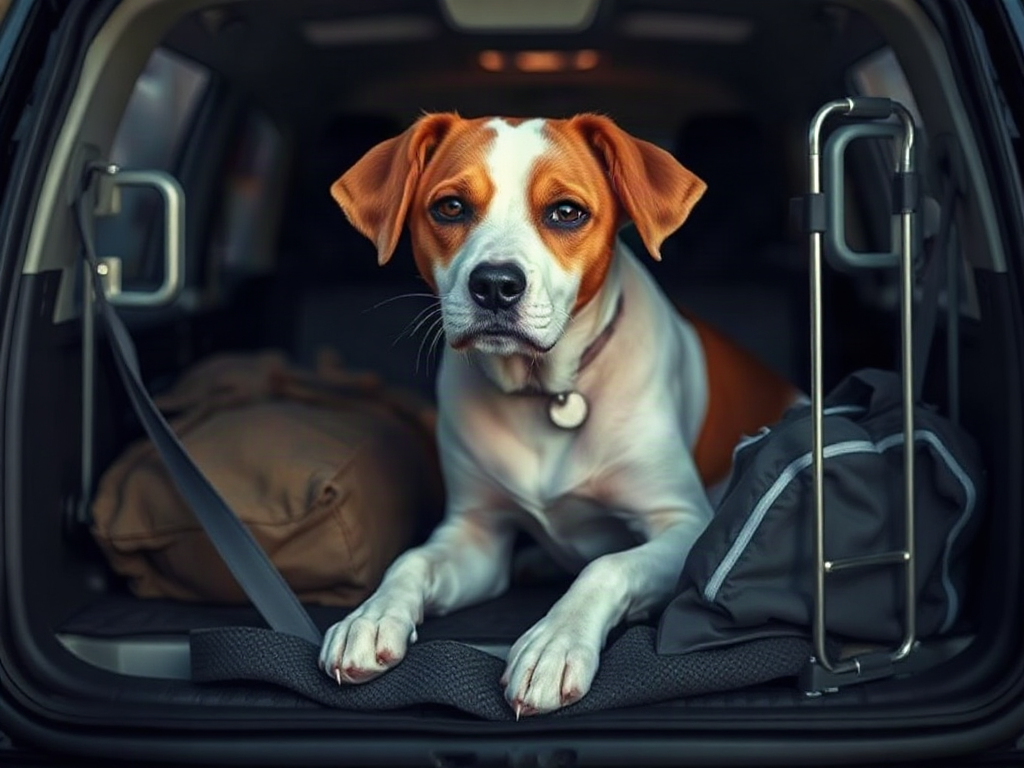
The best dog crates for overnight travel provide enough room to stand, turn, and sleep naturally while balancing ventilation, secure latches, vehicle stability, and destination practicality. Hard-sided plastic crates suit dogs needing an enclosed resting space, while sturdy wire models offer airflow and visibility at a hotel or rental. Soft-sided crates work mainly for calm, crate-trained dogs because fabric and mesh provide limited resistance to chewing or force. Measure the dog rather than relying on breed labels, secure the crate during road transport, and test it before departure.
Which Crate Type Suits Overnight Travel?
Crate construction should match both the transport stage and the sleeping location. A model that works well beside a hotel bed may be awkward to secure in a vehicle, while a rigid transport crate may consume too much floor space in a small room. Begin with the dog’s behavior: chewing, pushing at doors, reacting to visual activity, and settling in unfamiliar surroundings all affect which material is appropriate.
Hard-sided plastic crates provide a more enclosed interior than wire models. They can be useful for dogs that relax when surrounding movement is partly blocked, and the solid lower shell helps contain tracked dirt or a minor spill. Their main disadvantages are bulk, restricted visibility, and fewer convenient storage options. Ventilation openings must remain unobstructed, especially when luggage is packed around the crate. A plastic model intended for an airline trip also needs to satisfy that airline’s current requirements; a general “airline approved” marketing phrase is not a substitute for checking the operating carrier’s rules.
Wire crates offer broad airflow and let a dog see the room. Many fold flat, making them practical for road trips where the crate is assembled only at the destination. A removable pan simplifies cleanup, and a fitted cover can reduce visual stimulation without blocking every ventilated side. Wire crates can rattle in a moving vehicle, however, and folding designs vary in rigidity. They should not be assumed to provide crash protection unless the exact product has relevant documented testing and is installed as directed.
Soft-sided crates are light, quiet, and easy to carry through lodging. They are a reasonable destination enclosure for a calm adult dog that already rests reliably behind mesh panels. They are a poor match for persistent scratchers, chewers, escape-prone dogs, or dogs that panic when confined. A zipper can be reinforced against casual nudging, but fabric construction is not equivalent to a rigid door and frame.
Furniture-style crates and collapsible fabric playpens may look comfortable, yet they usually prioritize indoor use over transport. Heavy decorative panels are cumbersome, while open-topped or flexible enclosures may not contain an agile dog. For most overnight trips, the useful shortlist is rigid plastic for greater enclosure, folding wire for destination versatility, or soft-sided construction for a settled dog under controlled conditions. The common mistake is choosing by portability alone and discovering after arrival that the dog can bend, chew, or unzip the structure.
How Much Room Does a Dog Need Overnight?
A suitable overnight crate allows the dog to stand without crouching, turn around without scraping the sides, lie on either side, and rest with a natural head position. Extra space beyond those movements is not automatically better. A very large interior can let the dog slide during abrupt vehicle movement, take up unnecessary cargo room, and make a nervous dog feel less sheltered.
Measure while the dog is standing on a level surface. Record the body length from the nose to the base of the tail, not to the tail tip. Measure height from the floor to the top of the head or upright ears, whichever is higher. Shoulder width and the dog’s preferred sleeping posture also matter: a broad dog that curls tightly may need a different shape than a narrow dog that sleeps fully extended. Compare those measurements with the manufacturer’s interior dimensions because thick walls, tapered sides, door frames, and raised floors reduce usable room.
| Fit Check | Acceptable Result | Warning Sign |
|---|---|---|
| Standing | Natural posture with head and ears clear | Crouching or ear contact with the roof |
| Turning | One controlled turn without compression | Shoulders catching or repeated backing |
| Lying down | Can curl and lie on either side | Limbs forced against the door or wall |
| Doorway | Enters without ducking sharply | Back or hips strike the frame |
Breed-based sizing charts are only a starting point. Two dogs of the same breed can differ in height, body length, coat volume, age, and sleeping posture. Thick bedding further reduces headroom, while a crate with sloped sides may provide less shoulder space than its exterior measurements suggest. Test the complete setup with the actual mat installed rather than checking an empty display model.
Puppies present a separate tradeoff. Buying a crate for projected adult size can leave an excessive open area now, so an adjustable divider may be useful in a wire model. The divider must lock securely and leave no dangerous gaps. A puppy also may need nighttime toilet breaks based on age, routine, and individual development; a larger crate should not be used as a substitute for an appropriate break schedule.
Fit is failing if the dog cannot change position, pants in a cool and calm environment, repeatedly presses into a corner, or emerges with rubbed fur or skin. Panting and agitation can have several causes, including stress or temperature, so persistent or unusual signs deserve veterinary guidance rather than a simple crate-size adjustment.
Which Safety, Comfort, and Cleaning Features Matter?
Secure construction and unobstructed airflow deserve priority over accessory count. Examine every latch from inside and outside, looking for gaps a nose or paw could manipulate. Door hardware should close positively without sharp projections. Wire intersections, ventilation holes, handles, and folding joints should feel smooth, and the floor should remain stable when the dog shifts weight.
Vehicle use introduces forces that do not exist in a bedroom. Place the crate on a level surface where it cannot become a projectile or be crushed by unsecured luggage. Use only attachment points and installation methods identified by the manufacturer; improvised straps can deform a door, close ventilation openings, or create pressure in a part of the shell not designed to bear a load. A product described as durable, heavy duty, or suitable for cars should not be interpreted as crash-tested without specific, credible documentation for that model.
Ventilation must work in the packed environment, not merely on an empty showroom floor. A crate with openings on several sides can still become poorly ventilated when wedged against suitcases or covered completely with a blanket. If a partial cover helps the dog settle, leave generous open areas and monitor temperature and breathing. Never leave a crated dog unattended in a parked vehicle; cabin temperature can change quickly, and a crate restricts the dog’s ability to seek a cooler area.
For bedding, choose a flat, washable mat that fits within the floor perimeter and does not bunch under the door. Deep loose blankets may be comforting for some dogs but can reduce usable space, trap heat, or become chewing material. Dogs that shred fabric need a simpler surface selected with veterinary input if orthopedic support or a medical condition is involved. Remove collars, tags, or harness components if they could catch on the crate, unless a particular transport provider requires otherwise or a veterinarian has advised a specific setup.
Cleaning design matters after a muddy walk, spilled water, motion sickness, or a toileting accident. Removable pans and wipeable shells are easier to manage than sewn fabric bases, but a sliding pan must lock in place. Pack an absorbent towel, waste bags, pet-safe cleaning supplies, and a spare dry mat outside the occupied crate. Do not place bottles, bags, or hard toys loose inside during vehicle movement.
The misleading assumption is that comfort comes from filling the enclosure with familiar objects. Familiar scent may help a settled dog, but congestion creates heat, snagging, and swallowing risks. A fitted mat, adequate airflow, stable placement, and predictable breaks generally matter more than pillows or multiple toys.
How Should You Test and Pack the Crate?
An overnight trip should not be the dog’s first extended session in a new enclosure. Assemble the crate at home, inspect it, and allow the dog to investigate without immediately closing the door. Follow with short, calm sessions that resemble the intended use, gradually adding the chosen mat, closing the door, and moving out of sight only as the dog remains comfortable.
Testing should include the complete travel configuration. For a road trip, install the crate in the parked vehicle using the manufacturer’s directions, check that doors open fully, and confirm that air vents and rear visibility are not compromised. Take a brief drive before attempting a longer route. At the destination, rehearse carrying or folding the model so that assembly does not depend on unclear instructions late at night.
Use this compact pre-departure sequence:
- Inspect: Check the frame, seams, latches, fasteners, floor, and ventilation openings.
- Fit: Watch the dog stand, turn, enter, exit, and lie down on the installed mat.
- Install: Position and secure the crate according to its instructions without blocking airflow.
- Rehearse: Complete a short confinement period and a short drive when road travel is planned.
- Pack separately: Carry food, water, bowls, medications, cleaning supplies, leads, and spare bedding outside the occupied enclosure.
Signs that preparation is working include voluntary entry, normal posture, the ability to settle after routine movement, and calm release through the door. Repeated biting at mesh, forceful door impacts, frantic digging, heavy drooling, escape attempts, or escalating vocalization indicate that the plan is not ready for an overnight test. These behaviors should not be dismissed as stubbornness. Stop the session safely and seek help from a veterinarian or qualified behavior professional when distress is severe, persistent, or new.
Accommodation rules add another constraint. Some hotels require pets to be crated when left in a room, while others prohibit unattended animals regardless of confinement. Confirm the current property policy directly and do not assume that bringing a crate grants permission to leave the dog alone. In shared lodging, place the enclosure away from exterior doors, busy corridors, heaters, cords, curtains, and unstable furniture.
Air travel requires a different verification process from a hotel or road setup. Contact the operating airline before buying or modifying a crate, then compare its current dimensional, construction, door, ventilation, and labeling requirements with the exact product. Aircraft, route, and animal-handling policies can affect acceptance. The common failure is treating a successful home test or a manufacturer’s broad travel claim as proof that a carrier will accept the crate.
Frequently Asked Questions
Is a wire or plastic crate better for an overnight trip?
Wire crates provide visibility, airflow, and convenient folding at a destination. Plastic crates feel more enclosed and contain debris better. Choose according to the dog’s behavior, available space, transport method, and any provider-specific requirements.
Can a dog sleep overnight in a soft-sided crate?
A calm, crate-trained dog may sleep in one under suitable conditions. Soft sides are inappropriate for dogs that chew, claw, push through mesh, or become distressed when confined because fabric and zippers offer limited resistance.
Should water be left inside the crate overnight?
Water needs vary with health, temperature, diet, age, and travel circumstances. Use a stable setup that does not reduce resting room, and ask a veterinarian about restrictions or unusual drinking needs rather than withholding water to avoid breaks.
Should the overnight crate be covered?
A partial cover may reduce visual stimulation for some dogs, but it must not obstruct ventilation or trap heat. Observe the dog and room temperature; remove the cover if panting, restlessness, or fabric chewing develops.
Can the same crate be used for driving and sleeping?
Possibly, if it fits the dog, can be installed as the manufacturer directs, remains ventilated when packed, and works in the lodging space. Do not assume an indoor crate provides vehicle crash protection without model-specific evidence.
Conclusion
Choose from measured interior fit, the dog’s confinement behavior, and the actual transport environment—not from breed labels or portability claims alone. Plastic shells favor enclosure and cleanup, folding wire models suit many destination setups, and soft-sided options belong with dogs that have already shown calm, non-destructive crate habits.
Before departure, install the intended mat, verify standing and sleeping room, examine every latch and edge, and rehearse both confinement and vehicle placement. Keep ventilation openings clear, secure the crate only through approved methods, and confirm lodging or airline conditions directly. If the dog shows escalating distress, repeated escape behavior, unusual panting, or physical rubbing, change the plan rather than forcing an overnight stay. A short home trial and a realistic packing test reveal more than a product label—and leave time to select a safer alternative.