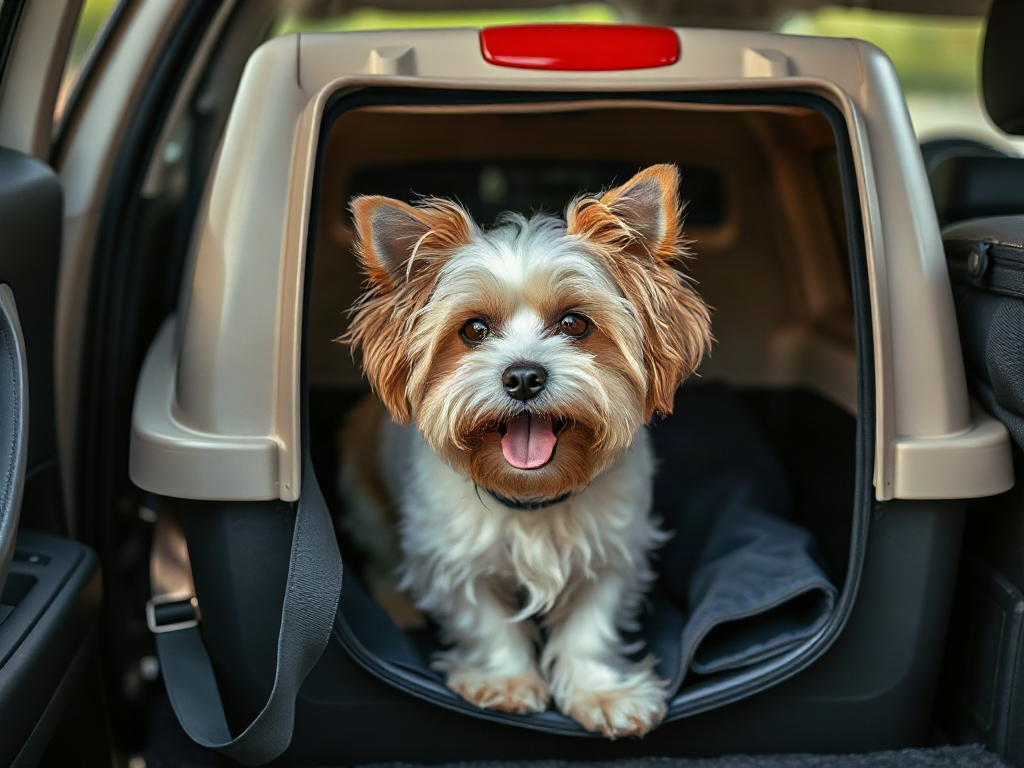
Inexpensive pet carriers for short journeys can be suitable when sizing, ventilation, and closure strength match the animal and the transport method. The pet should be able to stand, turn, and settle without sliding around in excessive space, while mesh or vent openings maintain airflow without creating weak escape points. Check the floor for sagging, inspect every zipper or latch under light pressure, and confirm that handles remain stable when the loaded carrier is lifted. A low price is reasonable for occasional local use, but flimsy seams, unsecured doors, poor vehicle restraint options, or insufficient weight capacity are reasons to choose a sturdier model.
Match the Carrier to the Short Trip
A carrier suitable for a ten-minute drive to a veterinary clinic may not be suitable for a long walk, crowded public transport, or airline travel. Trip duration matters, but handling conditions matter more. Count the time spent carrying the animal from door to vehicle, waiting at the destination, and returning home—not merely the minutes in motion.
Soft-sided models are often economical, light, and easy to store. They can work well for calm cats and small dogs during local errands, provided the base stays level and the pet does not claw or push forcefully at mesh panels. A hard plastic model usually weighs more and occupies more storage space, but its rigid walls resist collapse and make it easier to clean after an accident. Cardboard carriers may be offered for temporary transport, yet moisture, chewing, and repeated use can weaken them quickly.
Transport method narrows the choice further. A carrier carried mainly by hand needs balanced handles and a floor that does not bow. A model used in a car needs a stable shape and a practical way to limit movement. A backpack-style carrier shifts the animal’s angle as the wearer moves and therefore requires a firm base, reliable ventilation, and close attention to comfort. For a pet that scratches, chews, or panics in confinement, an inexpensive soft bag is usually a poor economy even for a short outing.
Do not assume that “short” means the construction can be disposable. A failed zipper in a parking area or a detached handle beside traffic creates an immediate escape risk. Spend first on structural reliability rather than pockets, decorative trim, or a matching cushion. The most useful inexpensive pet carriers for short journeys are simple models whose floor, seams, doors, and handles remain dependable under the pet’s full weight.
Choose around the hardest predictable part of the outing. If the animal will wait in a reception area for half an hour, ventilation and room to settle deserve more attention than compact storage. If several flights of stairs are involved, low weight and stable handles become priorities. Airline use is a separate purchasing problem because individual carriers and routes may have specific dimensions and acceptance requirements; a local-trip carrier should not be assumed to qualify.
Measure the Pet and Inspect the Interior
Correct sizing provides enough room for natural repositioning without turning the interior into an unstable open compartment. Measure the pet while standing from the floor to the highest natural point of the head or ears, depending on posture, and from the chest to the rear. Compare those measurements with the usable interior, not only the exterior dimensions printed on a label.
The animal should be able to stand without sustained pressure against the roof, turn around, and lie in a normal resting position. Extra space is not automatically safer. In a sudden stop or while the carrier is being carried, a pet inside an oversized enclosure can slide farther before contacting a wall. A tightly packed carrier causes a different problem: restricted posture, poor access to airflow, and greater distress when the animal cannot shift away from a wet pad or uncomfortable surface.
Weight ratings require equally careful reading. A maximum rating describes the load the manufacturer says the product can bear; it does not confirm that the carrier has suitable proportions for every animal under that number. A compact, heavy-bodied cat may fit the weight limit but crowd a narrow bag. Conversely, a tall, lightly built dog may exceed the practical height before approaching the stated weight ceiling. Use both measurements and body shape.
Inspect the interior with your hand before placing the pet inside. Feel for exposed wire ends, sharp plastic molding, rough zipper backs, loose hook-and-loop strips, and gaps where a claw could catch. Press the center of the floor with approximately the pet’s weight. If it folds, twists, or pulls away from the sidewalls, add only a properly fitted rigid insert approved for that design or select another model; loose household boards can shift and create hard edges.
A thin washable pad can improve footing, but thick bedding consumes headroom and can cover lower ventilation openings. For a short veterinary trip, an absorbent pad under a familiar thin towel is often more practical than a plush bed. The pad should lie flat and should not bunch around the door. A common sizing mistake is testing an empty carrier visually and overlooking how the base changes once loaded. Evaluate the enclosure with weight inside, then check the pet’s posture during a calm indoor trial.
Evaluate Materials, Airflow, and Closures
Low-cost construction is acceptable only when its load-bearing parts remain sound. On a soft-sided model, inspect the stitching where handles join the body, where mesh meets fabric, and where the base attaches to the walls. Closely spaced, even stitches without loose ends are more reassuring than a broad decorative seam hiding a lightly attached handle. Pull gently in opposite directions at each junction and reject visible separation.
Mesh provides airflow and visibility but varies considerably in resistance to claws and teeth. Fine, loosely tensioned mesh may distort when pressed. Rub a fingernail lightly across an inconspicuous section and push outward with a flat hand; the panel should return to shape without opening gaps along its border. Pets that become more agitated when they can see activity may prefer partial visual coverage, but never drape fabric over the carrier in a way that obstructs vents or traps heat.
Rigid carriers rely on vent slots, door hardware, and shell connections. Confirm that the top and bottom halves meet evenly and that every fastener is present. The door should align without needing to be forced, and its latch should fully engage. Plastic that is already whitened at a bend, deeply scratched around a fastener, or cracked near the handle may be weakened. These details matter when considering a used carrier, which can offer better construction for the same budget but requires a more thorough inspection and cleaning.
Closures deserve a deliberate test because nervous animals can apply repeated pressure at one point. Run zippers through their full path, check that sliders do not separate the teeth, and look for a clip or other design that keeps paired sliders from being nudged apart. On hard doors, press outward from inside while operating the latch from outside. The door should remain seated unless intentionally released. Interior tether clips are not substitutes for a secure door and should not be attached to a collar where sudden tension could affect the neck.
Odor alone does not prove a material is unsafe, but a strong persistent chemical smell, oily residue, flaking coating, or color transfer onto a damp white cloth is a sensible reason not to place a pet inside. Wash or wipe removable surfaces according to the product instructions and let everything dry fully. Comparing inexpensive pet carriers for short journeys by seam integrity and closure performance is more useful than comparing them by the number of accessory pockets.
Check Carrying and Vehicle Security
A carrier must remain controllable between the home, vehicle, and destination. Load it with an object close to the pet’s weight, close every opening, and lift it only a few inches over a soft surface. Watch whether the base stays horizontal, handles twist, shoulder-strap clips rotate, or the enclosure folds toward the center. Any sudden tilt during this test will be more unsettling with a live animal inside.
Short handles can offer better control than a long shoulder strap in tight areas, while a padded strap may be more comfortable during a longer walk. The tradeoff is movement: a bag hanging at hip level can swing or strike doors and railings. Carry it close to the body with one hand supporting the base when practical. Never lift a loaded carrier by a decorative strap, mesh panel, or top opening unless the design explicitly makes that part load-bearing.
Vehicle use introduces different forces from ordinary hand carrying. Place the carrier on a stable surface where it cannot become a distraction or move freely during braking and turns. Follow the vehicle manual and the carrier manufacturer’s instructions for positioning and restraint. A seat-belt loop is useful only if it is structurally attached and used as directed; threading a belt through a carry handle may overload a part that was not designed for crash forces.
For example, a soft carrier that sits securely on a flat rear-seat area during a slow test may collapse when a belt is tightened around its middle. A rigid carrier may resist compression better but still slide if its smooth base has no appropriate restraint method. Test the empty setup first, then repeat with substitute weight. If the carrier tips during normal cornering, the setup is already failing before an emergency occurs.
No inexpensive model should be described as protective in a collision unless it carries specific, credible evidence for that claim. Marketing phrases such as “car ready” may refer only to convenience features. Owners who travel frequently, drive at higher speeds, or need documented crash-performance information should investigate purpose-built restraint products rather than relying on a basic local-use bag. For occasional low-speed transport, prioritize stable placement, manufacturer-directed securement, intact structure, and separation from airbags or driver controls.
Use a Pre-Trip Inspection and Trial Run
A brief inspection before every outing catches wear that a low purchase price can make easy to dismiss. Perform the check with enough time to switch carriers rather than while the pet is waiting at an open door. Damage rarely improves during use, and improvised tape or knots can interfere with ventilation, doors, and emergency access.
Use this compact sequence before loading the animal:
- Press the base: Confirm that it remains seated, dry, and level under expected weight.
- Trace the perimeter: Look for split seams, cracked plastic, enlarged mesh holes, or missing fasteners.
- Cycle every closure: Open, close, lock, and lightly load each zipper, clip, or latch.
- Check airflow: Make sure bedding, covers, pockets, and vehicle surfaces do not block vents.
- Lift and set down: Verify that handles and straps hold the carrier without tilting or detaching.
- Confirm identification: Attach current contact details where they remain visible and cannot be chewed.
Introduce the carrier indoors before the day it is needed. Leave it open in a quiet room, place familiar bedding inside, and let the pet investigate without being forced. Later, close the door briefly, lift the carrier a small distance, and set it down smoothly. A successful trial includes stable footing, normal recovery after movement, and closures that remain undisturbed. Escalating scratching, heavy panting unrelated to heat, repeated escape attempts, or a carrier that deforms under movement signals that the setup needs reassessment.
Do not confuse habituation with proof of construction quality. A relaxed pet can still be injured by a broken handle, while a strong carrier does not automatically make confinement comfortable. Both the equipment and the animal’s response require attention. If severe distress persists, or transport is complicated by pain, breathing difficulty, mobility limits, or a prior medical problem, ask a veterinarian for individualized transport advice.
After returning, remove damp liners, wipe hard surfaces, and inspect the areas stressed during the outing. Store the carrier dry with closures relaxed and panels supported rather than crushed under heavier items. Replacing a worn zipper bag before it fails is usually less costly than managing an escape. Readers comparing inexpensive pet carriers for short journeys should treat repeated cleanability and easy inspection as part of value, not as optional conveniences.
Frequently Asked Questions
Is a soft or hard carrier better for a short trip?
A soft carrier suits calm, lightweight pets and is easier to carry and store. A hard carrier is often preferable for animals that scratch, push at panels, have accidents, or need more rigid support.
How much room should a pet have inside?
The pet should be able to stand naturally, turn around, and lie down without being compressed. Avoid excessive space that allows uncontrolled sliding when the carrier moves.
Can a low-cost carrier be used in a car?
It may be used if it remains stable and can be positioned or restrained according to both carrier and vehicle instructions. Do not assume handles or luggage straps are designed for seat-belt loading.
Is a used pet carrier a sensible budget option?
Yes, if the shell, seams, vents, floor, fasteners, and closures are intact and the carrier can be cleaned thoroughly. Reject cracked plastic, distorted mesh, persistent contamination, or missing hardware.
When should an inexpensive carrier be replaced?
Replace it when the floor sags, seams separate, mesh develops holes, plastic cracks, hardware corrodes, or a door or zipper no longer stays securely closed under light pressure.
Further Reading
Authoritative Sources
- AAHA Pet Health Resources
aaha.orgPet-health guidance from the American Animal Hospital Association
- ASPCA Pet Care
aspca.orgHumane animal care, behavior, and safety resources
Conclusion
A limited budget should narrow the feature list, not lower the standard for containment. Select a design for the pet’s size, behavior, and actual handling conditions, then put most of the budget toward a stable floor, durable ventilation panels, dependable closures, and firmly attached handles. Test the carrier with substitute weight before loading the animal, inspect it again before each outing, and watch how both the structure and pet respond during a short indoor trial.
Skip extras that do not improve control or comfort, and reject any model that bows, opens under pressure, or cannot be positioned safely in the intended vehicle. A straightforward carrier that fits correctly and survives routine inspection offers better value than a feature-heavy option with weak seams or uncertain hardware.