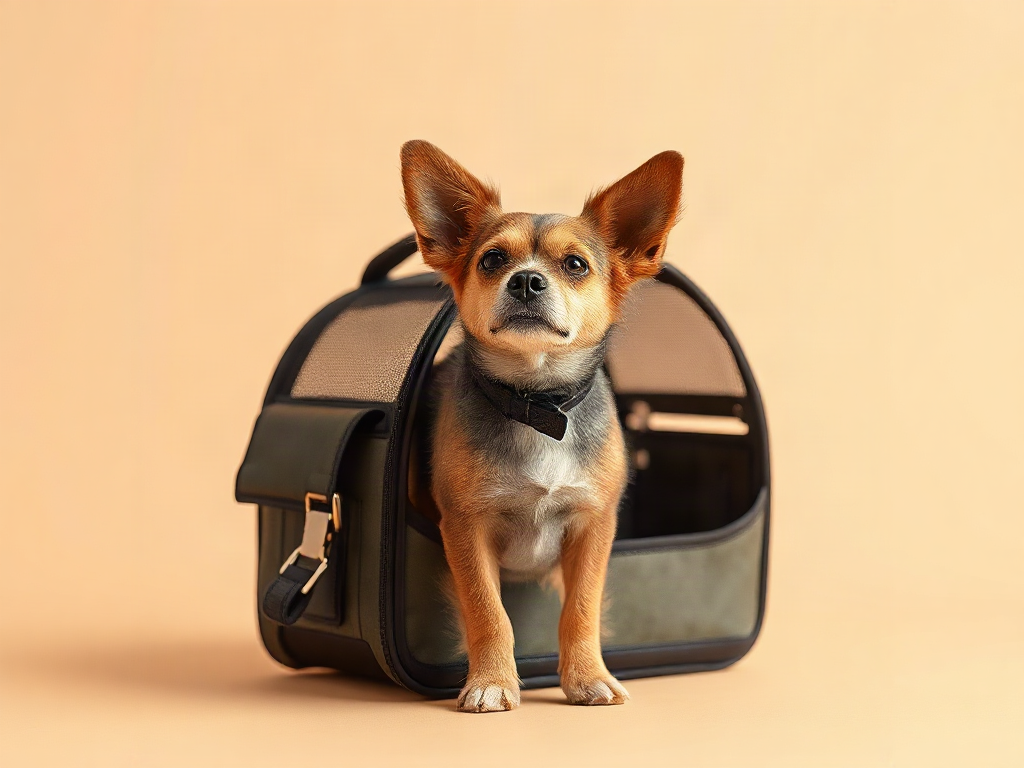
Dog carriers for broad-chested dogs should provide enough interior width for the rib cage, a stable floor that does not sag, and openings large enough for entry without shoulder compression. Measure chest circumference, shoulder width, back length, and standing height, then compare those figures with the carrier’s internal—not external—dimensions. The dog should be able to stand naturally, turn around, lie on its sternum, and breathe without the side panels pressing inward. Weight limits still matter, but choosing by weight alone often produces a carrier that is long enough yet too narrow through the chest.
Why Does Standard Carrier Sizing Often Fail?
Carrier size charts frequently emphasize pet weight and overall length, but neither measurement describes how much lateral space a dog needs through the shoulders and rib cage. A compact, muscular dog may weigh less than a taller, narrow-bodied dog while requiring considerably more interior width. If both are assigned the same nominal size, the broad-chested dog is more likely to contact the side walls or struggle through the opening.
The problem becomes more pronounced in soft-sided models. Manufacturers usually list the carrier’s outside dimensions, while piping, padding, pockets, sloping walls, and structural frames reduce usable space. A carrier described as 12 inches wide externally may offer less room at the dog’s shoulder level. Flexible mesh does not automatically correct that shortfall: stretched mesh can press against the ribs, bow the carrier inward, or place sustained tension on seams and zippers.
Body position also changes the space calculation. A dog lying tightly curled may fit during a quick trial at home but become uncomfortable when attempting to turn, brace during a vehicle stop, or settle in a chest-down position. Broad-chested dogs often occupy more floor area when lying naturally because the elbows sit slightly away from the body. A floor panel that matches torso width but leaves no room for the forelimbs is functionally undersized.
Consider a dog whose back length fits a medium carrier according to the chart. If its shoulders brush both walls when standing, moving up one size may appear to solve the issue. Yet a longer carrier can create a different problem: excess fore-and-aft movement during transport. The better option may be a model with a squarer footprint, straighter side walls, and a shorter but wider interior rather than simply the next size in the same tapered design.
A common mistake is assuming that a high weight rating indicates generous space. Weight ratings primarily describe what the handles, base, and structure are intended to support; they do not confirm suitable proportions. Treat the limit as a structural threshold, then assess interior geometry separately. If a dog is near the stated limit or the base bends under its weight, a sturdier design is warranted even when the body technically fits.
Prioritize the narrowest functional point: the doorway, framed top, shoulder-level width, or curved end panel. Those restrictions determine whether the dog can enter and reposition without twisting. Product photos can disguise tapering, so request or verify internal measurements when they are not published. A vague size label such as “large” offers less decision value than four clear dimensions and a description of the floor construction.
How Should You Measure a Broad-Chested Dog?
Accurate carrier selection requires measurements taken while the dog is standing squarely on a level surface. A flexible tape is useful for circumference, while a rigid ruler, yardstick, or two-book method gives a more reliable straight-line width. Thick coats should be gently compressed without pulling the tape tight, and the dog should not be crouching, leaning, or stretching toward a treat.
Measure the chest circumference around the deepest part of the rib cage, usually just behind the front legs. Circumference helps describe body mass and is useful when assessing wearable slings or backpack openings, but it does not directly equal the carrier width required. For an enclosed carrier, measure straight across the widest point of the shoulders or chest. This lateral measurement is the more useful comparison with interior width.
Next, measure from the point of the shoulder to the base of the tail for body length. Measure standing height from the floor to the top of the head or ears, whichever is higher in the dog’s normal posture. If the dog will travel lying down for much of the trip, observe the width occupied by its elbows in a relaxed chest-down position. That real resting footprint may be wider than the standing torso.
- Record body weight: use it to check the carrier’s structural limit.
- Measure straight shoulder width: compare it with usable interior width at the same height.
- Measure body length: allow room to reposition without creating an oversized sliding space.
- Measure standing height: account for a soft roof that may sag below its frame.
- Observe a natural resting position: note elbow spread and the space needed to turn.
Add practical clearance rather than relying on exact body-to-bag equality. The appropriate allowance depends on carrier rigidity, trip length, posture, and any size constraints imposed by the mode of travel. A rigid wall retains its stated shape but has no give; a soft wall may yield slightly but can also collapse inward. Clearance that exists only when mesh is stretched should not be treated as comfortable usable space.
Recheck measurements if the dog is young, has recently changed weight, or develops a different resting posture. Measurements taken months earlier can lead to a misleading purchase. For dogs with breathing, mobility, spinal, or orthopedic concerns, sizing also becomes a veterinary question because a posture that looks acceptable may not be suitable for an extended trip.
The most frequent measuring error is comparing the dog with exterior product dimensions. Look for interior specifications, and ask whether the stated height includes the base or handle structure. If only external figures are available, do not assume a fixed deduction will reveal the interior; wall thickness and frames vary by design. Choose a seller with a workable return policy and preserve packaging until the dog has completed a calm indoor fit test.
Which Carrier Shapes and Features Work Best?
A rectangular carrier with a wide base and near-vertical walls usually uses space more efficiently than a heavily tapered or dome-shaped design. Broad-chested dogs benefit from shoulder-level width, not merely a broad floor beneath narrowing walls. A structured frame can preserve that width, provided the frame itself does not create a low crossbar or a narrow doorway.
The base should remain flat under the dog’s full weight. A removable board wrapped in a washable pad generally offers more predictable support than a cushion suspended in fabric. Test the floor by lifting the occupied carrier only after the dog is comfortable and the closures are secured. If the center folds, the dog’s elbows slide inward, or the walls pull tightly around the torso, the structure is not distributing the load well.
Entry design matters as much as interior dimensions. A large top opening can help a small, cooperative dog enter without forcing broad shoulders through a narrow end door. Side entry may be easier for a heavier dog that should walk in rather than be lowered. Multiple openings are useful only if their zippers and frames remain secure; an expansive panel with weak structure can distort when the carrier is lifted.
Ventilation should cover more than one side and remain unobstructed when the dog lies down. A broad torso can block low mesh panels, especially when the carrier is nearly body-width. Upper mesh panels help maintain airflow, but they should not be the only ventilation if a blanket, seat, or luggage could cover them. Avoid using external pockets so heavily that they bow into the interior.
| Design Detail | Useful Fit Signal | Warning Sign |
|---|---|---|
| Side walls | Remain upright beside the shoulders | Press inward or flare under zipper tension |
| Floor | Stays level when lifted | Folds toward the center |
| Opening | Allows entry without twisting | Shoulders scrape the frame |
| Ventilation | Mesh remains exposed in resting positions | Torso blocks most lower panels |
| Restraint point | Short internal tether attaches to a harness | Tether encourages collar loading or tangling |
Backpack and sling carriers require a separate judgment. Their vertical posture and body-hugging shape may be unsuitable for a dog whose rib cage is compressed by the opening or side panels. Backpack dimensions that look adequate on paper can narrow at the top, while slings offer little protection from body pressure or sudden movement. An enclosed horizontal carrier is generally easier to evaluate for posture because the dog can distribute weight across the floor.
Do not confuse extra softness with extra comfort. Deep padding reduces internal height and may become unstable beneath a muscular dog. A thinner, nonslip, washable pad over a firm base often preserves more usable room. The best design is the one that maintains its measured shape when occupied, not the model with the largest exterior shell or thickest cushion.
How Do You Test the Fit Before Traveling?
A proper fit test should happen indoors before the carrier is used in a vehicle, terminal, or crowded setting. Place the open carrier on a nonslip floor and allow voluntary investigation. Treats can be placed near the entrance and then farther inside, but pushing or pulling the dog through the opening hides entry problems and can create resistance to future use.
Watch the dog enter from several angles. The shoulders should pass without being rotated sharply, and the back should not scrape a rigid top frame. Once inside, the dog should be able to stand in a normal posture, make a controlled turn, and lie down without the rib cage holding the walls outward. Brief contact with fabric during a turn is different from continuous compression while resting.
Close the carrier for a short supervised interval only after the dog enters comfortably. Observe breathing effort, posture, repeated repositioning, pawing, biting at mesh, and attempts to force the head into corners. Panting can reflect heat, stress, exertion, or a medical issue, so it should not be interpreted from fit alone. End the test and reassess if the dog cannot settle, appears distressed, or has difficulty breathing; veterinary advice is appropriate when symptoms could have a health-related cause.
Next, lift the carrier a few inches using the handles as intended. The base should remain level, the dog should not roll toward the center, and the walls should not tighten around the chest. Then walk a short distance indoors. A fit that works on the floor may fail once suspended because handle tension changes the bag’s geometry. Wheeled or strapped configurations should also be tested in the exact setup planned for travel.
Signs of a workable fit include easy entry, a natural chest-down rest, visible clearance at the shoulders, exposed ventilation panels, and a stable base during lifting. Failure signs include forced crouching, elbows stacked beneath the body, persistent side-wall bulging, inability to turn, zipper strain, or loss of floor shape. Do not solve these failures by leaving the carrier partly open during transport; that trades a fit problem for an escape risk.
Travel rules create an additional constraint. Airlines and other transport providers may impose carrier dimensions, placement requirements, or acceptance conditions that differ by operator and itinerary. Verify current rules directly before buying, because a physically suitable carrier may not meet a specific transport limit. If the permitted space cannot accommodate the dog without compression, the practical answer is a different travel arrangement rather than squeezing the dog into a smaller bag.
The common mistake is making the first closed-carrier session the actual departure. Repeat short sessions with the carrier resting, lifted, and placed in the intended vehicle location. Gradual practice reveals structural faults while returns or exchanges are still possible and separates poor fit from simple unfamiliarity.
Frequently Asked Questions
Should I size a carrier by my dog’s weight or chest width?
Use weight to verify structural capacity, but use shoulder width, body length, height, and resting posture to judge space. Weight alone cannot show whether the side walls will compress a broad rib cage.
How much room should a broad-chested dog have inside?
The dog should stand naturally, turn in a controlled way, and lie chest-down without holding the walls outward. Exact clearance varies by design, so test usable interior space rather than applying one universal allowance.
Are soft-sided carriers suitable for muscular dogs?
They can be when the frame preserves shoulder room and the base stays level under load. Reject designs that bow inward, sag at the floor, or depend on stretched mesh to create enough width.
Is moving up one carrier size always the best solution?
No. A larger version may add length without enough chest-level width. Compare shapes and look for a wider, squarer footprint with straighter walls rather than relying only on the next size label.
What if the correct fit exceeds an airline’s size limit?
Do not compress the dog to meet the limit. Confirm the operator’s current requirements and consider another approved travel arrangement if the available space cannot support a natural posture.
Conclusion
Choose by usable geometry rather than a size name or weight range. Record the dog’s straight shoulder width, chest circumference, body length, standing height, and relaxed elbow spread, then compare those measurements with the carrier’s narrowest interior points. Favor a stable floor, upright walls, accessible openings, and ventilation that remains exposed when the dog lies down.
Before committing to travel, test entry, turning, resting, lifting, and short periods of movement under supervision. Wall pressure, zipper strain, sagging floors, forced crouching, or an inability to settle all justify a different size or shape. Confirm transport-provider restrictions separately from the physical fit assessment. If acceptable dimensions and humane body clearance cannot coexist, change the travel plan rather than treating soft fabric or a generous weight rating as permission to squeeze the dog into limited space.