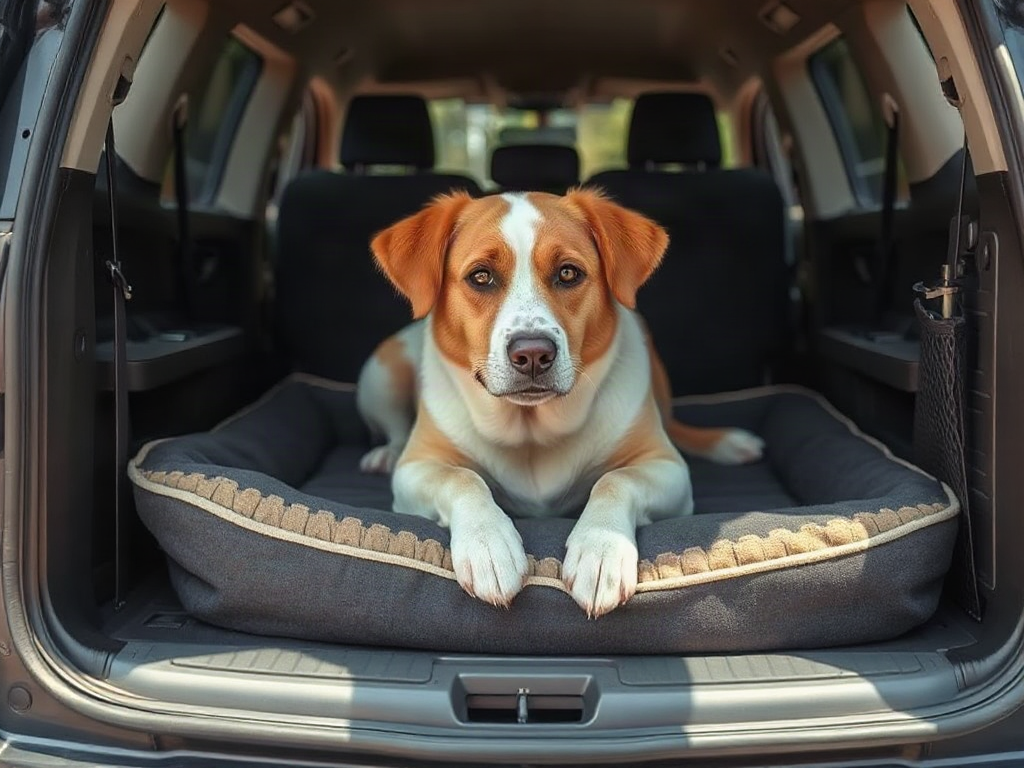
Dog beds suitable for crate travel should fit flat inside the crate, preserve standing and turning room, resist sliding, and use washable materials suited to the dog’s temperature and habits. A thin, firm mat is usually more practical than a deep bolster because excess padding can reduce usable space and trap heat. Measure the crate floor rather than relying only on the crate’s size label, and check that seams, zippers, and loose fill are inaccessible to chewers. For road trips, prioritize a stable nonslip base and easy accident cleanup; for flights, confirm the carrier operator’s bedding rules before packing any insert.
Match the Bed to the Crate’s Usable Space
A crate bed should cover the floor without curling up the walls or taking away the dog’s functional headroom. Crate labels describe the outer product or a general size class, but the bed occupies the interior floor, which may be smaller because of molded edges, door hardware, sloped walls, or a raised threshold. Measure the flat floor at its narrowest usable points before choosing an insert.
Length and width are only part of the fit. Bed thickness affects whether the dog can stand naturally, turn around, and settle without crouching. A six-inch bolster that appears comfortable on a living-room floor may make a compact travel crate too restrictive. A one- to three-inch mat often preserves more interior volume, although the appropriate thickness depends on the dog’s build, joint comfort, and the crate’s height. The goal is cushioning without converting valuable movement space into upholstery.
Watch what happens when the dog enters and changes position. A suitable mat stays mostly flat as the dog circles, does not block the door, and leaves enough room for the paws to land securely. If the front edge folds when the dog steps inside, the insert is too large, too flexible, or poorly anchored. If hard floor remains exposed around every edge, the bed may be undersized and prone to traveling across the crate during turns or braking.
Shape matters as well. Rectangular wire crates generally accept standard rectangular mats, while plastic kennels may have tapered sides and rounded corners. Soft-sided carriers can narrow toward the top and may flex around a thick insert. Owners comparing Dog beds suitable for crate travel should use actual interior measurements rather than choosing by breed name. Two dogs of the same weight can have very different leg length, body depth, and sleeping posture.
A common mistake is buying a bed large enough to look plush but too bulky for the enclosed space. Test the complete setup at home. The fit is working when the dog can enter without catching a paw, rotate without pushing bedding into the door, and lie on its side without being forced onto a raised rim. Replace or resize the insert if it repeatedly buckles, blocks ventilation openings, or leaves the dog unable to adopt a normal resting position.
Choose Materials for Temperature, Support, and Behavior
Material choice should reflect the travel environment and the individual dog rather than a general preference for softness. Dense foam distributes weight and can be useful for older dogs or dogs that become stiff on hard surfaces, but thick foam holds more heat and takes longer to dry after an accident. Thin fiberfill feels soft initially yet may compress unevenly under a heavy dog. A firm, low-profile pad provides less plushness but usually retains its shape and leaves more room inside the crate.
Warm-weather travel calls for restraint with fleece, faux fur, and deep memory foam. Crates already limit airflow compared with an open bed, and a dog’s body adds heat to that smaller space. A breathable woven cover over modest cushioning is often easier to manage in a climate-controlled vehicle. Bedding is not a substitute for ventilation or safe cabin temperature, and a cooling label should not be treated as permission to leave a dog in a parked vehicle.
Cold conditions create the opposite tradeoff. A lightly insulated mat can reduce contact with a cold crate floor, but loose blankets may bunch beneath the dog or cover vents. If extra warmth is needed, use a fitted layer that the dog has already tolerated under supervision. Self-warming reflective layers can make crinkling sounds that some dogs dislike, so introduce them before departure rather than discovering the reaction during a long drive.
Support needs also change the decision. A dog with mobility limitations may find an extremely soft bed difficult to stand on because the paws sink and the surface shifts. Firm foam with a grippy cover can offer a more predictable push-off surface. Dogs with pain, weakness, recent surgery, pressure sores, or continence concerns may need bedding guidance from their veterinarian because support, positioning, and hygiene requirements differ by condition.
Chewing behavior can rule out otherwise comfortable materials. Exposed foam, tufted tops, piping, and accessible zipper pulls invite investigation. No fabric bed should be described as indestructible, and ingesting cover pieces or fill can create a serious problem. For a dog that tears bedding, begin with a simple fitted mat and observe it at home. Persistent shredding, swallowed material, or frantic digging means the setup is failing; remove the damaged item and choose a safer management approach rather than repeatedly replacing plush beds.
Control Sliding, Bunching, and Chewing Risks
Stability matters during transport because vehicle movement can shift an insert even when it stays put in a stationary crate. A slick waterproof base on a smooth plastic floor may slide under the dog during cornering or braking. That movement can make footing less predictable and push the bed against the door. A nonslip underside, close floor fit, and moderate firmness work together more reliably than any one feature alone.
Test stability with the empty crate before putting it in the vehicle. Place the bed inside, press down where the dog’s front and rear paws normally land, and push laterally. A small amount of surface flex is normal, but the entire pad should not skate across the floor. Next, let the dog enter and turn while the crate remains secured at home. Look for folded corners, a migrating liner, claws catching in mesh, or repeated hesitation when stepping onto the surface.
Do not improvise internal tie-downs with cords, clips, or elastic loops that the dog can reach. An attachment intended to stop movement can become a chewing, snagging, or entanglement hazard. If the manufacturer provides a concealed fastening system designed for that crate and pad, inspect it for correct use. Otherwise, precise sizing and a high-friction backing are generally preferable to adding loose hardware inside the enclosure.
The bed and crate have separate jobs. Bedding provides a resting surface; it does not secure the crate, absorb crash forces in a validated way, or correct poor crate placement. Secure the travel enclosure according to its manufacturer’s instructions and the vehicle configuration. Adding a thick pad should not obstruct attachment points, interfere with the door latch, or cover ventilation openings. For air travel, airline and route requirements may limit bedding type or quantity, so road-trip assumptions should not be carried over automatically.
A useful comparison is a fitted flat mat versus a loose folded blanket. The blanket is inexpensive and easy to wash, but its layers can shift toward one end as the dog turns. The fitted mat costs more and may require model-specific sizing, yet it normally offers a steadier surface. A blanket can still suit a calm, non-chewing dog on a short controlled trip if it remains flat during a home trial. Stability, not product category, is the deciding evidence.
Plan for Cleaning and Trip Conditions
Travel bedding should be cleanable on the timetable the trip allows. A removable machine-washable cover is useful only if the inner pad is protected from moisture and the cover can be removed without wrestling with exposed foam. Examine the care label before purchase, including water temperature, drying method, and whether the entire insert or only its cover can be washed.
Water resistance and waterproofing are not identical. A water-resistant fabric may delay penetration from a small spill but eventually allow urine or vomit into the filling. A waterproof liner protects the core more effectively, although some liners trap heat, make noise, or feel slippery beneath the cover. For puppies, dogs prone to motion sickness, or dogs with urinary leakage, a protected core and spare cover can reduce downtime between travel legs.
Layering requires discipline. Stacking a waterproof liner, absorbent pad, fleece blanket, and bolster may seem prepared, but the pile can reduce space and create mobile layers. Use the fewest components that address the likely problem. For example, a house-trained adult on a two-hour drive may need only a washable fitted mat. A puppy on a longer itinerary may benefit from a thin protected pad plus a replacement stored outside the crate. Disposable absorbent material should not be left accessible to a dog that shreds or eats it.
Odor is a practical warning, not merely a cosmetic issue. A cover may smell clean while the foam core remains damp. Reassembling it too early can preserve moisture and make the crate unpleasant. Press the core with a dry towel and allow complete drying according to the manufacturer’s directions. Inspect seams and the underside for residue, cracking, delamination, or mold-like spotting; discard a pad that cannot be thoroughly cleaned or has deteriorated.
Pack cleanup supplies where they can be reached without opening the crate beside traffic. A spare fitted cover or second thin mat, waste bags, paper towels, and a pet-appropriate cleaner are more useful than one elaborate bed with no backup. Readers reviewing Dog beds suitable for crate travel should consider drying time and replacement logistics alongside comfort, especially for overnight routes or destinations without laundry access.
Use a Pre-Travel Bed Checklist
A short trial reveals fit and behavior problems that product descriptions cannot predict. Install the bed several days before the trip and allow supervised crate sessions while the vehicle is stationary. Progress to a brief drive only after the dog rests without chewing, digging continuously, overheating, or pushing the pad into a corner. Familiar use also prevents a new smell, texture, or crinkling liner from becoming an extra stressor on departure day.
Use this compact inspection sequence before each journey:
- Confirm fit: The pad lies flat, clears the latch and vents, and preserves standing and turning room.
- Check condition: Seams are closed, foam is not exposed, and no zipper pull or torn fabric is accessible.
- Test traction: The insert resists lateral movement on the actual crate floor.
- Assess climate: Cushioning is not so warm or deep that it compromises comfort or usable space.
- Prepare cleanup: A dry replacement and basic accident supplies remain outside the enclosure.
- Observe the dog: Normal settling, easy position changes, and relaxed entry suggest the arrangement is usable.
Signs of failure deserve action rather than adjustment during transit. Remove or replace the bed if the dog pants despite an appropriately cooled environment, cannot stand normally, slips while turning, becomes caught in damaged fabric, or repeatedly consumes material. Panting or distress can have causes unrelated to bedding, so stop safely and assess the dog and travel conditions rather than assuming a thinner mat alone will solve the problem.
Crate bedding should never compensate for an enclosure that is the wrong size. Nor should an orthopedic label override poor fit, excessive heat, or a cover the dog destroys. The practical hierarchy is adequate crate space first, safe enclosure setup second, then a stable and cleanable comfort layer. That ordering prevents a well-intended accessory from undermining the basic travel arrangement.
Final selection should be based on observed performance. Keep the bed if it remains flat, dry, intact, and comfortable across trial sessions. Switch to a firmer or thinner option if it bunches or consumes headroom; choose a protected washable core if accidents reach the fill; remove fabric bedding if chewing continues. Those observations provide better guidance than price, thickness, or plush appearance alone.
Frequently Asked Questions
How thick should a travel crate bed be?
Use the thinnest pad that provides suitable cushioning while allowing the dog to stand, turn, and lie naturally. Low-profile mats commonly fit travel enclosures better than deep bolsters, but the dog’s build and support needs matter.
Can I use a regular household dog bed in a crate?
Yes, if it fits flat, does not obstruct the door or ventilation, and remains stable during movement. Oversized, overstuffed, or loose-edged household beds are usually poor choices for compact travel crates.
Are waterproof crate beds better for travel?
A waterproof liner is useful for puppies, motion sickness, and continence issues because it protects the inner fill. Balance that benefit against heat retention, noise, stiffness, and the need for a washable outer cover.
Should a dog have bedding during air travel?
Check the operating airline’s current requirements for the route and carrier type. Rules may specify or restrict bedding, and an acceptable road-trip mat should not be assumed acceptable for a flight.
What should I do if my dog chews the crate bed?
Remove damaged bedding before material can be swallowed, then try a simpler fitted surface under supervision. Seek veterinary help promptly if material may have been ingested or the dog shows vomiting, pain, appetite loss, or difficulty passing stool.
Conclusion
A useful crate bed earns its place through fit, stability, climate suitability, and manageable cleaning—not through maximum thickness. Measure the interior floor, account for the pad’s effect on headroom, and reject any option that curls, slides, blocks hardware, or exposes material to chewing. Match the construction to the trip: breathable low-profile cushioning for warm vehicle cabins, a protected washable core where accidents are plausible, and only airline-permitted bedding for flights.
Run supervised home sessions and a short drive before relying on the setup for a longer route. The dog should enter easily, change position without slipping, and leave the bedding intact. Pack a dry replacement outside the crate, inspect seams before departure, and revise the arrangement when direct observation shows bunching, heat buildup, moisture, or restricted movement.