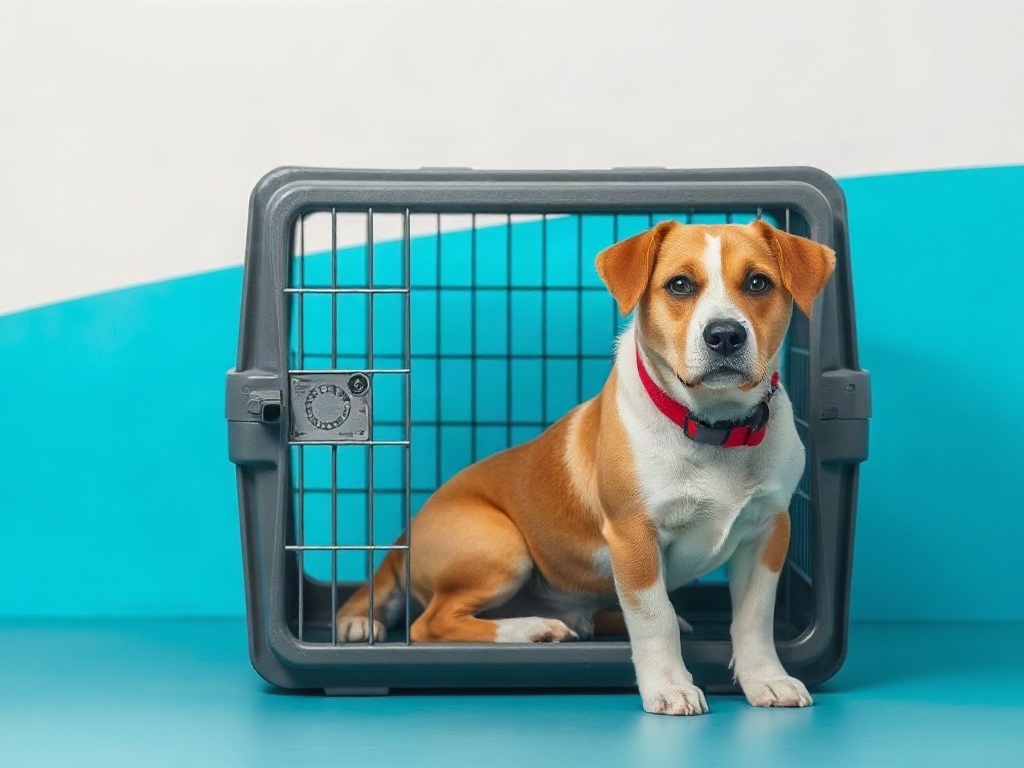
Travel crates for dogs who panic alone should prioritize escape-resistant construction, correct interior space, secure door hardware, and gradual acclimation rather than relying on confinement to stop distress. A rigid crate may limit bending and fabric damage, but no crate can make severe separation panic safe by itself. Watch for frantic biting, repeated impacts, heavy drooling, or attempts to force through ventilation openings, because these behaviors can lead to broken teeth, torn nails, or overheating. Test the setup during brief, recorded absences before travel, and involve a veterinarian or qualified behavior professional if the dog cannot remain below the panic threshold.
Why Do Some Dogs Panic in Travel Crates?
A dog that becomes frantic when left alone may be reacting to separation, confinement, travel cues, or a combination of all three. Distinguishing among these pressures changes what a safe plan looks like. A dog who rests in a crate while the owner is nearby but panics after the owner leaves is showing a different pattern from a dog who claws at the door as soon as it closes.
Travel adds unfamiliar sounds, vibration, temperature changes, handling, and disrupted routines. The crate itself may also predict an unpleasant event if it appears only before a long drive, boarding stay, or flight. Closing the dog inside for progressively longer periods without checking its response can strengthen that prediction rather than create comfort.
Use a phone or indoor camera to observe the first short absence. Useful details include how quickly the behavior begins, whether the dog can eat, whether it pauses, and whether distress intensifies. Continuous pacing, vocalizing, panting unrelated to heat, drooling, door biting, or forceful body impacts suggest more than ordinary protest. A dog that takes a food toy and settles after a few minutes presents a lower-risk picture than one that ignores food and immediately attacks the exit.
A common mistake is assuming a stronger enclosure will resolve the emotional cause. Heavy construction may contain some dogs more reliably, yet it can also leave a highly distressed dog struggling against less forgiving surfaces. The crate is a transport and management tool, not a treatment for separation-related behavior. If panic is intense, sudden, or worsening, a veterinarian can assess pain, illness, medication considerations, and whether referral to a veterinary behavior professional is appropriate.
Before comparing products, write down the exact trigger sequence: crate enters the room, dog goes inside, latch closes, person moves away, vehicle starts, or dog is left at the destination. That sequence identifies where preparation should begin and prevents the purchase decision from obscuring the behavioral problem.
Which Crate Design Is Safest for a Panicking Dog?
A rigid, well-ventilated enclosure is generally a more defensible starting point than a fabric carrier for a dog known to scratch, chew, or push against boundaries. Soft-sided models are portable and convenient for settled dogs, but mesh panels, zippers, and seams can become escape points when a dog applies teeth and claws. Wire crates provide airflow and visibility, although determined dogs may catch a jaw, paw, collar, or nail in the gaps.
Molded plastic travel kennels reduce wide openings and visual stimulation while providing a defined shell. Their limitations include plastic doors or attachment points that may not withstand persistent force, along with reduced airflow if baggage or vehicle panels block the vents. Metal or reinforced crates can resist deformation better, but added strength brings weight, cost, noise, and hard interior surfaces. Labels such as “escape-proof” should be treated skeptically because safety depends on the dog’s behavior, crate condition, hardware, and transport setting.
Inspect the actual unit rather than judging by its category alone. The door should align cleanly and latch without play. Vent openings should not admit the dog’s muzzle, and exposed edges should not invite chewing. Fasteners should remain tight under hand pressure. If the crate separates into upper and lower shells, verify that every connection is present and correctly seated. Remove collars, harnesses, tags, and dangling accessories inside the enclosure unless a specific transport rule requires otherwise; these items can snag during movement.
Vehicle use introduces another decision: containing the dog is not the same as securing the crate. Place the enclosure where it cannot slide, tip, or become a projectile, following the vehicle and crate manufacturers’ instructions for attachment. Do not improvise by routing a restraint across a weak door or ventilation panel. For air travel, the carrier must also satisfy the current requirements of the airline and itinerary, which may differ from what is suitable for a car.
The better choice is therefore the least hazardous design the individual dog can tolerate—not automatically the strongest model available. A dog who calmly uses a properly secured molded kennel may be safer than a panicking dog confined in an extremely rigid metal box. Construction must be evaluated alongside observed behavior.
How Should the Crate Fit and Interior Be Set Up?
Crate fit should allow the dog to stand naturally, turn around, and lie in a normal position without providing so much unused room that the dog is thrown across the interior during vehicle movement. Measure the standing dog rather than relying only on breed or weight labels. Check height at the tallest natural point, body length from the nose area to the base of the tail, and width at the broadest part of the body.
Extra space does not necessarily reduce panic. An oversized kennel can permit pacing, repeated charges at the door, or unstable footing on turns and stops. An undersized one restricts posture and can worsen heat and handling problems. Thick bedding also changes usable dimensions, so repeat the fit check with the planned floor layer installed.
For a dog likely to shred fabric, loose blankets and plush beds may create ingestion or entanglement hazards. A thin, fitted, nonslip mat is often easier to monitor, provided the dog has demonstrated that it will not chew it. Absorbent material may be useful for accidents, but it should lie flat and remain inaccessible for shredding. Avoid unattended bowls, clips, or toys that could splinter, snag, or reduce floor space. Food toys belong only in the setup after supervised use shows that the dog handles them safely.
Ventilation must remain open on multiple sides, with clearance from luggage, walls, and vehicle trim. More covering is not automatically more calming: a partial visual barrier may help a dog that reacts to passing movement, while extensive covering can reduce airflow and conceal escalating distress. Test any cover under supervision and confirm that the temperature remains suitable.
Use this compact pre-travel inspection:
- Fit: The dog can stand, turn, and rest without compression or excessive open space.
- Hardware: Doors, latches, shell fasteners, and attachment points are intact and fully engaged.
- Interior: No collar, loose strap, chewable bedding, sharp edge, or dangling accessory is present.
- Airflow: Every intended vent has clearance, including after luggage is loaded.
- Restraint: The crate is secured using compatible anchor points and does not rock or slide.
Recheck the setup after each trip. Chew marks, bent wire, cracked plastic, loosened bolts, and distorted latches are evidence that the next journey requires repair, replacement, or a different management plan.
How Can You Test the Crate Before Travel?
Preparation should begin below the point at which the dog loses the ability to eat, pause, or settle. Place the travel crate in a familiar area with the door secured open, and allow voluntary investigation. Meals or small food rewards can build a neutral association if the dog is comfortable enough to consume them. Forcing the dog inside after refusal risks turning the enclosure into a stronger warning signal.
Progress one variable at a time. A practical sequence is entering voluntarily, resting with the door open, tolerating a brief closure while a person remains beside the crate, accepting movement away, and then handling a very short absence. Reopening the door before panic begins is more useful than waiting for a full struggle and hoping repetition produces acceptance. Duration should increase according to the dog’s recorded response, not a fixed calendar.
Once the indoor setup is quiet, transfer the same skills to a stationary vehicle. Next, try the engine running, followed by a brief drive that ends somewhere neutral or pleasant. A dog may tolerate confinement at home yet react to engine vibration or road motion, so skipping directly to a long trip leaves no room to identify the failing step. At a hotel or rental, test the crate while the owner remains in the room before considering any absence.
Signs of progress include entering without avoidance, taking food normally, lying with a loose posture, and recovering promptly after the session. Warning signs include faster escalation across trials, refusal of normally valued food, attempts to bend or bite the enclosure, heavy drooling, soiling associated with distress, or inability to settle after release. Repeatedly practicing through those signs is not a tougher form of acclimation; it is evidence that the step is too difficult.
Build the travel plan around the dog’s demonstrated tolerance. If the dog can remain comfortable only while someone is visible, arrange a companion, pet sitter, or supervised stop rather than treating the trip as a test of endurance. When necessary travel cannot be matched to current tolerance, discuss the situation with a veterinarian well ahead of departure. Any medication plan needs professional direction and a trial under controlled conditions rather than first use on travel day.
When Is a Crate the Wrong Travel Plan?
A crate is the wrong short-term plan when confinement reliably produces behavior likely to injure the dog or defeat the enclosure. Bleeding gums, damaged teeth, torn nails, abrasions, bent bars, cracked panels, or repeated escape attempts call for stopping the trial and reassessing the arrangement. Breathing difficulty, collapse, marked weakness, or suspected heat illness requires prompt veterinary attention rather than another equipment adjustment.
Choosing not to leave the dog crated alone does not necessarily mean abandoning travel. Depending on the route and destination, alternatives may include traveling with another adult, arranging continuous supervision, using a trusted sitter at home, selecting accommodations that permit the dog to remain with the owner, or postponing an optional trip while behavior support is underway. A secured vehicle barrier or crash-tested harness may suit some calm dogs during road transport, but it is not an unattended-hotel-room solution and may be unsafe for a dog that chews restraints.
Operational limits also matter. Hotels may restrict unattended animals, airlines set carrier conditions, and climate control can fail in parked vehicles. Never assume that a familiar crate makes an unattended car acceptable. Plans should account for loading delays, rest stops, check-in procedures, and the possibility that the dog cannot be left while the owner enters a building.
Separate inconvenience from risk when making the decision. A noisy dog who settles quickly may require better scheduling and environmental management. A dog who repeatedly launches at the door requires a different level of intervention. Video evidence, damage patterns, and recovery time provide better guidance than optimism or product claims.
The practical threshold is straightforward: if the enclosure cannot be tested without escalating distress, do not depend on it as the only safeguard during a longer or less controllable trip. Reduce the challenge, add supervision, change the itinerary, or seek veterinary and behavior guidance before departure.
Frequently Asked Questions
Is a metal crate always safest for a dog that escapes?
No. Metal may resist damage, but a panicking dog can injure teeth, nails, or limbs against rigid surfaces. Safety depends on escape behavior, opening size, hardware, fit, restraint, and supervised testing.
Should I cover the crate to calm my dog?
A partial cover may reduce visual triggers for some dogs, but it can restrict airflow and hide distress. Test it while supervising the dog, keep vents clear, and remove it if panting or agitation increases.
Can I leave bedding in a travel crate?
Use only a fitted, nonslip layer the dog has not chewed or shredded during supervised trials. Loose blankets and thick beds can reduce space or create ingestion and entanglement hazards.
How do I know whether my dog is improving?
Look for voluntary entry, normal food intake, relaxed resting, fewer attempts to reach the exit, and quick recovery. Longer confinement is not progress if agitation, drooling, or destructive behavior increases.
Can a veterinarian help with travel-related crate panic?
Yes. A veterinarian can evaluate medical contributors, discuss behavior support, and determine whether medication or referral is appropriate. Seek help before the trip so any plan can be assessed under controlled conditions.
Conclusion
Choose a travel crate by matching its construction and dimensions to the dog’s observed behavior, not by trusting an escape-proof label. Inspect doors, vents, seams, fasteners, interior materials, and vehicle attachment points, then record brief trials to see what happens after the latch closes and the owner moves away. Calm entry and recovery support gradual progression; frantic contact with the enclosure means the plan needs to become easier or change entirely.
Before departure, reproduce the actual stages of travel in controlled steps, including the stationary vehicle, engine noise, a short drive, and the destination environment. If the dog bites hardware, strikes the walls, damages teeth or nails, or cannot remain settled during a short absence, prioritize supervision and professional veterinary or behavior support over stronger confinement. A safe itinerary may require another person, different lodging, a sitter, or postponement.