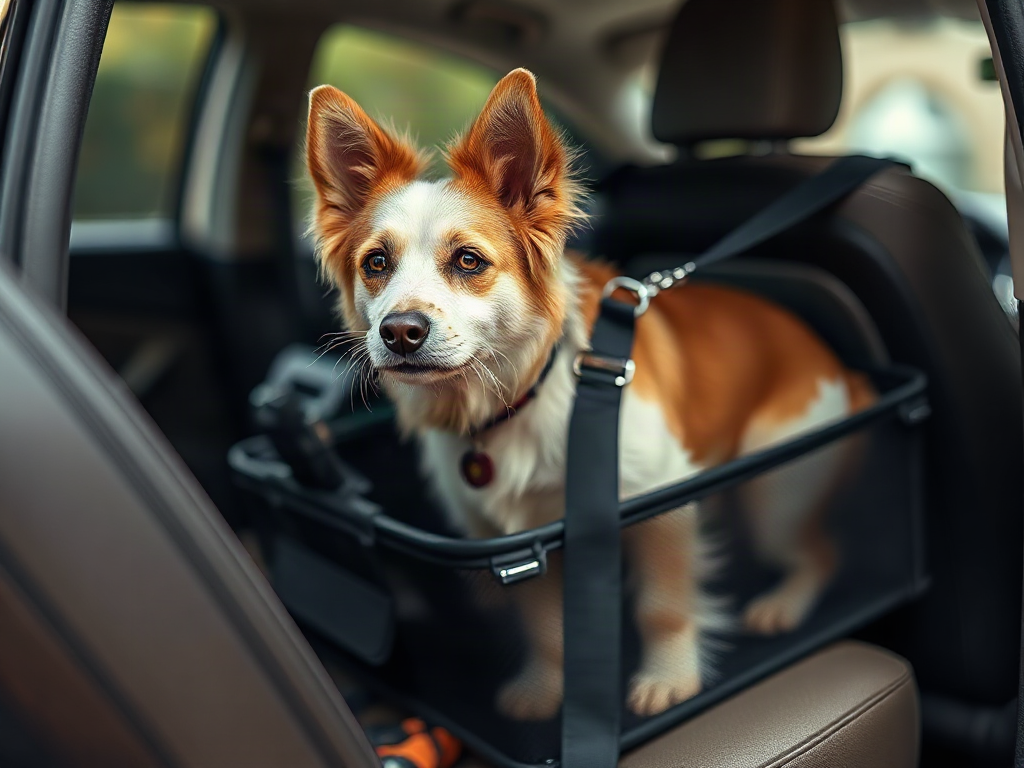
Low-cost dog travel carriers worth considering are models that fit the dog’s standing and turning dimensions, use secure closures, provide adequate ventilation, and suit the intended car, walking, or airline trip. A basic soft-sided carrier may serve a calm small dog on short journeys, while a rigid plastic model is usually more practical for scratching, chewing, or messy travel. Check the internal measurements rather than relying on weight limits, inspect seams and zipper stops, and confirm that the base does not collapse under the dog. Budget models lose value quickly when weak hardware, poor balance, or carrier restrictions make them unsafe or unusable.
Which Budget Carrier Style Matches the Trip?
Carrier style should follow the journey rather than the lowest advertised price. Soft-sided bags, rigid plastic carriers, backpacks, and wearable slings manage weight and movement differently. A model that works for a ten-minute walk from a parking lot may be awkward in a moving vehicle, difficult to clean after an accident, or unacceptable for a particular airline itinerary.
Soft-sided carriers are often the most accessible low-cost option for small, settled dogs. Their flexible walls make storage easier, and some compress slightly beneath a seat. That flexibility is also their main limitation: a heavy dog can bow the floor, while a restless dog may push against mesh panels or work at a zipper. Look for a removable base insert that stays level when the loaded bag is lifted. A soft carrier is a poor bargain if the dog slides toward the center every time the shoulder strap is used.
Rigid plastic carriers generally offer better structure, easier wipe-down surfaces, and more resistance to claws. They can suit car journeys, veterinary visits, or dogs that need a defined enclosure. Their drawbacks are bulk, less convenient storage, and variable door quality at the cheapest end of the market. A rigid shell should meet evenly at its seams, and its door should latch without needing pressure to align it. Decorative plastic that flexes around the latch is a warning sign.
Backpack carriers may be useful on foot or public transport where allowed, but the dog’s posture and the wearer’s balance need close attention. A tall-looking pack can still have a narrow base that forces a dog to perch rather than settle. Slings provide even less containment and should not be treated as substitutes for enclosed carriers in vehicles or crowded terminals. They are better reserved for brief, controlled movement with a calm dog.
For car travel, a carrier also needs a stable placement strategy. Loose placement on a seat or in an open cargo area allows it to shift during turns and sudden stops. Examine the manufacturer’s instructions for any attachment points and intended vehicle use; a luggage sleeve or ordinary shoulder strap should not automatically be assumed to be a crash-restraint system. Readers comparing Low-cost dog travel carriers worth considering should reject models that do not explain how their straps and loops are meant to be used.
Air travel creates a separate constraint. Labels such as “airline friendly” do not guarantee acceptance because aircraft, routes, cabin policies, and under-seat spaces can differ. Obtain the operating airline’s current requirements before buying, then compare the carrier’s external dimensions and design with those instructions. For cargo transport or complex itineraries, a purpose-specific crate may be necessary; the cheapest general-purpose bag should not be assumed suitable.
Sizing and Comfort Without Paying for Unnecessary Features
Correct internal space provides more value than extra pockets, matching bowls, or padded trim. A dog should be able to enter without being forced, stand in a natural position, turn around, and settle comfortably. An excessively tight carrier restricts posture and airflow around the body, while an oversized soft bag can sag and allow the dog to slide as it is carried.
Measure the dog while standing normally. Record the length from the front of the chest to the rear of the body, the height from the floor to the highest point that must clear the top, and the width across the broadest area. Compare those measurements with usable internal dimensions, not only the product’s outside measurements. Thick padding, sloped ends, wheel housings, and reinforced frames can reduce the space available inside.
Published weight limits are structural claims, not complete sizing instructions. Two dogs of equal weight may have very different proportions: a compact dog may fit where a long-backed or tall-legged dog cannot. If a listing gives only a weight range and no internal dimensions, ask the seller or choose a model with clearer information. Guessing by breed name is similarly unreliable because individual dogs vary.
Ventilation needs to remain open when the carrier is occupied and positioned for travel. Mesh on several sides can improve airflow and visibility, but more mesh is not automatically better for a dog that scratches, becomes overstimulated, or needs protection from drafts. A rigid carrier with ventilation openings may offer stronger containment, whereas a soft bag can provide a quieter visual environment if some panels are solid. Never cover all openings to calm a nervous dog.
The floor deserves a loaded test. Place an object close to the dog’s weight inside the empty carrier, lift it as directed, and watch whether the base stays flat. A bowed floor concentrates pressure, changes the dog’s footing, and can pull the side walls inward. A thin comfort pad can be replaced cheaply, but it cannot correct a weak base. For dogs prone to travel accidents, a removable, washable liner over a moisture-resistant insert is more useful than plush fabric sewn permanently into the bottom.
Comfort also depends on temperature, trip duration, noise, and the dog’s familiarity with confinement. Panting that continues in a cool setting, frantic digging, repeated escape attempts, heavy drooling, or refusal to enter may signal distress, overheating, nausea, or a poor association with the carrier. Stop and assess the situation rather than assuming a thicker cushion will solve it. Persistent travel distress or possible motion sickness warrants a conversation with a veterinarian.
A practical budget allocation puts money first toward space, airflow, a stable floor, and dependable closures. Accessory pockets and expandable compartments come later. Expansion panels can provide waiting-room space when fully supported and supervised, but they may add zippers and seams that a determined dog can exploit. The simplest correctly sized design is often a better purchase than a feature-heavy model with uncertain structure.
Construction Details That Separate Value From False Economy
Small construction details reveal whether a low price represents efficient design or premature failure. Product photos rarely show how a carrier behaves under load, so inspect the closure path, load-bearing seams, handles, base, and ventilation panels as a connected system. A strong handle offers little protection if it is stitched only to a thin outer layer.
On soft carriers, apply gentle pressure around mesh borders and zipper ends. Stitching should look consistent, without loose threads, skipped areas, or gaps where mesh meets fabric. Zippers should move smoothly around corners and resist opening when pressure is applied from inside. Dual zipper pulls are convenient, but they should have a way to remain together when the dog is enclosed. An exterior clip may discourage accidental separation; it does not compensate for a flimsy zipper track.
Check every opening, not just the main door. A top entry can simplify loading for some small dogs, yet a poorly secured top panel may become an escape point when the carrier is lifted. Internal tethers require careful judgment as well. If one is used according to the manufacturer’s directions, it should attach to a properly fitted harness rather than a neck collar, and it must be short enough to reduce entanglement without holding the dog in an unnatural position. It is not a substitute for closing the carrier.
Rigid models require a different inspection. Confirm that the upper and lower shell halves connect at all intended points, that fasteners are present, and that the door cannot be dislodged by ordinary pawing. Press lightly near the door frame and handle to identify excessive flex. A metal door may be stronger than a light plastic one, but only if its hinge pins and latch engage fully with the shell.
Used carriers can stretch a limited budget further, particularly rigid plastic models with replaceable fasteners. Examine them in bright light for hairline cracks around the handle, door frame, ventilation holes, and assembly points. Check for rust, bent doors, persistent odors, chewed edges, and missing hardware. Clean and dry a secondhand carrier before use, following material-appropriate instructions. A structurally damaged shell is not restored by tape or a new blanket.
Online reviews are most useful when they describe the dog’s approximate dimensions, trip type, and duration of ownership. A review saying a bag is “roomy” offers little without context. Look for repeated reports about floor collapse, zipper separation, torn mesh, uncomfortable handles, or inaccurate measurements. At the same time, distinguish design failures from misuse, such as placing a chewing dog in a lightweight mesh bag or exceeding the stated load.
Return terms matter because fit cannot be confirmed from a listing alone. Before allowing the dog into a carrier that may need to be returned, understand the seller’s condition requirements. Preserve packaging and test dimensions first. The selection process for Low-cost dog travel carriers worth considering should account for replacement cost: spending slightly more on repairable hardware or a washable liner may cost less than replacing an entire bag after a few trips.
A Practical Pre-Purchase and Home-Test Process
A staged test exposes poor fit and weak construction before the carrier is used in a stressful setting. Begin by writing down the exact trip: walking distance, vehicle placement, storage needs, expected duration, weather exposure, and any carrier rules imposed by a transport provider. This prevents an appealing low price from overriding a non-negotiable requirement.
Use a compact buying checklist:
- Match the format to the trip. Decide whether structure, collapsibility, carrying comfort, or easy cleaning has priority.
- Compare usable measurements. Check the dog’s standing dimensions against the interior, including sloped panels and padding.
- Inspect containment. Review doors, zipper stops, mesh borders, shell connections, and possible escape gaps.
- Test the loaded base and handles. Confirm that the floor remains level and attachment points do not distort.
- Verify outside rules. Recheck airline, rail, accommodation, or local transport requirements directly with the provider.
- Keep the receipt. Fit and handling problems may appear only after assembly and careful indoor evaluation.
Once the carrier passes a physical inspection, introduce it at home with the door secured open. Place it in a familiar room and allow voluntary investigation. Small food rewards can be offered near the entrance and then inside, provided the dog has no dietary restriction that makes them unsuitable. Do not force the dog in and immediately begin a long journey; that pairs confinement with loss of control and gives no opportunity to identify a sizing problem.
Progress from brief entries to short periods with the door closed while you remain nearby. Then lift the carrier only a small distance, set it down smoothly, and inspect the dog’s position. Successful signs include entering without prolonged hesitation, turning without scraping the walls, settling on a level base, and remaining able to breathe comfortably with ventilation unobstructed. A carrier is failing the test if it tips, folds inward, pinches fur in a zipper, permits a paw or nose to force open a gap, or causes the dog to remain compressed.
For a car trip, rehearse carrier placement in the stationary vehicle before driving. Follow the carrier and vehicle manufacturers’ instructions rather than improvising with clips that were designed for keys, luggage, or walking leashes. Start with a short drive and check for sliding, overheating, vomiting, escalating vocalization, or damaged closures afterward. Never open the carrier beside an unsecured exterior door or in an unfamiliar parking area.
Air travelers should perform the dimensional and handling checks well before departure. Confirm the current policy with the airline operating each segment, including carrier dimensions, pet reservations, documentation, and whether the dog must remain enclosed. Codeshare trips can involve more than one set of operating conditions. A budget carrier that is rejected at check-in becomes an expensive mistake even if its construction is adequate.
After each use, remove debris, wash detachable liners as directed, and inspect stress points while the carrier is empty. New whitening in plastic, enlarged stitch holes, frayed mesh, loosening handles, or a zipper that repeatedly separates indicates deterioration. Early inspection makes a low-cost model more manageable because it allows retirement before failure during transit rather than after it.
Frequently Asked Questions
Are inexpensive soft-sided carriers safe for car trips?
They may provide containment when correctly sized, closed, positioned, and used according to their instructions, but softness and seat loops do not automatically mean crash protection. Review the manufacturer’s stated vehicle use and avoid leaving the carrier loose on a seat.
Should I choose a carrier by my dog’s weight?
Use weight to check the carrier’s load limit, then use the dog’s length, height, and width to confirm physical fit. Weight alone cannot show whether a tall or long-bodied dog has enough usable room.
Is a secondhand dog carrier a reasonable budget option?
A used rigid carrier can be good value if its shell, door, handle, and fasteners are intact. Avoid cracks, bent hardware, chewed openings, missing parts, and damage concealed by tape or fabric.
Does “airline approved” guarantee cabin acceptance?
No. Acceptance depends on the operating airline’s current policy, the aircraft, the route, the carrier’s external dimensions, and the dog’s fit. Confirm every flight segment directly before purchasing.
How can I tell whether a low-cost carrier is failing?
Stop using it if the floor collapses, seams open, mesh frays, plastic cracks, the door flexes out of position, or zippers separate under light pressure. Distortion while carrying the dog is also a clear warning.
Conclusion
A limited budget should narrow the purchase to functional priorities, not excuse weak containment. Measure the dog in a standing position, identify the exact travel setting, and compare usable interior space before considering convenience features. Inspect every closure and load-bearing point, test the floor with weight inside, and verify transport-provider rules independently.
Soft-sided models make sense for calm small dogs and storage-conscious owners, while rigid carriers may justify their bulk when cleaning, structure, or resistance to scratching matters more. Whichever format fits the trip, introduce it gradually and run a short home and vehicle trial before relying on it. Keep the packaging and receipt until fit is confirmed, then examine the carrier after each journey. Replacing a damaged model early is less costly than managing an escape, a rejected boarding attempt, or a failure away from home.