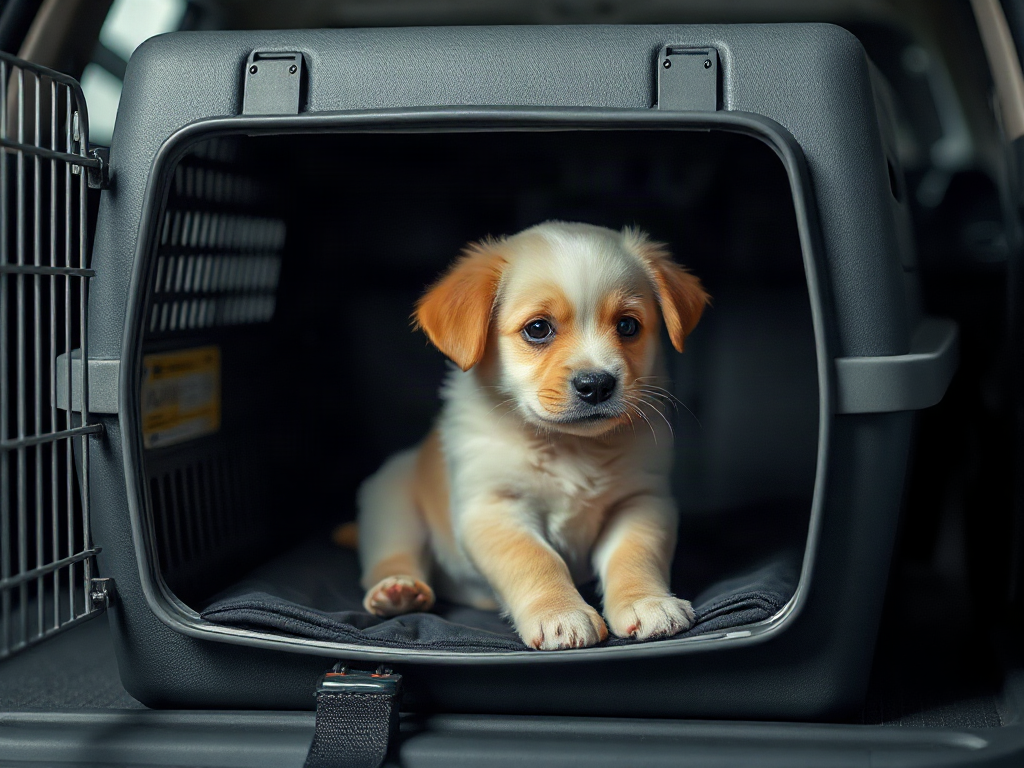
Travel crates for puppies during house training work best when they are correctly sized, introduced as calm resting spaces, and paired with prompt toilet breaks after sleep, meals, play, and transportation. The crate should let a puppy stand, turn, and lie comfortably without providing a distant corner for elimination. During trips, shorten the interval between breaks because motion, excitement, drinking, and schedule changes can alter toilet timing. Carry familiar bedding, cleaning supplies, a leash, and rewards, but remove absorbent material if the puppy repeatedly soils it.
How Should a House-Training Crate Fit?
A suitable puppy crate provides enough room for a natural standing posture, a full turn, and comfortable rest. It should not be so large that the puppy can sleep at one end and consistently eliminate at the other. That distinction matters during house training because the crate works as a temporary resting area between supervised toilet opportunities, not as a miniature room where the puppy spends much of the day.
Measure the puppy rather than relying only on breed labels or an estimated adult weight. Check standing height to the top of the head or ears, body length from nose to the base of the tail, and the space needed to turn without crouching. A rigid crate with a secure divider can accommodate growth while keeping the usable area appropriate. Recheck the divider frequently: puppies can outgrow an adjustment quickly, and a cramped posture is not an acceptable way to discourage accidents.
Construction also affects daily use. A rigid plastic model can offer a contained sleeping environment and may be practical for vehicle transport, while a wire model usually provides visibility and easy divider placement. Soft-sided designs are lightweight, but a puppy that scratches, chews seams, or pushes against mesh may damage one or escape. A collapsible fabric carrier should therefore not be treated as an unattended confinement space unless its condition, closures, and suitability for that puppy have been carefully assessed.
Floor setup requires similar judgment. A thin, washable mat may make resting more comfortable, but thick bedding can absorb urine and conceal a developing accident pattern. Some puppies also chew loose fabric. Begin with a simple, easy-to-clean surface and add bedding only when the puppy remains dry and does not ingest material. The crate should stay ventilated and out of direct sun, heaters, cargo piles, and other locations where temperature or airflow can become unsafe.
A common mistake is buying an adult-size crate and assuming extra space is kinder. More room is useful for long-term ownership, but during early training it should be managed with a divider rather than left completely open. At the opposite extreme, choosing a tight travel shell to reduce soiling compromises comfort and may make the puppy resist entering. Fit should support relaxed rest while preserving a clear distinction between the sleeping area and the outdoor toilet location.
Building a Crate and Toilet Routine
Crate use becomes meaningful only when it is connected to predictable exits, supervision, and immediate access to an appropriate toilet area. Puppies commonly need an opportunity after waking, eating, drinking heavily, energetic play, training, and release from the crate. Age affects bladder and bowel control, but there is no single reliable confinement formula for every puppy. Size, recent activity, health, previous learning, and stress can all change the interval.
Start by taking the puppy directly from the crate to the chosen outdoor spot on a leash. Keep the trip calm and focused rather than turning it into play before elimination. When the puppy finishes, reward promptly and then allow supervised freedom or activity. If nothing happens, return indoors under close observation or use a short crate interval before trying again. Letting the puppy wander unsupervised after an unsuccessful toilet trip often produces an indoor accident within minutes.
The following sequence keeps the relationship between rest and elimination clear:
- Offer a toilet break before crating. Give the puppy enough time to settle and eliminate rather than making a rushed doorway stop.
- Use the crate for a realistic rest period. End the interval sooner if the puppy wakes, becomes active, circles, sniffs, or gives its established toilet signal.
- Go straight to the toilet location after release. Carry very young puppies when a hallway, elevator, or long route creates repeated accidents.
- Record the result. Note sleep, food, water, play, elimination, and accidents so the schedule reflects the individual puppy.
A written log is more useful than guessing. If accidents repeatedly occur 15 minutes before a planned outing, the schedule is too ambitious for the present circumstances. Move the break earlier, then lengthen intervals gradually after several dry repetitions. Progress should be judged by reliable behavior across different parts of the day, not by one unusually successful afternoon.
Do not restrict normal access to water simply to keep the crate dry. Instead, account for drinking when planning the next outing and ask a veterinarian about any concern involving excessive thirst or urination. Meals can often be scheduled consistently, which makes bowel movements easier to anticipate, but feeding and water decisions should still suit the puppy’s age, health, climate, and veterinary guidance.
The crate should never replace interaction, exercise, social exposure, or toilet access. Long confinement may force a puppy to soil the sleeping area, weakening the distinction the routine is meant to build. It can also create frustration that owners mistakenly interpret as stubbornness. A successful routine uses short, purposeful crate periods alongside active supervision and frequent opportunities to make the correct choice.
How Should the Routine Change During Travel?
Travel usually calls for earlier and more deliberate toilet stops than the puppy needs in a familiar home routine. Vehicle motion, excitement, unfamiliar surfaces, changed meal timing, and increased or decreased drinking can disrupt an otherwise predictable pattern. A puppy that stays dry for a certain interval while napping at home may not match that interval during a busy road trip.
Offer a toilet opportunity shortly before departure, then plan stops around the puppy’s recent pattern rather than the vehicle’s fuel range. A break is especially sensible after the puppy wakes, after a substantial drink, or when restlessness replaces quiet sleep. Stop in a safe location, attach the leash before opening the crate or vehicle door, and choose a low-distraction surface where the puppy can focus. Avoid letting a loose puppy jump from the vehicle into an unfamiliar parking area.
Secure the crate according to the vehicle and crate manufacturer’s instructions so it cannot slide, tip, or become a projectile during abrupt movement. Do not place it where luggage can fall against ventilation openings. Temperature needs active monitoring because a parked vehicle can become dangerous quickly, and airflow from the front seats may not reflect conditions around a crate in the cargo area. The puppy should not be left unattended in a vehicle simply because it is confined.
Pack for continuity rather than convenience alone. Useful supplies include a leash and harness, waste bags, water, a familiar mat if the puppy does not soil or chew it, rewards, paper towels, an enzymatic cleaner, and spare washable material. Familiar items can make settling easier, but they cannot compensate for missed breaks. Puppy pads inside the crate may protect the floor, yet they can blur the intended sleeping-versus-toileting distinction. They are better treated as an emergency management choice than the default house-training setup.
Consider a puppy that normally toilets after waking from a morning nap. If the puppy sleeps for part of a drive and then sits upright, shifts repeatedly, or whines near the usual waking time, waiting for a scheduled stop may be unreasonable. A safe stop at that point protects the training pattern. By contrast, opening the crate every time the puppy makes a brief sound can accidentally teach that vocalizing ends confinement. Look at timing, posture, recent intake, and the puppy’s established signals together.
Arrival deserves its own plan. Take the puppy to the selected toilet area before greeting people, exploring a rental property, or playing indoors. Keep the crate and supplies in a consistent location where possible. New surroundings increase supervision needs, even when the puppy had begun to appear dependable at home.
What Should You Do About Accidents or Distress?
An accident in a travel crate is information about timing, fit, stress, surface preference, or health; it is not evidence that punishment is needed. Move the puppy calmly to the designated toilet area, clean the puppy if necessary, and remove odor from the crate with a product intended for pet waste. Scolding after the event does not show the puppy where elimination should occur and may make toileting around people more difficult.
Review what happened immediately before the accident. Was the crate interval longer than usual? Did the puppy drink, eat, play, or wake without receiving a prompt outing? Was a large crate left undivided? Did traffic delay the planned stop? A single accident after an obvious scheduling failure calls for an earlier break next time. Repeated accidents despite frequent opportunities require a wider review rather than progressively longer confinement.
Crate distress must also be separated from a toilet signal. A puppy needing to eliminate may wake, sniff, circle, shift position, or vocalize near a predictable time. Distress may include escalating vocalization, frantic scratching, biting at the door, heavy drooling, persistent escape attempts, or an inability to settle even after toileting. These behaviors should not be handled with a wait-it-out approach when the puppy risks injury or panic. Reduce the difficulty, return to brief positive crate sessions, and seek qualified behavioral or veterinary help when the response is intense or persistent.
Build comfort outside urgent travel periods. Feed occasional meals near or inside the open crate, toss a safe reward through the doorway, and allow the puppy to exit without being trapped during early repetitions. Once entry is relaxed, close the door briefly while remaining nearby, then reopen it before agitation builds. Increase duration and distance in small steps. Only use chews or food toys that are appropriate for the individual puppy and safe under the level of supervision available.
Medical signs change the decision. Diarrhea, vomiting, straining, blood, unusual urine frequency, marked thirst, lethargy, or a sudden loss of previously reliable control can have causes that training adjustments will not resolve. Contact a veterinarian for guidance, particularly when symptoms persist or the puppy seems unwell. Very young puppies can deteriorate more quickly than healthy adult dogs, so avoiding unsupported home diagnosis is prudent.
The clearest signs of progress are voluntary crate entry, settling without escalating agitation, dry resting periods matched to the puppy’s current ability, and elimination soon after reaching the selected spot. Failure looks like recurring soiling, reluctance to enter, worsening escape behavior, or a schedule that depends on the puppy remaining confined beyond comfortable limits. In those cases, shorten the task and correct the setup instead of demanding endurance.
Frequently Asked Questions
Should a travel crate contain a puppy pad during house training?
Usually not as the default setup, because a pad can encourage elimination inside the sleeping area. It may serve as emergency protection in limited circumstances, but scheduled toilet stops and washable flooring preserve a clearer training pattern.
Can the same crate be used at home and in the car?
Yes, if it fits the puppy, remains in sound condition, and can be secured in the vehicle as directed by its manufacturer. Confirm that moving it does not disrupt the puppy's access to a consistent home resting place.
How do I know whether whining means the puppy needs a toilet break?
Consider the time since the last break, recent food or water, waking, posture, and the puppy's usual signals. Take the puppy out calmly when the need is plausible, keep the outing focused, and avoid turning every vocalization into play.
Should I punish a puppy for soiling the crate?
No. Clean the area without drama and adjust the break schedule, crate dimensions, or supervision. Punishment after an accident does not identify the correct toilet location and may increase fear.
When should crate accidents be discussed with a veterinarian?
Seek veterinary guidance for repeated unexplained accidents or signs such as diarrhea, vomiting, straining, blood, unusual thirst, frequent urination, lethargy, or a sudden change in previously stable habits.
Conclusion
A useful travel crate preserves a comfortable sleeping space while supporting frequent, well-timed trips to an appropriate toilet area. Check the fit as the puppy grows, secure the crate correctly in the vehicle, and base breaks on waking, meals, drinking, activity, and the puppy’s recorded pattern rather than a rigid age formula. Before a trip, rehearse calm entry and short confinement at home; during the trip, watch for changes in posture and restlessness and stop safely when a toilet need is plausible.
Treat accidents as a reason to inspect timing, crate dimensions, bedding, and health. Shorten the next interval instead of punishing the puppy or expecting greater endurance. If soiling continues despite a suitable setup, or if distress and physical symptoms appear, obtain veterinary or qualified behavior support. The next practical step is to measure the crate, prepare a simple toilet log, and test the routine on a short local drive before attempting a longer journey.
Further Reading
Authoritative Sources
- How to Crate Train a Dog: 11 Tips That Actually Work
earthbuddypet.comPuppies under six months should not be crated more than three to four hours at a stretch, and adult dogs should not go more than four to five ...
- Crate Training Best Practice Tips
snugglepuppy.comCrate training is a time commitment. New puppies under 6 months old cannot be in a crate for more than 3-4 hours at a time because they don't ...