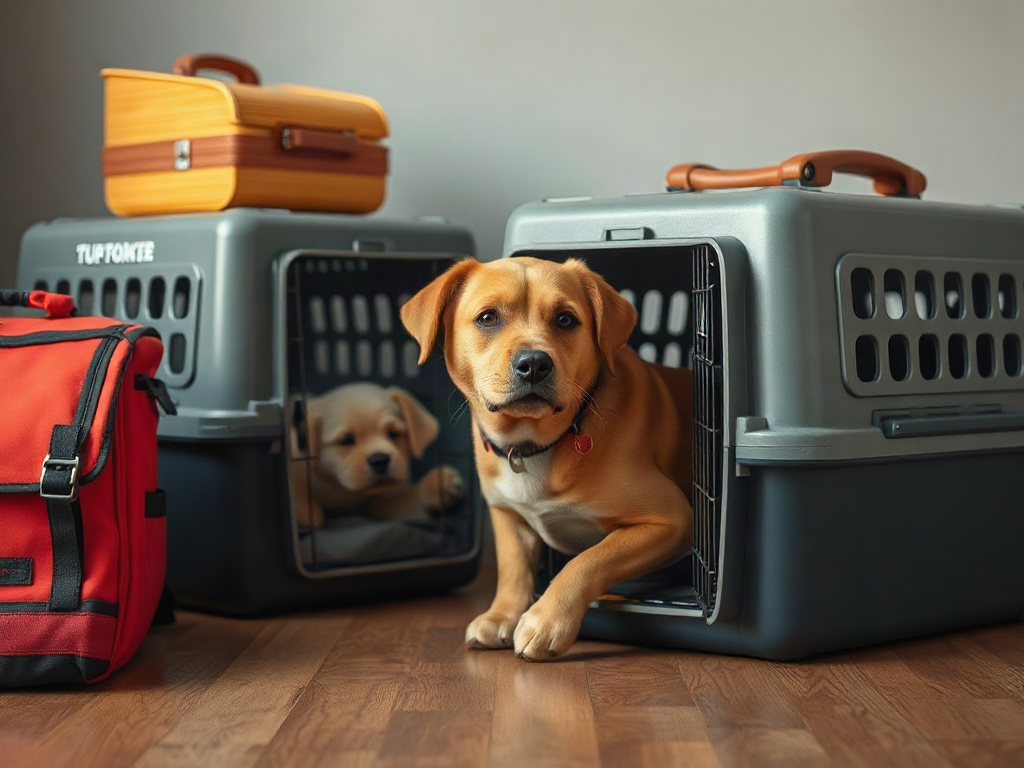
Travel crates for dogs with short noses should provide unrestricted airflow, enough room for a natural standing posture, and a secure structure that does not press against the face or chest. Brachycephalic dogs may have greater difficulty cooling themselves through panting, so heat, humidity, stress, and poor ventilation deserve more attention than extra padding or compact dimensions. Measure the dog rather than relying on breed labels, favor ventilation on multiple sides, and avoid covers that obstruct openings. Before any trip, confirm transport-provider rules and ask a veterinarian whether the dog’s breathing, weight, age, and medical history make the planned journey appropriate.
Why Do Short-Nosed Dogs Need Different Crate Priorities?
Short-nosed dogs require a crate decision centered on breathing space and temperature management rather than the smallest enclosure that technically contains them. Breeds commonly described as brachycephalic have shortened skull shapes, but individual breathing ability varies widely. A French Bulldog that breathes quietly at rest may respond to confinement differently from a heavier dog of the same breed that already pants in a cool room. Breed alone is therefore a warning to assess carefully, not a complete fitness test.
Dogs primarily release heat by panting. A crowded, warm, or poorly ventilated enclosure can make that process less effective, while excitement may increase respiratory effort before the vehicle even moves. Soft bedding piled around the body, a decorative crate cover, or luggage placed against ventilation holes can further reduce air movement. The weak assumption is that an air-conditioned cabin or vehicle automatically protects the dog. Climate control can fail to reach the crate evenly, especially in direct sun, a parked vehicle, a crowded cargo area, or beneath an airline seat.
A practical comparison illustrates the priority. A compact soft carrier may be convenient for a brief walk through a terminal, yet its flexible walls can bow inward and its mesh may be partly blocked by the seat or nearby bags. A larger rigid crate usually preserves interior volume and protects vents from collapsing, although it is heavier and may not qualify for in-cabin placement. Neither style is automatically correct: the planned transport mode, the dog’s measurements, and the carrier’s actual ventilation determine suitability.
Watch the dog before treating crate behavior as a training issue. Persistent noisy breathing, repeated gagging or retching, pronounced effort through the abdomen, weakness, disorientation, or gums that look pale, gray, or blue warrant prompt removal from the stressful setting and veterinary attention. A dog with known airway disease, previous heat intolerance, fainting, or breathing trouble should be evaluated by a veterinarian before travel. Sedation should not be improvised to make confinement easier; medication decisions belong with the veterinarian who knows the dog and the itinerary.
The practical priority order is straightforward: determine whether the trip is medically reasonable, choose a structure that preserves open space around the dog, protect every ventilation panel from obstruction, and reduce avoidable heat and stress. Convenience features such as storage pockets, wheels, and thick cushions come after those requirements.
How Should You Measure Crate Fit Without Restricting Breathing?
Crate fit should be based on the dog’s standing, turning, and resting posture rather than weight limits alone. Manufacturer weight ratings describe what a product may hold, but they do not reveal whether a broad-chested dog can turn without compression or whether its face will sit against a wall. Measure while the dog is standing naturally on a level surface, preferably when calm rather than panting after exercise.
Record body length from the point of the shoulder to the base of the tail, standing height from the floor to the highest natural point of the head or ears, and width across the broadest part of the body. For a short-nosed dog, also observe how much room the head needs when the dog sits and pants. The finished interior should permit standing without crouching, turning without scraping the sides, and lying with the neck in a comfortable position. Check published interior measurements because molded shells, wheel housings, padding, and tapered walls can make external dimensions misleading.
A crate can also be too large for secure road transport if the dog slides across an empty floor during braking or turns. The answer is not to squeeze the dog into a smaller shell. Use a stable, thin, nonslip mat and secure the crate according to the vehicle and crate manufacturer’s instructions. Avoid loose pillows that bunch around the chest or cover low vents. If the dog cannot maintain footing during an ordinary turn, the setup needs correction before a longer journey.
Use this fit check with the crate assembled exactly as it will travel:
- Stand: The head and ears do not press against the roof.
- Turn: The shoulders and hips clear the walls without forcing a tight pivot.
- Rest: The dog can lie on its side or chest without its nose being pushed into fabric or a door.
- Pant: Open space remains around the face, and no bedding or liner reaches the muzzle.
- Vent: Harnesses, bowls, labels, luggage, and vehicle surfaces do not block the openings.
A common mistake is testing only for a few seconds. Let the dog enter voluntarily and observe several calm position changes while the crate remains open. A suitable fit should still work after the mat and any approved water container are installed. For air travel, personal measurements do not replace the airline’s current dimensional, construction, and breed-related rules; ask the operating carrier about the exact flight, aircraft, and route before buying a crate.
Which Ventilation and Construction Features Matter Most?
Ventilation is useful only when openings remain exposed and the enclosure keeps its intended shape. Look for substantial airflow paths on multiple sides rather than a single mesh door. Opposing openings allow air to pass across the interior, while upper and lower vent areas can reduce pockets of warm, still air. More mesh is not automatically safer if the material sags onto the dog, tears under scratching, or becomes covered when placed beside luggage.
Rigid plastic crates preserve clearance around the head and resist inward collapse. They can suit vehicle use and some airline arrangements when the specific model and hardware satisfy the provider’s rules. Their tradeoffs are bulk, weight, and variable vent placement. Inspect molded openings for rough edges, check that the door latches positively, and confirm that the top and bottom sections connect with the required fasteners. A loose snap-fit shell may look secure in a living room but respond poorly to lifting or vibration.
Soft-sided carriers are lighter and easier to place in constrained spaces, but structure matters. Choose reinforced panels that do not fold onto the dog when a shoulder presses against them. Test every zipper and look for locking clips or another means of discouraging accidental opening. Mesh should be taut enough to remain away from the nostrils. Expandable panels may add resting room when fully deployed in a safe location, but they do not solve a cramped fit if they must stay closed during transport.
For road travel, restraint compatibility deserves the same scrutiny as ventilation. A crate that shifts, rolls, or becomes a projectile creates a different hazard. Follow the vehicle and crate makers’ attachment directions, keep the enclosure away from unprotected cargo that can fall against it, and do not place it where an airbag could strike the dog. Consumer crash-test information may help compare products, but a marketing phrase such as “car safe” is not a substitute for clear installation instructions and documentation of the test method.
Examine the complete setup rather than shopping from feature counts. A broad mesh panel loses its value when pressed against a seatback; a crate with many vents performs poorly under a blanket; and a fan does not make an overheated parked vehicle acceptable. Portable fans may circulate existing air but can fail, run out of power, or blow warm air. The sounder approach is to maintain a suitable ambient environment, preserve open vent clearance, and treat accessories only as secondary support.
How Should You Prepare the Crate and Monitor the Trip?
Crate preparation should begin with calm, voluntary practice well before departure. Place the enclosure in a comfortable room, secure the door open, and let the dog investigate without being pushed inside. Short sessions with familiar bedding or food rewards can help separate the crate from the noise and motion of travel. Progress to brief door closures only when the dog settles normally, then add the stationary vehicle and short drives. Training may reduce excitement, but it cannot correct an airway problem or make an undersized crate safe.
Before departure, check the forecast and the conditions at every transfer point, not merely the temperature at home. Schedule around cooler periods when possible and minimize waiting in exposed loading areas. Exercise should be gentle before confinement; hard running immediately before a warm trip may leave the dog panting heavily at the point when calm breathing is most desirable. Follow veterinary guidance about food, water, and medication, particularly for dogs with reflux, heart disease, airway concerns, or previous motion sickness.
During a road trip, place the crate where you can assess the dog without opening it into traffic or an unsecured area. Stop in safe locations often enough to evaluate breathing, comfort, hydration, and elimination needs; the appropriate interval varies with the dog, trip length, weather, and veterinary advice. A normal check is more than seeing that the dog is awake. Listen for a change from the dog’s usual breathing, look for escalating agitation or drooling, and feel whether the crate area is warmer or less ventilated than the driver’s seat.
Air travel requires a stricter go-or-no-go decision. Airlines may restrict short-nosed breeds, routes, seasons, crate types, or cargo acceptance, and policies can change. Obtain written confirmation from the operating airline rather than relying on a booking site or a policy remembered from a previous trip. Cabin travel may reduce separation, but under-seat dimensions can conflict with the space a broad dog needs. Cargo acceptance does not mean that a particular dog is medically suited to fly. Discuss alternatives such as ground transport or postponement when the dog cannot fit comfortably within permitted cabin dimensions.
Signs that preparation is working include voluntary entry, the ability to lie down without facial contact, breathing that returns to the dog’s normal resting pattern, and a crate that stays stable with all vents clear. Repeated escape attempts, sustained heavy panting in mild conditions, worsening respiratory noise, vomiting, weakness, or inability to settle indicate that the plan is failing. End the trial rather than extending it in hopes that the dog will simply adapt. Recheck fit and temperature, and seek veterinary guidance when breathing or medical concerns are involved.
Conclusion
A suitable crate preserves usable space around the head and chest, stays ventilated after it is installed, and remains stable during movement. Measure the dog’s posture rather than trusting a weight label, then test the fully equipped enclosure for standing, turning, resting, and panting room. Compare rigid and soft-sided designs according to the actual vehicle or airline arrangement, not convenience alone.
Practice in calm stages and treat changes in breathing, temperature tolerance, balance, or behavior as information rather than disobedience. Confirm current carrier rules directly with the transport provider, especially for flights, and ask a veterinarian to assess dogs with airway symptoms, heat intolerance, relevant medical history, or previous travel problems. If permitted dimensions conflict with comfortable fit, changing the transport plan is safer than forcing the dog into the available space.
Frequently Asked Questions
Is a larger crate always better for a short-nosed dog?
No. It must provide comfortable posture and open space around the face, but excessive unused room can allow sliding during vehicle movement. Use a stable nonslip surface rather than downsizing to a cramped enclosure.
Are soft-sided carriers safe for brachycephalic dogs?
They may be appropriate when the carrier remains structurally open, fits the dog, has unobstructed mesh on multiple sides, and meets the transport provider’s rules. A panel that bows against the face is a poor fit.
Should a travel crate be covered to calm the dog?
A cover can obstruct airflow and trap warmth. If visual screening is useful, it should never block ventilation, and the dog’s temperature and breathing still need close observation.
Can a portable fan make the crate safe in hot weather?
No. A fan can move air but cannot reliably correct dangerous ambient heat, and batteries or equipment may fail. Avoid hot conditions and never leave the dog in a parked vehicle.
How can I tell whether my dog is ready for a longer trip?
The dog should enter voluntarily, maintain its usual breathing, change positions freely, and settle during progressively longer practice rides. Respiratory distress, persistent panic, vomiting, or weakness calls for stopping and reassessing with a veterinarian.
Further Reading
Authoritative Sources
- USDA APHIS Pet Travel
aphis.usda.govOfficial information on animal travel requirements and planning for domestic or international trips
- IATA Traveler’s Pet Corner
iata.orgExplains airline-oriented pet transport planning and the need to verify requirements with the operating carrier
- AVMA Traveling With Your Pet FAQ
avma.orgProvides veterinary-focused points to discuss when assessing a pet’s health and preparing for travel