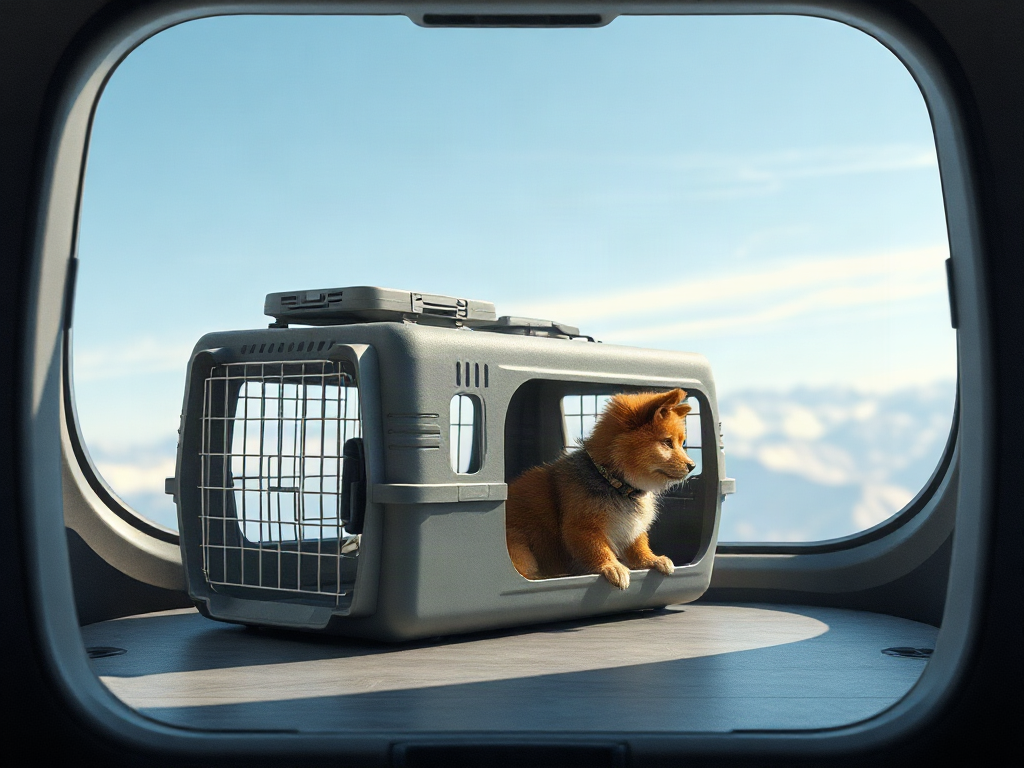
Travel crates for high-altitude trips should provide secure restraint, generous ventilation, enough room for natural posture, and reliable temperature protection without adding unnecessary weight. Altitude does not make a crate itself unsafe, but thinner air, rapid elevation gain, heat buildup, stress, and an animal’s existing respiratory or heart condition can increase risk. Choose a rigid, stable model for vehicle cargo areas or rough handling, secure it against sliding, and keep vents unobstructed. Acclimate the animal before departure, schedule water and observation stops, and seek veterinary guidance when health history or breathing tolerance creates uncertainty.
How Does Altitude Change Crate Travel?
Elevation changes the conditions around the animal rather than the basic function of the crate. As a vehicle climbs, lower oxygen availability may make exertion and stress harder to tolerate, while strong sun, cold air, dry conditions, and abrupt weather shifts complicate temperature management. A confined animal cannot move to another seat, seek shade, or clearly explain discomfort, so the traveler must monitor the crate environment and the animal together.
The speed of ascent matters. A gradual drive with periodic stops offers more opportunities to assess behavior than a rapid transition from low elevation to a mountain destination. During a stop, observe the animal before encouraging activity. Breathing should settle appropriately for the circumstances, posture should remain coordinated, and the animal should respond normally. Persistent breathing difficulty, unusual weakness, collapse, confusion, blue or very pale gums, repeated vomiting, or an inability to settle warrants prompt veterinary attention rather than continued travel.
Heat remains a serious operational concern even when the mountain air feels cool. Sunlight through vehicle glass can warm a crate, and blankets, luggage, seatbacks, or a tightly packed cargo area can reduce circulation around its vents. Conversely, directing cold air continuously into the enclosure can chill a small, short-coated, elderly, or medically vulnerable animal. The better approach is to maintain a moderate cabin temperature and preserve airflow around multiple sides of the crate.
Health history should influence the trip plan before equipment is purchased. Animals with known heart or respiratory disease, short muzzles, previous trouble at elevation, advanced age, or poor exercise tolerance may require individualized veterinary advice. A larger vent panel cannot compensate for a condition that reduces breathing tolerance. Medication should not be improvised for travel, and sedatives should not be used unless a veterinarian who knows the animal has advised their use.
A common mistake is treating altitude as a reason to buy an oversized enclosure. Excess space may allow the animal to be thrown against the walls during sudden braking or rough-road movement. Correct fit, stable placement, measured ascent, and active observation provide more useful protection than simply choosing the largest available model.
Crate Fit, Airflow, and Construction
A suitable crate allows the animal to stand without crouching, turn around, lie in a normal position, and rest without being compressed against the door or roof. Measure the individual animal rather than relying only on weight labels, which can group together pets with very different body proportions. Account for ears when standing, body length in a relaxed position, and the thickness of any pad placed inside.
Ventilation should be distributed rather than concentrated in one small panel. Openings on several sides permit air exchange when one side is near a seat or interior wall, but those openings only work when they remain clear. Mesh pockets stuffed with supplies, a decorative cover, or luggage pressed against the shell can defeat otherwise adequate ventilation. Inspect the assembled crate from every side and identify which openings could become blocked after loading.
Rigid plastic or metal crates are often the practical choice for long mountain drives, heavy cargo areas, and situations involving rough handling. Their structure resists collapse and provides a defined attachment point for securement. Soft-sided models are lighter and easier to carry into lodging, but they can deform under luggage, shift more readily on slick surfaces, and may be vulnerable to chewing or clawing. A soft enclosure can still be appropriate for a calm, crate-trained animal when it is fully supported and securely restrained in the passenger compartment.
Door hardware deserves closer attention than extra pockets or expandable panels. The latch should engage completely, resist accidental contact, and remain reachable after the crate is installed. Check corners, fasteners, wire junctions, and plastic seams for sharp edges or movement. If the top and bottom shell are joined by removable hardware, verify every connection before departure rather than assuming assembly at the factory or after storage remains sound.
Use a thin, stable, nonslip pad that does not bunch against vents. Deep bedding may retain heat, reduce interior height, and create an unstable footing on winding roads. Absorbent material can be placed beneath a washable surface for animals prone to accidents, but loose pads should not slide when the crate is gently tilted.
The recurring failure is evaluating the empty crate indoors and ignoring its loaded environment. Put the pad, water solution, and permitted accessories inside; place the crate where it will actually ride; then check posture, latch access, airflow, and stability. A model that looks spacious in a room may become poorly ventilated once surrounded by bags in a vehicle.
How Should the Crate Be Secured in a Vehicle?
The crate should sit on a level, supported surface and be restrained so it cannot slide, tip, or become a projectile during abrupt steering or braking. Follow the vehicle and crate manufacturers’ instructions for approved attachment methods. Do not assume that threading a seat belt through a handle is safe; some handles are intended only for carrying and may not withstand crash forces.
Placement affects both restraint and climate. A passenger-compartment location often makes it easier to observe the animal and maintain a controlled temperature. An enclosed trunk is unsuitable because ventilation and temperature cannot be managed reliably. Open cargo areas expose the crate to wind, debris, exhaust, weather, and severe temperature variation and should not be treated as equivalent to the climate-controlled cabin.
In an SUV or hatchback, a crate placed behind the rear seat may appear stable until a steep grade or sharp bend causes it to move. Use compatible anchors or a vehicle-specific restraint arrangement, and prevent surrounding objects from striking the enclosure. Heavy coolers, tools, and suitcases should not sit loose beside or above it. Leave a clear air path around ventilation panels and confirm that a shifting bag cannot cover them.
A restraint test can expose obvious loading problems before departure. With the vehicle parked, press the crate forward, backward, and side to side using moderate hand pressure. It should not migrate across the surface, rotate toward a door, or allow the restraint to pull across a vent or latch. This is not a crash-performance certification, but it helps identify ordinary movement that could worsen on mountain curves or unpaved access roads.
Route conditions should shape the installation. A short paved drive to a high-elevation hotel may need a different arrangement from hours on washboard roads to a trailhead. Rough routes favor a rigid shell, secure nonslip base, minimal interior clutter, and more frequent checks of attachment points. Stop safely before adjusting the enclosure; opening a crate beside moving traffic or on a narrow shoulder introduces escape and collision hazards.
The weak assumption is that a heavy crate will stay put because of its weight. Braking, cornering, and steep grades can move substantial objects. Securement, not mass, controls routine sliding and reduces the chance that the enclosure or nearby cargo will injure the animal.
High-Altitude Trip Checklist
Preparation should test the complete travel setup before the mountain ascent. Crate training, route planning, equipment inspection, and health decisions are easier to address at home than at a remote overlook. Begin with short stationary sessions, progress to ordinary drives, and observe whether the animal can rest without frantic escape behavior, repeated drooling, persistent vocalization, or attempts to chew the enclosure.
Use the following compact checklist before leaving:
- Confirm fit: Check standing height, turning room, resting posture, and pad thickness with the animal inside.
- Inspect the enclosure: Test the latch, fasteners, seams, vents, base, and restraint points.
- Load for airflow: Keep ventilation panels clear and separate the crate from loose or heavy cargo.
- Plan the ascent: Identify safe stopping locations, weather changes, fuel availability, and veterinary services along the route and near the destination.
- Pack practical supplies: Carry water, a familiar bowl, leash or harness, waste supplies, cleaning materials, identification details, and necessary prescribed medication.
- Check the animal: Note baseline breathing, energy, appetite, and behavior so meaningful changes are easier to recognize.
Water should be offered in a way that does not create a spill hazard or require opening the door in an unsafe place. Whether an attached bowl is suitable depends on the crate, the animal, and the length of the segment. Test it in advance; a bowl that empties across the bedding on the first curve offers little practical value. Never leave an animal unattended in a parked vehicle merely because the crate has ventilation.
At each planned stop, inspect more than the animal. Touch the bedding to detect spills, confirm the latch remains fully engaged, verify that straps have not loosened, and look for luggage migration. A calm animal, stable interior temperature, dry footing, normal responsiveness, and unchanged securement indicate that the arrangement is functioning as intended. Escalating agitation, sustained abnormal breathing, repeated attempts to escape, overheating, weakness, or hardware movement means the plan needs to change.
Destination conditions also matter. A crate that works in the vehicle may be placed beside a heater, in direct afternoon sun, or on an exposed balcony after arrival. Establish a quiet, temperature-controlled location indoors and keep familiar bedding available. For a multi-day stay, continue monitoring rather than assuming the absence of trouble on the first drive proves the animal has fully adjusted.
The most avoidable mistake is making the first long crate experience coincide with a rapid climb. Familiarization reveals fit, motion sensitivity, latch problems, and anxiety while alternatives are still available. If practice drives show persistent distress, consult a veterinarian or qualified behavior professional before extending the duration or elevation.
Frequently Asked Questions
Does a pet need a special crate specifically rated for high altitude?
There is generally no separate altitude rating for ordinary travel crates. Prioritize correct fit, open ventilation, structural condition, secure placement, and suitability for the chosen transportation method.
Is a soft-sided or hard-sided crate better in the mountains?
Rigid models are usually easier to stabilize and protect from surrounding cargo. A soft-sided enclosure may suit a calm animal in a supported cabin location, provided it cannot collapse, shift, or have its mesh blocked.
Should the crate be covered when driving at elevation?
A partial cover may reduce visual stimulation for some animals, but it must not restrict ventilation or trap heat. Monitor conditions closely and avoid covering every vent panel.
How often should I check my pet during a mountain drive?
Check at every safe planned stop and whenever behavior, breathing, weather, road conditions, or cabin temperature changes. The appropriate interval varies with the animal, route, health, and trip length.
When should I ask a veterinarian about high-altitude travel?
Seek individualized advice before departure if the animal has heart or respiratory disease, a short muzzle, advanced age, poor exercise tolerance, previous altitude trouble, or a history of severe travel distress.
Conclusion
A dependable mountain-travel setup combines an appropriately fitted enclosure with unobstructed ventilation, stable vehicle securement, controlled cabin temperature, and an ascent plan that leaves room for observation. Test the complete arrangement on shorter drives, including the pad, water method, restraints, and surrounding luggage. During the trip, watch for changes from the animal’s normal breathing, coordination, responsiveness, and ability to settle rather than relying on the crate alone as protection.
Before departure, inspect every latch and attachment point, map safe stops, and identify veterinary care near the route and destination. Animals with respiratory, cardiac, age-related, or prior altitude concerns need veterinary guidance tailored to their health. If the setup shifts, overheats, blocks airflow, or causes persistent distress during practice, revise it before climbing higher.