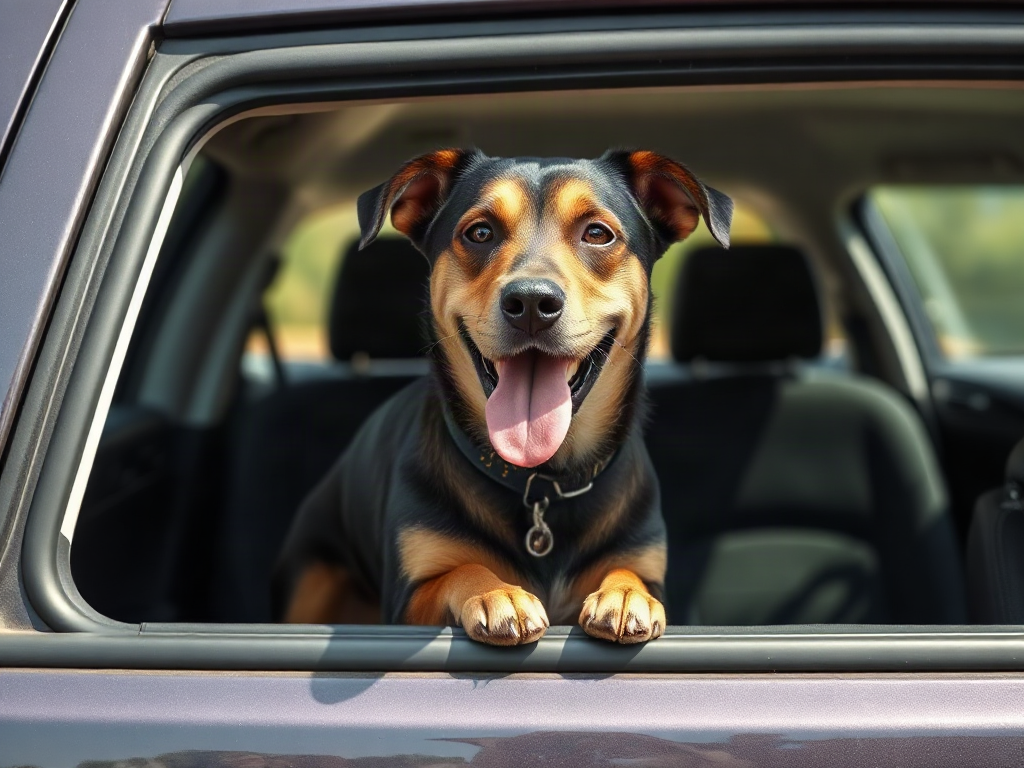
Leaving a dog in a car creates serious travel safety risks because cabin heat can rise quickly, ventilation is limited, and dogs cannot cool themselves as efficiently as people. Cracked windows, shade, mild outdoor temperatures, or a short errand do not make an unattended vehicle reliably safe. Heat stress may progress from heavy panting and drooling to weakness, confusion, vomiting, collapse, or seizures. Avoid leaving the dog alone by using pet-friendly stops, traveling with another adult, or changing the itinerary. If distress is suspected, move the dog to a cooler setting, begin gradual cooling, and obtain urgent veterinary guidance.
Why a Parked Vehicle Becomes Dangerous
A parked vehicle traps solar energy and restricts air exchange, creating a cabin environment that can become much hotter than the surrounding air. Sunlight passes through the windows and warms the dashboard, seats, cargo area, and other interior surfaces. Those surfaces then release heat into an enclosed space. The risk is not confined to obviously hot afternoons: direct sun, humidity, limited airflow, dark interior materials, and changing cloud cover can all alter conditions during a stop.
Dogs primarily release excess heat through panting, with limited cooling through their paw pads. Panting becomes less effective when the surrounding air is hot or humid, and it also increases water loss. A dog confined inside a warming cabin therefore faces two connected pressures: heat production continues, while the available cooling mechanism becomes less effective. A carrier can add another layer of restricted airflow, particularly if luggage, seat covers, or the vehicle wall obstruct its ventilation panels.
Cracking the windows does not create dependable temperature control. A small opening may permit some air movement, but it does not remove heat at the rate an active climate-control system can. Parking beneath a tree is equally unreliable because the sun angle shifts and shade may disappear. Leaving the air conditioner running has its own failure points: engines can stop, climate settings can be changed accidentally, mechanical systems can malfunction, and some vehicles automatically shut down after a set period.
Consider a traveler who parks in partial shade to collect a food order expected to take two minutes. The order is delayed, the checkout line grows, and the shaded parking space moves into direct sun. The original plan was brief, but the dog experiences the actual delay rather than the intended one. This mismatch between expected and real stop duration is a common reason seemingly minor errands become unsafe.
Temperature is not the only concern. An unattended dog may panic, chew restraints, become entangled, damage a carrier, or escape through an open window or door. Theft and unauthorized contact are possible, while a running vehicle introduces security and exhaust concerns. The soundest interpretation of Leaving a dog in a car: travel safety risks is therefore broader than heat alone: an owner loses direct control over the animal, the cabin, and the length of the stop.
Which Dogs Face Greater Risk
Every dog can overheat in a parked vehicle, but individual vulnerability changes how quickly a problem may become critical. Flat-faced dogs, such as Bulldogs, Pugs, and Boston Terriers, often have less efficient airflow through shortened upper airways. Their anatomy can make heat dissipation through panting more difficult, especially when they are excited or stressed. A dog that appears comfortable at departure may deteriorate after the vehicle stops and airflow changes.
Puppies and senior dogs may regulate body temperature less effectively than healthy adults. Dogs with heart disease, respiratory disease, obesity, thick coats, mobility limitations, or a previous heat-related illness may also have less reserve. Medication and an existing medical condition can affect risk, so owners should ask their veterinarian about travel limitations rather than assuming that a familiar route is suitable.
Activity immediately before the stop matters as well. A dog that has just run at a rest area may still be producing substantial body heat after returning to the vehicle. Placing that dog in a carrier inside a stationary cabin can slow cooling further. Excitement, barking, pacing, and attempts to escape confinement add muscular activity and can raise heat production. Water is useful for hydration, but a full bowl does not make a hot enclosure safe or restore effective heat loss.
Carrier placement deserves close attention during road travel. A secured carrier protects against movement during ordinary driving, but it should not be treated as a climate-controlled compartment. Direct sunlight through a rear window may strike the carrier even when the front seats feel comfortable. Cargo areas can have weaker air circulation than the passenger area, and soft-sided carriers can collapse against mesh panels when packed tightly beside bags.
Before departure, sit near the dog’s travel position while the vehicle is operating and check whether conditioned air actually reaches it. Confirm that no blanket, sunshade, luggage, or seatback covers the carrier vents. A reflective window shade may reduce direct solar exposure during driving, but it is not a substitute for supervision or active cooling when parked.
A common misconception is that a heat-tolerant or athletic dog is protected by conditioning. Fitness may improve endurance during appropriate exercise, but it does not defeat an enclosed vehicle’s heat load. Acclimation to warm weather is not permission to leave a dog unattended. The practical threshold should be based on whether a responsible person remains with the dog and can respond immediately—not on breed reputation, coat length, or apparent toughness.
Warning Signs and Emergency Response
Heat distress can progress rapidly, so changes in breathing, behavior, coordination, and gum appearance deserve immediate attention. Early signs may include intense or persistent panting, restlessness, excessive drooling, seeking a cooler surface, or reluctance to stand. As the condition worsens, a dog may develop weakness, vomiting, diarrhea, confusion, abnormal gum color, poor coordination, collapse, or seizures.
Do not wait for collapse before acting. Remove the dog from the hot environment, place the animal in shade or an air-conditioned space, and contact a veterinarian or emergency veterinary hospital promptly. Veterinary evaluation may still be needed when the dog seems to recover because heat injury can affect internal organs in ways that are not immediately visible.
Cooling should be controlled rather than extreme. Cool or tepid water can be applied to the body while air movement is provided, if this can be done safely. Avoid covering the dog with wet towels for an extended period because the fabric may warm and restrict heat release. Ice baths or very cold water may constrict surface blood vessels and can complicate cooling. A veterinary professional can give instructions suited to the dog’s condition while transportation is arranged.
Use this compact response sequence when a dog under your care shows possible heat distress:
- End the exposure: move the dog out of the vehicle and into a cooler, ventilated location.
- Call for veterinary direction: describe the dog’s breathing, awareness, mobility, gum appearance, and known length of exposure.
- Begin gradual cooling: use cool water and airflow unless the veterinary professional directs otherwise.
- Transport safely: keep the cabin cool, secure the dog without blocking ventilation, and have another person monitor the animal when possible.
If you encounter someone else’s dog confined in a vehicle, first assess the animal from outside and note the location, vehicle description, visible symptoms, and time. Ask the business or venue to page the owner and contact local law enforcement or animal control when the dog appears endangered. Laws concerning forced vehicle entry vary by jurisdiction and may impose specific notification or reasonable-belief requirements. Calling emergency authorities and following their instructions is safer than assuming a particular legal remedy applies.
After any suspected overheating event, record what happened: outdoor conditions, parking exposure, estimated duration, symptoms, and cooling measures used. Give that information to the veterinarian. The failure mode to avoid is treating improved panting as proof that the danger has passed. Observable recovery during the ride to a clinic does not rule out delayed complications.
How to Plan Stops Without Leaving a Dog Behind
Safe road-trip planning treats every stop as a supervision problem before the vehicle leaves home. Fuel, meals, restrooms, check-in procedures, and unexpected delays should each have a plan that keeps the dog with a capable adult or in an approved pet-friendly setting. The decision should not be postponed until everyone is hungry, the fuel tank is low, or a business prohibits animals indoors.
Two-adult travel offers the simplest arrangement: one person stays with the dog in a climate-controlled vehicle while the other handles the errand. The supervising adult should remain alert and able to adjust the climate system or leave immediately; merely sitting nearby while asleep or distracted is weaker protection. For solo travel, drive-through food, curbside pickup, outdoor service windows, pet-friendly businesses, and staffed boarding or day-care facilities near longer appointments may be workable alternatives.
Rest areas create a different constraint because the traveler may need a restroom where pets cannot enter. Route planning can identify locations with an adult travel companion, a secure outdoor arrangement within sight, or a pet-friendly stop. Tying a dog outside unattended is not a safe substitute: escape, conflict with other animals, theft, weather exposure, and contact with strangers remain possible. A carrier should likewise never be placed outside the vehicle without direct supervision.
Build a stop plan around four questions:
- Who remains responsible for the dog during the stop?
- Where will the dog stay, and is active climate control available?
- What happens if the stop lasts longer than expected?
- Which nearby alternative can be used if pets are prohibited?
For example, a solo driver attending a scheduled appointment should not rely on a remote vehicle app as the primary safeguard. Remote temperature readings, cameras, and alerts can provide information, but connectivity may fail, batteries may drain, sensors may not reflect the carrier’s microclimate, and the owner may be unable to return immediately. Technology is a backup layer, not a substitute for a person who can intervene.
Trip preparation should include water, a drinking container, leash and identification, waste supplies, veterinary contact details, and a properly ventilated restraint or carrier for driving. These supplies improve travel management but do not convert a parked cabin into a safe holding area. Review Leaving a dog in a car: travel safety risks with every adult traveler so responsibility does not become ambiguous at a stop.
A plan is working when errands remain predictable, the dog stays supervised, and delays do not force improvised choices. It is failing when the schedule repeatedly depends on “just a minute,” a running engine without an observer, or an app notification as the only warning. Change the route, divide tasks, use pet-friendly services, or leave the dog safely at home when continuous supervision cannot be maintained.
Frequently Asked Questions
Is it safe to leave a dog in a car with the windows cracked?
No. Partly open windows do not provide reliable cooling, and cabin conditions can change while the owner is away.
Can a dog stay in a parked car if the air conditioner is running?
An unattended running vehicle remains risky because the engine or climate system can stop and the owner may not notice promptly. A capable adult should stay with the dog.
What is the first sign that a dog is overheating?
Persistent heavy panting, restlessness, and excessive drooling are common early warnings. Any unusual breathing or behavior after heat exposure warrants immediate cooling and veterinary advice.
Should I give an overheated dog ice water?
Move the dog to a cooler area and seek veterinary direction. Gradual cooling with cool or tepid water and airflow is generally preferable to an ice bath or extreme cold.
What should I do if I see a distressed dog in someone else’s vehicle?
Record the location and visible symptoms, ask the venue to locate the owner, and call local law enforcement or animal control. Follow official instructions because vehicle-entry laws differ by jurisdiction.
Conclusion
A safe itinerary removes the need to gamble on shade, cracked windows, a running engine, or an errand that is expected to be brief. Before driving, assign supervision for fuel, food, restroom, and lodging stops; check airflow at the dog’s secured position; and identify pet-friendly alternatives along the route. Give extra consideration to flat-faced, elderly, very young, overweight, or medically vulnerable dogs.
Watch for escalating panting, drooling, weakness, confusion, vomiting, or loss of coordination whenever heat exposure is possible. End the exposure, begin controlled cooling, and obtain veterinary direction rather than waiting to see whether the dog recovers alone. If no workable supervision arrangement exists, changing the schedule or leaving the dog in a safe environment at home is the lower-risk choice.