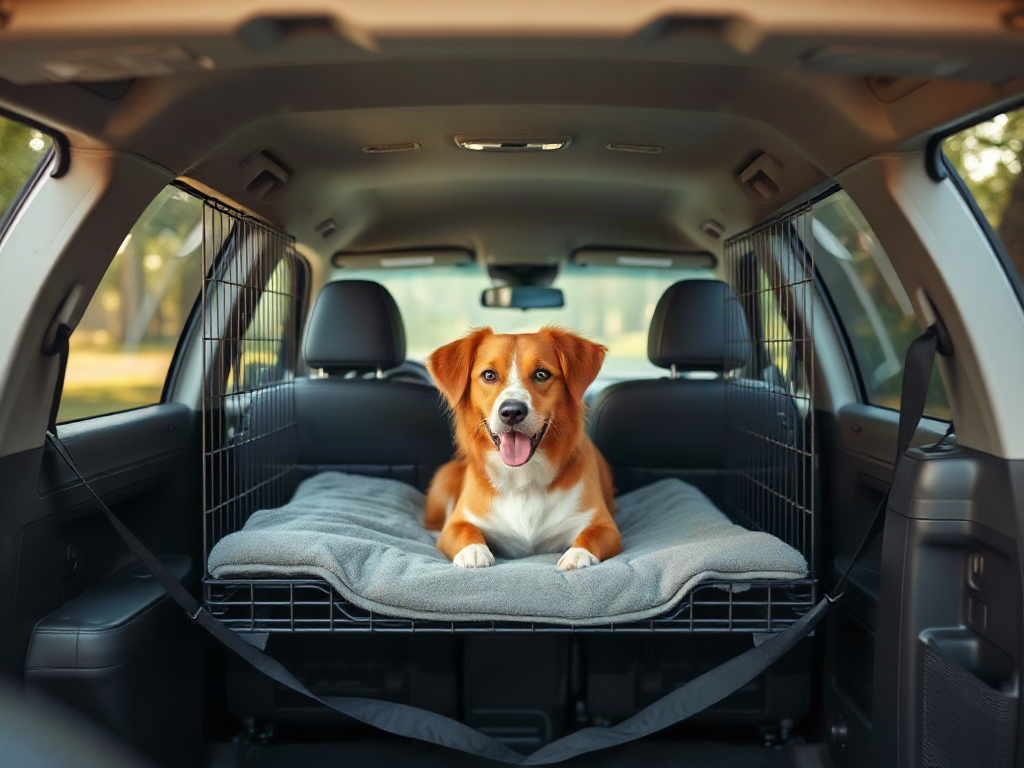
The best crate placement inside a travel vehicle is a level, climate-controlled position where the crate can be secured to structural anchor points without blocking airbags, exits, or the driver’s view. In most passenger vehicles, that means the rear seating area or cargo area rather than the front passenger seat or an open pickup bed. The crate should resist forward, sideways, and upward movement during sudden braking while retaining clear ventilation around its sides. Vehicle layout, crate construction, anchor strength, heat exposure, and access after a collision all matter more than simply choosing the space where the crate fits most easily.
How to Identify the Safest Available Position
A suitable crate position begins with the vehicle’s protected passenger compartment, not the largest empty space. The chosen location should provide a flat supporting surface, usable anchor points, controlled cabin temperature, and enough clearance for the crate door and ventilation openings. It should also keep the animal away from active airbags and prevent the crate from becoming a loose object during abrupt steering or braking.
The rear seating area is often a practical starting point when a correctly sized crate fits fully on the seat or on a level platform designed for that area. A crate that overhangs a narrow seat, rocks on a raised center section, or leans against a door is not properly supported. Folding a seat may create a larger surface, but the result must still be checked for slope, gaps, exposed latches, and the strength of the available tie-down locations.
Placement in an enclosed cargo compartment can work well in hatchbacks, SUVs, and vans when that compartment shares the cabin’s ventilation and temperature control. A rigid cargo barrier alone does not secure a crate. Similarly, pushing the crate tightly against luggage may stop visible sliding during normal driving but does not provide dependable restraint when the vehicle changes speed sharply. Luggage can shift, collapse, or place damaging pressure on crate walls.
Use this compact position check before loading the pet:
- Surface: The entire crate base rests on a firm, level area without rocking or overhang.
- Restraint: Structural anchors can limit movement in every direction, not merely hold the crate downward.
- Clearance: Airbag deployment zones, seat controls, doors, and emergency exits remain unobstructed.
- Environment: Air can circulate around the crate, and direct sun or exhaust cannot create a local hazard.
- Access: An adult can reach the animal and operate the door after surrounding cargo is loaded.
A common mistake is choosing a position solely because the crate wedges tightly between interior panels. Interior trim, seatbacks, and plastic cargo fittings may deform under force, while a jammed door can make removal difficult. The better choice is the location that combines stable support with purposeful restraint. For a broader comparison of position and restraint choices, see Best crate placement inside a travel vehicle.
Placement by Car, SUV, Van, and Pickup
Vehicle shape changes which position is workable, but it does not change the underlying priorities. The crate belongs inside the climate-controlled occupant space whenever possible, supported by a level surface and attached to appropriate anchors. The front passenger seat is generally a poor choice because of the frontal airbag, proximity to the dashboard, limited restraint geometry, and the possibility that the crate will interfere with controls or driver visibility.
Sedans and Hatchbacks
In a sedan, a small carrier may fit on the rear seat if it can be kept level and restrained according to its manufacturer’s instructions. A larger crate may not fit safely through the rear door or may sit partly on the seat edge. The closed trunk of a conventional sedan is unsuitable for a live animal because it is separated from normal cabin airflow, limits observation, and may create serious temperature and access problems.
A hatchback offers a different cargo arrangement because its rear storage area is usually open to the cabin. That space can accommodate a larger crate, but the crate should not be placed directly against the hatch glass or positioned so close to the hatch that a minor rear impact traps the door. Confirm that a second route—such as a side door—allows access to the crate or its emergency exit if the hatch cannot open.
SUVs and Vans
An SUV cargo floor often provides the most stable footprint for a medium or large crate. The apparent convenience can hide weak assumptions: grocery hooks are not necessarily restraint anchors, removable floor panels may flex, and third-row seat hardware can leave an uneven base. In a van, place the crate behind an occupied seating row rather than in an aisle where it could obstruct evacuation. Do not allow it to compromise seatbelt use or cover floor vents needed for rear-cabin airflow.
Pickup Trucks
An open pickup bed exposes a crate to weather, road debris, exhaust movement, extreme surface temperatures, and limited monitoring. A camper shell does not automatically make the bed equivalent to the passenger cabin; ventilation and thermal conditions may still differ sharply from the cab. If a suitable crate cannot be accommodated inside the cab without crowding occupants or interfering with airbags, another vehicle or transport arrangement is generally the more defensible option.
The recurring failure is treating available volume as safe volume. A roomy rear compartment may still have poor anchors, intense sun through large windows, or a crumple-zone-adjacent position. Measure the crate and map the anchor path before travel rather than discovering after loading that a strap crosses the door, presses on a ventilation panel, or prevents a seat from locking.
How to Secure the Crate Against Vehicle Movement
Crate restraint must address forward, rearward, sideways, and upward movement. A single strap over the top may reduce bouncing yet still let the crate rotate or slide during a turn. Effective attachment uses the crate’s designated restraint points, when provided, and vehicle anchors intended to carry meaningful loads. Follow both the crate maker’s restraint directions and the vehicle owner’s manual because attachment points that look similar may serve very different purposes.
Seat belts can be useful with carriers specifically designed for belt routing. Running a belt around an arbitrary wire, handle, or plastic door frame can concentrate force on a weak component. The carrying handle is particularly easy to misuse; its ability to support a carrier while walking does not establish that it can withstand crash loading. A belt should lie flat, engage the locking mechanism as directed, and avoid distorting the shell or blocking ventilation.
In an SUV example, a rigid crate on the cargo floor may use two properly rated tie-down paths to limit both fore-aft and lateral movement. Straps should pull in opposing directions rather than merely cinching the crate straight downward. Attach them only where the crate manufacturer permits. Wire crates can collapse or deform if straps are overtightened around unsupported panels, while soft carriers may be crushed if wedged under cargo or compressed by a belt in the wrong place.
After installation, test the empty crate by pushing at its base from the front, back, and both sides. Check for sliding, tipping, strap slippage, floor-panel movement, and contact with glass or doors. Recheck after the pet enters because bedding and the animal’s weight can change the center of gravity. Stop and inspect again after the first short drive, especially if straps are new or the floor covering is slick.
Signs of a failing setup include clicking anchors, loosening webbing, a crate that migrates toward the hatch, fresh rub marks, bent wire, stressed plastic around a belt path, or a door that no longer opens freely. Rubberized matting may reduce routine sliding and noise, but it is not a substitute for restraint. Blankets packed around the exterior are equally unreliable and may obstruct airflow.
The weakest assumption is that ordinary driving proves the installation is secure. Gentle acceleration imposes little compared with emergency braking or a collision. The practical goal is controlled attachment without crushing the enclosure or relying on cosmetic interior fittings. Readers comparing attachment options can use Best crate placement inside a travel vehicle as a reference point while checking manufacturer-specific instructions.
Ventilation, Heat, Visibility, and Emergency Access
A mechanically secure position can still be unsuitable if the crate develops a hotter, colder, or less ventilated microclimate than the front seats. Rear cargo spaces receive different airflow, especially when vents are blocked by luggage or the crate is surrounded on several sides. Sun through hatch or side glass can heat the enclosure even while the driver feels comfortable near the dashboard vents.
Before a longer trip, place the empty crate in its intended position, load the surrounding gear, and run the vehicle’s climate system as it will operate on the road. Check whether air reaches the crate without requiring vents to blast directly into the animal’s face. Feel the floor and sun-facing panels, and observe conditions during the time of day when travel will occur. A sunshade may reduce radiant heating, but it must not cover the crate’s ventilation openings or compromise the driver’s required view.
Monitoring should not encourage unsafe driver distraction. Position the door or a ventilated side so a passenger can inspect the pet, or use a securely installed viewing method that does not obstruct the windshield. Repeated panting, drooling, agitation, unusual quietness, vomiting, or labored breathing calls for a safe stop and assessment; some signs may reflect heat, motion sickness, fear, or another health problem. Seek veterinary guidance when symptoms are concerning, persistent, or severe rather than assuming relocation alone will solve them.
Emergency access deserves equal attention. A crate placed hard against the rear hatch may be unreachable if that hatch is damaged or blocked. A model with more than one door can provide another route, but the second door is useful only if cargo does not cover it. Keep leashes and essential handling items accessible to an adult rather than buried beneath suitcases, and never open the crate beside traffic without first controlling the surrounding area.
Balance access against escape risk during routine stops. Pointing a crate door directly toward an open vehicle door can allow a frightened pet to bolt as soon as the latch is released. A controlled unloading sequence—vehicle parked securely, exterior doors managed, leash ready, and crate opened by an adult—reduces that exposure. Children should not be responsible for releasing the latch at roadside stops.
The common ventilation mistake is leaving a parked pet in the vehicle because windows are cracked or the day feels mild. Cabin and crate conditions can change quickly with sun angle, airflow, and vehicle shutdown. Do not treat placement, air conditioning history, or a shaded parking spot as permission to leave an animal unattended. The safer plan is to organize stops so the pet remains supervised and climate conditions remain actively managed.
Frequently Asked Questions
Is the front passenger seat safe for a pet crate?
It is generally a poor location because an active airbag, dashboard proximity, and limited restraint options can expose the crate to additional hazards. Use a secured rear-cabin position when one is available.
Can a crate go in an SUV cargo area?
Yes, if the area is open to cabin climate control, the floor supports the full base, suitable anchors are available, ventilation remains clear, and the crate is accessible from more than one direction when possible.
Should the crate face forward or sideways?
Orientation should follow the crate manufacturer’s instructions and the available restraint geometry. Secure attachment, structural support, door access, and clearance from glass matter more than choosing an unsupported universal direction.
Can luggage be used to hold a crate in place?
No. Bags and boxes can shift or collapse and may block ventilation or damage the enclosure. Restrain the crate independently, then secure surrounding cargo so it cannot strike the crate.
How much should a secured crate move?
It should not slide, tip, rotate, or lift during a firm hand test. Some flex in straps or vehicle upholstery may occur, but continuing movement indicates that the anchor path, surface, or restraint needs revision.
Conclusion
Choose the crate position only after checking the supporting surface, anchor locations, airbag zones, airflow, and exit routes as one connected system. A rear seat may suit a small belt-compatible carrier, while an enclosed SUV or van cargo floor may better support a larger rigid enclosure. Neither option works if the base tilts, the restraints attach to weak fittings, or luggage blocks ventilation and access.
Install the crate empty, test movement from every direction, load the surrounding gear, and verify conditions at the animal’s actual position. Then make a short trial drive and inspect for loosened straps, heat buildup, rubbing, instability, or distress. If the vehicle cannot provide protected cabin placement without obstructing occupants or safety equipment, change the transport arrangement rather than forcing the crate into an exposed or poorly restrained space.