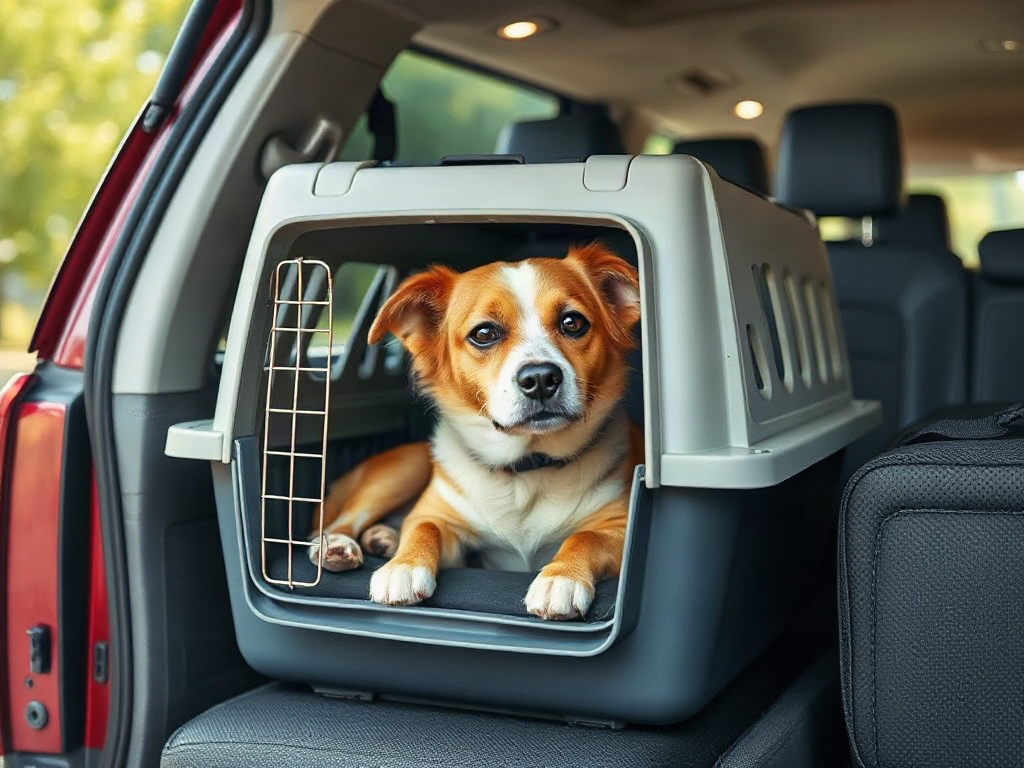
Affordable dog carriers for occasional trips should be selected by usable interior dimensions, secure closures, adequate ventilation, and compatibility with the planned car, rail, or cabin journey—not by price alone. A basic soft-sided model often suits a calm small dog, while a rigid carrier better resists crushing and contains scratching or chewing. Check the dog’s standing and resting fit, the carrier’s weight limit, seam strength, zipper locks, and a stable floor before buying. Avoid paying for elaborate pockets or wheels if the carrier will be used only a few times a year. Test it at home early enough to uncover sagging, escape points, or travel anxiety.
Set a Realistic Budget Around the Trip
An occasional-use carrier does not need every premium feature, but it must remain structurally sound through lifting, waiting, loading, and movement. The sensible budget is the lowest price that still provides enough space, dependable containment, airflow, and support for the intended journey. A carrier that collapses around the dog or opens under pressure is poor value even if it spends most of the year in storage.
Start with the trip rather than a product category. A short drive to a relative’s home places different demands on a carrier than a crowded train platform or an airline cabin. For a calm, lightweight dog traveling by car, a modest soft-sided carrier with a firm base and secure attachment points may be sufficient. A dog that paws at mesh, pushes against doors, or becomes restless in confined spaces may need a rigid plastic shell despite the extra storage space and higher cost.
Price differences often reflect convenience rather than essential function. Expandable compartments, wheels, decorative fabric, removable organizers, and multiple accessory pockets can be useful for frequent travelers, but they may add little value to two or three annual trips. Spend first on sound stitching, closure security, ventilation, and a floor that does not fold under the dog. A washable liner is valuable, although an inexpensive separate pad or folded towel may serve the same purpose if it lies flat and cannot bunch around the dog.
Transport rules can change the calculation. An airline may impose carrier dimensions, weight conditions, or construction requirements that an inexpensive general-purpose model does not meet. A carrier described by a seller as suitable for cabin use is not automatically accepted on every aircraft or route. Confirm the operator’s current requirements before ordering and measure the product yourself after it arrives. For road use, determine how the carrier will be restrained; a loose bag on a seat or cargo floor can shift sharply during braking.
A common budgeting mistake is buying the cheapest available carrier for a single urgent journey. That leaves no time to check fit, return a poorly made unit, or help the dog become comfortable inside it. Readers comparing Affordable dog carriers for occasional trips should allow enough lead time to inspect the item and conduct several short practice sessions. Low cost can be reasonable; rushed selection is the larger risk.
Measure for Usable Space, Not the Size Label
Carrier labels such as small, medium, or large are not reliable measurements because brands define them differently. Use the listed internal dimensions when available, then compare them with the dog’s body rather than relying only on a weight range. Weight limits indicate what the handles or frame may support; they do not prove that the interior has the right length, height, or width.
Measure the dog while standing naturally. Record the distance from the tip of the nose to the base of the tail, the height from the floor to the top of the head or ears, and the width across the body at its broadest comfortable point. The carrier should permit a normal resting position and enough room to adjust posture without forcing the head down continuously. Excessively large interiors are not necessarily better: they take up more space, may violate transport limits, and allow the dog to slide farther when the carrier moves.
Soft-sided carriers complicate measurement because their walls can bow inward and the base may sag. An exterior height of 11 inches does not provide 11 inches of usable height if the top compresses under a shoulder strap. Likewise, thick bedding reduces interior clearance. When dimensions are close, look for a wire or structured upper frame, a rigid insert beneath the floor pad, and product photos showing whether the ends taper.
Consider a practical example: two dogs may each weigh 12 pounds, yet a long-bodied dog may need more floor length while a compact dog with upright ears may need more vertical clearance. Choosing from the weight chart alone could leave either animal cramped. Body shape should therefore decide between two sizes, subject to the vehicle or carrier operator’s space limit.
Fit testing should happen indoors with tags and harness hardware arranged so they cannot catch on mesh. Invite the dog inside and observe whether it can enter without being forced, settle without curling more tightly than usual, and reposition without the carrier rolling or collapsing. Panting in a cool room, persistent attempts to back out, compressed ears, or refusal to lie down may indicate poor fit or stress; these signs should not automatically be blamed on unfamiliarity.
Do not improvise by folding a carrier aggressively to fit a restricted space while the dog is inside. Some soft models are designed to flex slightly, but substantial compression removes usable room and can obstruct ventilation panels. If the required dimensions and the dog’s minimum space are incompatible, the affordable choice may be a different transport plan rather than a smaller bag.
Choose Materials and Closures That Match the Dog
Construction should match the dog’s behavior under confinement, not merely its behavior at home. A relaxed dog may ride comfortably in polyester fabric with mesh panels, while a dog that scratches, bites zippers, or lunges at openings can damage an inexpensive soft carrier quickly. No light mesh should be assumed escape-resistant simply because it looks tightly woven.
Soft-sided models are usually lighter, easier to store, and more adaptable in tight spaces. Their weak points are commonly zipper junctions, mesh-to-fabric seams, handle attachment areas, and flexible floors. Run a hand along each seam, pull gently at handle anchors, and operate every zipper through its full path. Two zipper pulls should have a way to clip together or otherwise resist being nosed apart. An internal tether, if supplied, should connect to a well-fitted harness rather than a collar, and it should be short enough to prevent the dog from reaching an opening or becoming tangled.
Rigid plastic carriers resist crushing and often provide more predictable interior space. They can be awkward to carry and store, and low-cost versions may have brittle tabs, poorly aligned doors, or hardware that loosens. Check that the top and bottom halves join evenly, fasteners seat fully, and the door cannot be dislodged by pressure from inside. Ventilation holes should be smooth, with no sharp molding edges near paws or noses.
Ventilation is about both open area and placement. Mesh on several sides can promote airflow, but a panel pressed against luggage or a car seat no longer functions effectively. A heavily enclosed bag may also become warm in direct sun even when the outdoor temperature seems mild. Position the carrier away from heating vents and unshaded windows, keep openings clear, and never treat a carrier as a safe place to leave a dog unattended in a parked vehicle.
The base deserves particular attention because it transfers the dog’s weight to the carrier. Lift the occupied carrier only a few inches during a controlled home test. The floor should remain level enough that the dog does not slide toward the center, and the handles should not draw the walls tightly inward. If the pad curls, the insert bends permanently, or the seams stretch, return or reinforce the product only in a way that does not create sharp edges or reduce ventilation.
Used carriers can lower costs, but inspect them for cracked plastic, damaged mesh, corrosion, persistent odors, and missing fasteners. Clean them according to the material instructions before use. For more comparisons of Affordable dog carriers for occasional trips, prioritize condition over the original retail price; a premium carrier with worn closures may be less dependable than a simple new model.
Use a 6-Step Buying and Pre-Trip Plan
A disciplined buying sequence prevents inexpensive from becoming disposable. It also separates requirements that must be met from conveniences that can be skipped. Complete the process before the return window closes, because a carrier’s most consequential defects often appear only after it holds the dog’s full weight.
- Define the exact journey. Note the transport mode, trip duration, carrying distance, storage space, and any operator restrictions.
- Measure the dog and available space. Compare body dimensions with usable interior room, then verify that the exterior fits the vehicle or operator limit.
- Match construction to behavior. Choose soft sides for a calm dog and compact storage, or a rigid shell when pressure, scratching, or crushing is a realistic concern.
- Inspect the unloaded carrier. Examine seams, zipper ends, door alignment, ventilation edges, handles, floor inserts, and restraint points.
- Test it with the dog at home. Begin with the carrier open, add short closed-door periods, and then perform a low lift or brief stationary-car session.
- Recheck it before departure. Confirm that hardware remains tight, the liner is dry, identification is current, and ventilation will not be blocked by other items.
Conditioning is particularly valuable for a carrier used infrequently. Storage odors, unfamiliar zipper sounds, and sudden confinement can make an otherwise suitable model difficult to use. Leave the carrier open in a familiar room and allow voluntary investigation. Meals, treats, or a familiar washable mat can create a neutral association without trapping the dog. Progress to closing the door briefly while remaining nearby, then increase duration only while the dog stays settled.
A successful practice session looks uneventful: the dog enters with limited hesitation, can adopt a normal resting posture, and recovers quickly after being released. Repeated frantic scratching, heavy drooling unrelated to heat, attempts to bite through mesh, or escalating vocalization indicate that the plan is failing. Check first for heat, restricted posture, unstable footing, or a frightening location. Severe or persistent distress warrants advice from a veterinarian or appropriately qualified behavior professional rather than simply extending confinement.
Pack lightly around the carrier. Loose bowls, bottles, and luggage can strike or cover it during movement. Carry cleaning supplies and water separately unless a pocket is designed so its contents cannot press into the interior. Avoid placing a heavy object in an accessory pocket because it can tilt a soft bag and distort the frame.
After each trip, clean and dry the carrier completely, inspect high-stress points, and store it without tightly creasing structural panels. Keep removable fasteners and floor inserts with the unit. Occasional equipment can deteriorate unnoticed between journeys, especially in damp garages or hot storage areas, so repeat the inspection before every use. A simple carrier that passes these checks remains a better purchase than a feature-rich model whose closures or frame cannot be trusted.
Frequently Asked Questions
Is a soft or hard carrier better for occasional travel?
A soft carrier suits many calm small dogs and stores compactly. Choose a rigid model when the dog scratches or pushes forcefully, or when protection from surrounding pressure matters more than portability.
Can I choose a carrier using my dog’s weight alone?
No. Weight limits address carrying capacity, while body length, standing height, width, and posture determine whether the interior fits. Compare both sets of measurements.
Does an airline-approved label guarantee cabin acceptance?
No. Carrier limits can vary by operator, aircraft, route, and booking conditions. Check the carrier’s actual exterior dimensions against the operator’s current instructions before travel.
How early should a dog practice using a new carrier?
Begin as soon as the carrier arrives rather than on departure day. Several brief, calm sessions provide time to identify fit problems, weak hardware, or distress and still return the product if necessary.
Is a secondhand dog carrier a safe budget option?
It may be suitable if the shell, mesh, seams, door, fasteners, floor, and handles are intact. Clean it thoroughly and reject any unit with cracks, weakened closures, sharp edges, or persistent contamination.
Conclusion
Occasional use is a reason to avoid unnecessary extras, not to compromise on fit or containment. Define the journey, measure the dog and available transport space, then choose construction that reflects how the dog behaves when enclosed. Inspect closures, seams, ventilation, handles, and floor support while there is still time to return a weak product.
Once the carrier passes inspection, make it familiar through short home sessions and a controlled transport test. Reassess it after storage because fabric, plastic, and hardware can deteriorate between trips. The strongest budget purchase is usually a straightforward model that fits correctly, remains stable when lifted, and withstands the dog’s actual behavior. If those conditions cannot be met within the planned price, delay the purchase, consider a sound used model, or change the transport arrangement rather than relying on an unsafe compromise.