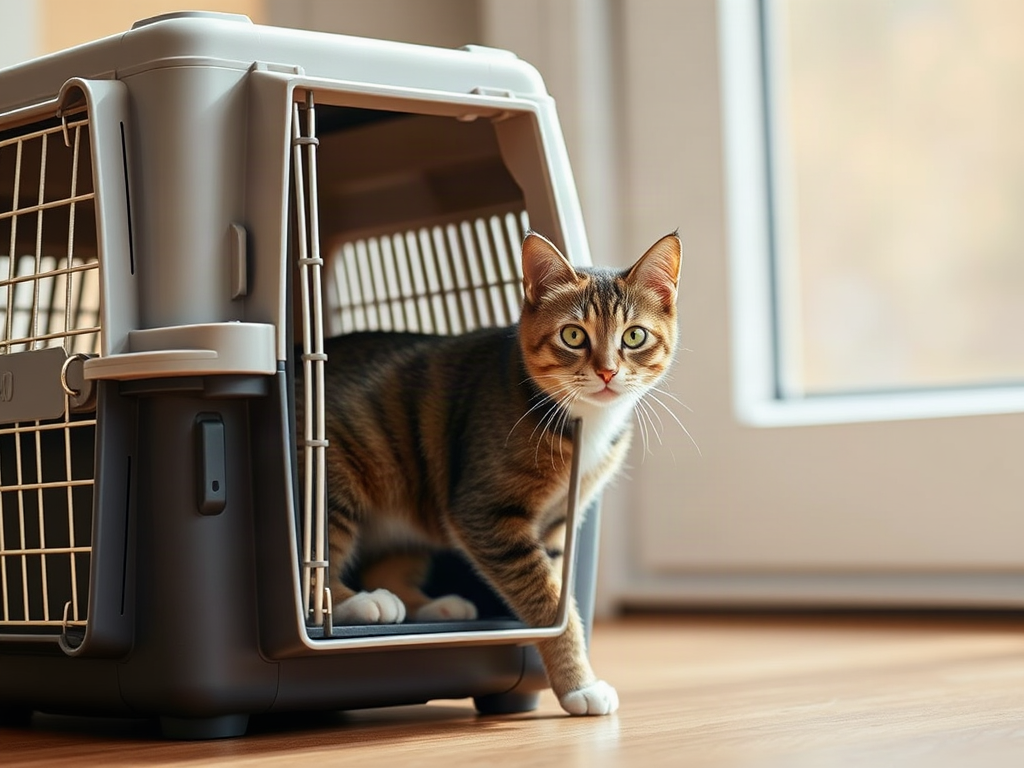
Cheap cat carriers can still protect pets when they combine a rigid or well-supported frame with secure closures, adequate ventilation, a stable floor, and enough room for a cat to turn around without sliding during transport. Inspect zipper locks, door attachment points, seams, and handle anchors rather than judging safety by price or padding alone. A low-cost hard-sided model often suits car trips and veterinary visits, while a structured soft carrier may be easier to carry but requires closer inspection for sagging and claw access. Correct sizing and secure placement in the vehicle matter as much as the carrier’s materials.
Where a Low-Cost Carrier Can Safely Save Money
A lower price is not automatically a safety defect. Basic carriers may omit decorative fabric, accessory pockets, expandable panels, premium hardware, or brand-specific features while retaining the structure needed for routine veterinary visits and short drives. The useful question is whether the manufacturer saved money on conveniences or on parts that keep the cat contained.
Simple construction can work in the buyer’s favor. A molded plastic shell with a metal or sturdy plastic door has fewer seams and zippers to inspect than a complicated fabric model. It is also easier to clean after urine, vomit, or a spilled water dish. A modestly priced carrier of this type can be a sensible choice for a calm adult cat traveling locally, provided the shell does not flex excessively and the two halves connect securely.
Cost cutting becomes risky when it affects the floor, frame, closures, or attachment points. A fabric carrier that folds inward under the cat’s weight can crowd ventilation panels and make the animal feel unstable. Thin mesh within reach of the claws may tear during a stressful trip. On hard carriers, brittle plastic, a loose door, or clips that release when the shell twists can create an escape route at a parking lot or clinic entrance.
Price should therefore be evaluated alongside the trip. A basic model may be entirely practical for occasional ground transport but inappropriate for an airline itinerary with carrier dimensions and construction rules. “Airline approved” is not a universal certification; acceptance depends on the airline, aircraft, route, and whether the animal travels in the cabin or another compartment. Check the carrier directly against the current requirements for the specific booking.
Used carriers can reduce costs further, but only if their history and condition are clear. Reject one with stress whitening around plastic fasteners, warped doors, missing bolts, persistent odor, torn mesh, or corroded hardware. Clean and dry a sound secondhand carrier before use, and confirm that every detachable component was included. Readers comparing Cheap cat carriers that still protect pets should put intact containment ahead of appearance, storage features, or matching luggage.
Seven Safety Checks to Make Before Buying
A useful inspection tests the complete carrier rather than treating ventilation, size, or material as an isolated feature. Cats push, scratch, shift their weight, and sometimes throw themselves against a door when frightened. The carrier must remain closed and reasonably stable under those combined forces.
- Test the frame. Press lightly on the roof and sides. A soft model should recover its shape, while a plastic shell should not separate, crack, or distort enough to release the door.
- Examine every closure. Zippers should run smoothly and meet without gaps. Two zipper pulls that can be clipped together are preferable for a cat that noses openings. Hard doors should latch fully without needing to be forced.
- Pull on seams and anchors. Check stitching around mesh, handles, shoulder straps, and restraint loops. Loose threads or sparse stitching near a load-bearing point indicate weak construction.
- Check the floor. The base should stay level when lifted with the cat’s expected weight inside. A removable board is useful only if it spans the full floor and cannot shift easily.
- Assess ventilation. Openings should provide airflow on multiple sides without leaving edges that can snag a claw. Dense decorative fabric should not cover most of the usable mesh.
- Look for interior hazards. Feel for sharp molding, exposed wire ends, rough zipper backs, and detachable pieces that could be chewed.
- Confirm carrying stability. Lift the empty carrier by each intended handle. The body should hang level, and attachment points should not stretch, pop, or pull away.
Perform the checks on the actual item after delivery even when product photographs appear reassuring. Budget models can vary in assembly, and shipping damage may leave a crack or bent door that was not present in the listing. Put a few wrapped household items equal to the cat’s approximate weight inside, close the carrier, and lift it just above a soft surface. This is a handling check, not a crash test, but it can reveal a sagging base or weak handle before the cat is involved.
Reviews are most useful when they describe a specific size and failure point. Comments such as “the zipper separated when my cat pushed the corner” or “the base bowed under a 12-pound cat” provide more decision value than general ratings. Confirm that a review applies to the current version and dimensions, since listings sometimes group several models together. A common mistake is buying from the star average and inspecting the carrier for the first time on departure day.
Hard-Sided Versus Soft-Sided Budget Carriers
Hard-sided carriers generally provide the clearest value when containment, floor stability, and easy cleaning take priority. Their molded walls resist inward collapse, and the rigid base gives a cat predictable footing while the carrier is lifted. They are often well suited to veterinary trips, cats that claw at mesh, and households that need a carrier ready for an urgent evacuation.
The tradeoff is bulk. A plastic carrier occupies storage space, may be awkward on public transportation, and can have uncomfortable handles. Low-priced versions sometimes rely on plastic side clips rather than bolts to join the top and bottom. Those clips deserve close attention: if the shell separates when twisted or lifted, convenience has displaced a critical containment function. Models with secure fasteners around the perimeter are preferable, especially for heavier cats.
Soft-sided carriers are lighter and easier to store, and their shoulder straps can make a clinic entry less cumbersome. A well-structured fabric model has reinforcing rods or panels, protected mesh, a firm base insert, and zipper pulls that can be secured together. It should not fold onto the cat when carried. Soft construction is less suitable for a persistent scratcher if the animal can reach large mesh panels or force its head into a zipper junction.
Consider a typical 15-minute drive with a calm cat that settles after departure. Either style may work if correctly sized and secured. For a powerful cat that repeatedly strikes the door, a rigid shell usually offers a more dependable barrier than entry-level fabric and mesh. Conversely, a small cat carried several blocks to a clinic may be easier to manage in a structured soft model with a stable shoulder strap. The safest choice depends on the cat’s behavior and the way the carrier will be handled, not merely on which style looks sturdier online.
Top-loading access is helpful for cats reluctant to enter through a front door, but the opening introduces more hinges, zippers, or latches to verify. Removable tops on hard carriers can make examinations less stressful because a fearful cat may remain in the lower half, yet all fasteners must be reconnected correctly afterward. Extra doors are worthwhile only when they close as reliably as the main entrance.
Neither style should be assumed to provide crash protection. A seat-belt sleeve or strap loop can limit ordinary movement, but its presence does not prove that the complete carrier has been independently crash-tested. When browsing Cheap cat carriers that still protect pets, distinguish containment features from substantiated vehicle-safety claims and follow the carrier maker’s placement instructions.
Sizing, Setup, and Transport Mistakes
Correct sizing gives the cat enough space to stand naturally, turn around, and lie down while limiting uncontrolled sliding. A carrier that is too small can force an awkward posture and obstruct movement around soiled bedding. An oversized carrier can allow the cat to be thrown farther inside during sudden braking and may be harder to keep level when carried.
Measure the cat rather than relying solely on labels such as small or large. Note the standing length from the chest to the base of the tail, the height to the top of the head or ears, and current weight. Compare those figures with the carrier’s internal dimensions and stated weight limit. Exterior measurements can overstate usable room because sloped walls, wheel wells, pockets, and thick padding reduce the interior.
Prepare the floor with a thin absorbent layer that does not bunch underfoot. A familiar towel can add traction and scent, but thick bedding may reduce headroom or block low ventilation holes. Puppy pads can contain an accident, although loose edges should be tucked beneath the pad or base insert so the cat cannot shred them easily. Avoid loading the carrier with hard toys, heavy dishes, or objects that could move into the cat during a sudden stop.
Introduce the carrier before it is needed. Leave it open in a quiet room, secure or remove the door if it could swing shut, and place familiar bedding or occasional treats inside. This does not guarantee a relaxed trip, but it can prevent the carrier from appearing only before an injection, car ride, or other stressful event. Signs of useful acclimation include voluntary entry and resting inside; frantic scratching, persistent door ramming, or refusal to approach indicates that more gradual exposure or veterinary guidance may be needed.
During a drive, keep the carrier closed and positioned so it cannot slide, tip, or become a projectile. Do not place it in a location where it interferes with driving controls, and never open it beside an unsecured vehicle door. Exact restraint and placement depend on the carrier and vehicle, so consult both manufacturers’ instructions. A loose carrier held on a passenger’s lap is not a reliable substitute for secure placement.
Inspect the unit after every demanding trip. Look for tooth marks around openings, stretched mesh, bent latches, widening cracks, damp floor boards, and stitching pulled loose near handles. Retire the carrier when a containment component cannot be restored to its intended condition. Owners seeking Cheap cat carriers that still protect pets gain more from replacing a damaged basic model than continuing to use an expensive one whose door or frame has become unreliable.
Frequently Asked Questions
Are inexpensive plastic cat carriers safe?
They can be suitable for routine ground transport if the shell is intact, the door latches securely, the halves cannot separate, and the base supports the cat without flexing excessively.
How much room should a cat have inside a carrier?
The cat should be able to stand in a natural posture, turn around, and lie down. Measure the cat and compare those measurements with the usable interior rather than the exterior dimensions.
Is a soft or hard carrier better for an anxious cat?
A rigid carrier is often more appropriate for a cat that claws mesh or forces zipper gaps. A structured soft carrier may suit a calmer cat that benefits from lighter, quieter handling.
Can a cheap carrier be used on an airplane?
Only if it meets the current requirements for the specific airline, route, aircraft, and travel arrangement. A marketing label alone does not establish acceptance.
When should a cat carrier be replaced?
Replace it when the shell is cracked or warped, mesh is torn, zippers separate, latches no longer hold, the floor is unstable, or handle anchors have begun to pull loose.
Conclusion
A modest budget can cover a dependable cat carrier when spending is directed toward containment rather than extras. Inspect the frame, door or zippers, seams, ventilation, floor, interior surfaces, and handle anchors before trusting a new purchase. Match the construction to the cat as well: rigid walls are usually more practical for determined scratchers, while a reinforced soft model can make short walking trips easier with a calm animal.
Measure the cat, conduct a weighted handling check over a soft surface, and introduce the carrier well before departure. On travel day, use a thin absorbent floor layer and secure the closed carrier according to its instructions. Continue checking high-stress parts after each trip. A basic model that passes those checks is a better purchase than a feature-heavy carrier with weak closures or an unstable base.
Further Reading
Authoritative Sources
- Choosing the Best Carrier for Your Cat
zoetispetcare.comAny carrier you select should have a way to strap it into a vehicle with a seat belt. You can also look for carriers that have been crash-tested for safety as ...
- The 5 Best Cat Carriers for Car Travel, Tested and Reviewed
thesprucepets.comBest Overall: Tavo Pets Maeve Car Seat at Chewy $400 ; Best Budget: Petseek Extra Large Cat Carrier at Amazon $70 ; Best Backpack: Pidan Backpack ...
- Best Cat Carriers for Everyday Use and Travel
preventivevet.comVeterinary and trainer picks for cat carriers that work well for veterinary visits, airline travel, and long car trips. Crash-tested options are available.
- Best Cat Carriers 2026 | The Strategist
nymag.comThe Very Best Cat Carriers ; AmazonBasics Two-Door Top-Load Pet Kennel. $52 · $52 at Amazon. Buy ; Sherpa Original Deluxe Airline-Approved Dog & ...