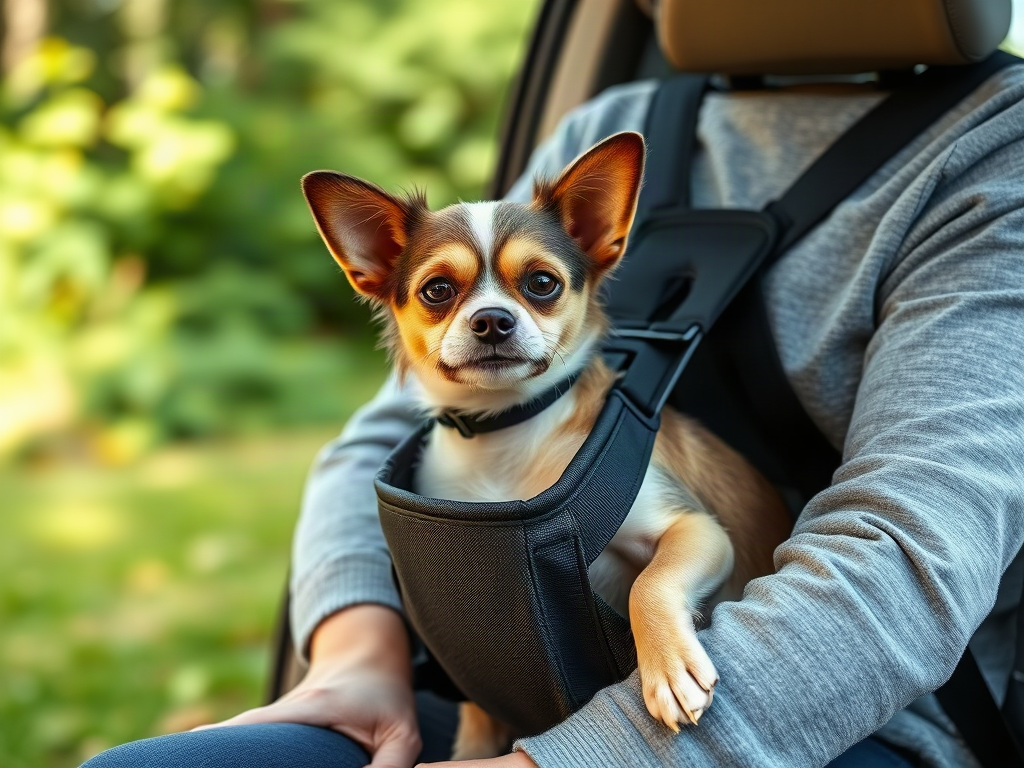
Front carriers for hands-free dog travel work best for small dogs that can sit in a supported, upright position without restricted breathing or unstable body movement. Choose a carrier by the dog’s measured weight, torso length, chest shape, and physical condition rather than relying on a breed label alone. A secure design should include a firm lower platform, adjustable shoulder and waist straps, ventilation, and an internal tether attached to a harness—not a collar. Keep trips short at first, watch for panting, slumping, rubbing, or escape attempts, and use a crate or stroller when the dog cannot remain comfortably supported.
When a Front Carrier Is the Right Transport Choice
A front carrier is most suitable for a small dog that tolerates close handling, can maintain a stable posture, and needs to be carried through a setting where a leash or wheeled carrier is inconvenient. Typical uses include walking through a crowded station, crossing a busy terminal, taking a short urban outing, or giving an older dog a break during a longer walk. Positioning the dog against the wearer’s chest also makes it easier to notice shifting, distress, or an attempted escape.
Hands-free does not mean attention-free. The wearer must still monitor the dog, avoid abrupt bending, and keep one hand available when stepping over obstacles or moving through a crowd. A front-loaded dog changes the wearer’s center of gravity, particularly on stairs and uneven pavement. Carrying shopping bags, pulling luggage, or checking a phone can make that balance change more consequential.
The dog’s physical condition matters more than whether its weight falls below a product’s advertised limit. A compact dog with a short torso may sit securely in a structured pouch, while a longer-bodied dog of the same weight may slump or lack hindquarter support. Dogs with breathing difficulties, spinal or joint pain, recent surgery, poor balance, or strong sensitivity to confinement may need another transport method. A veterinarian can help assess suitability when a health condition affects posture, breathing, temperature regulation, or mobility.
Compare the carrier with the actual alternative for the trip. A backpack may distribute weight more comfortably over longer distances but prevents continuous visual monitoring. A stroller provides more room and stable support but is awkward on stairs. A hard or soft travel crate offers greater enclosure and is generally more appropriate in a vehicle, yet it does not provide the same mobility on foot. Front carriers are therefore a short-distance mobility tool rather than a universal replacement for every dog restraint.
A common misconception is that a calm dog can safely ride in any pouch. Calm behavior does not correct a sagging base, oversized opening, weak stitching, or poor ventilation. Before choosing among Front carriers for hands-free dog travel, decide where the carrier will be used, how long the dog will remain inside, and whether the wearer can move normally under the combined load.
Measure the Dog and Evaluate the Carrier Structure
Carrier sizing should begin with measurements taken while the dog is standing naturally. Record body weight, chest circumference, torso length from the base of the neck to the base of the tail, and the seated height needed for the intended riding position. Compare every measurement with the manufacturer’s internal dimensions and stated limits. A weight rating alone describes load capacity; it does not confirm that the dog’s proportions match the compartment.
The dog should be held close enough to avoid bouncing but not compressed around the chest or abdomen. Openings for the neck or legs must not rub, pinch, or allow the shoulders to slip through. If the design encloses the body, the dog should have enough room to settle into the intended posture without curling sharply or hanging from the fabric. If the legs remain inside, the base should support the hindquarters rather than concentrating pressure beneath the abdomen.
Structure separates a usable travel carrier from a simple fabric sling. A supportive lower panel spreads the dog’s weight and limits sagging. Reinforced seams bear repeated loading, while secure closures reduce the chance that movement will widen an opening. Padding can reduce pressure against the wearer, but thick padding should not obstruct airflow or conceal weak construction. Removable liners are useful for cleaning after rain, dirt, or an accident, provided they cannot bunch beneath the dog.
Test the empty carrier before placing the dog inside. Inspect stitching at strap anchors, pull gently against each buckle, operate every zipper, and press on the base to see whether it folds under modest pressure. Then use a soft object approximating the dog’s weight to check whether the pouch tilts away from the body. A carrier that hangs level when empty may pitch forward once loaded.
Use this compact pre-purchase checklist:
- Proportions: Internal length, depth, and openings match the individual dog.
- Support: The base remains level and supports the full torso and hindquarters.
- Construction: Strap anchors, seams, closures, and buckles show no gaps or deformation.
- Access: The dog can enter and exit without forced limb positioning.
- Care: Contact surfaces can be cleaned and dried completely.
The usual sizing failure is buying extra room on the assumption that larger is more comfortable. Excess space permits sliding and rotation with every step. Slightly more room may suit an enclosed carrier where the dog lies down, but a body-worn front design must control movement while preserving normal breathing and posture.
Check Restraint, Ventilation, and Load Distribution
A safe setup uses several independent controls rather than trusting one zipper or tether. The carrier’s main enclosure should contain the dog, while an internal attachment provides secondary escape control. Connect that tether to a well-fitted harness. Attaching it to a collar can place force on the neck if the dog jumps, slips, or is jolted by the wearer’s movement. The tether should be short enough to prevent climbing out but long enough for an unstrained head position.
Ventilation requires exposed mesh or open panels that remain unobstructed when the carrier is loaded. A soft wall may look breathable on a table and then collapse against the dog’s face when the straps tighten. Warm weather, direct sun, dense crowds, and the wearer’s body heat can all increase the thermal load inside the pouch. Heavy panting, persistent restlessness, glazed attention, drooling beyond the dog’s norm, or unusual weakness are reasons to stop, move to a cooler location, and remove the dog safely.
Strap design affects both control and carrying tolerance. Two broad shoulder straps generally resist twisting better than a single narrow strap, while a sternum or waist strap may limit side-to-side movement. The carrier should sit high and close to the torso. If it hangs low, the load pulls away from the wearer’s center, encouraging rounded shoulders and amplifying each step. Tightening every strap aggressively is not the solution; excessive compression may distort the dog’s compartment or make breathing less comfortable.
Consider a commuter carrying a small dog from a parking area to a station. On level pavement, a loosely adjusted carrier may appear acceptable. When the wearer climbs stairs and turns through a gate, however, the dog begins swinging outward. Raising the carrier, balancing the shoulder straps, and engaging a waist strap can reduce that movement. If the pouch still tips or the base buckles, the carrier is structurally unsuitable rather than merely misadjusted.
Inspect Front carriers for hands-free dog travel after each demanding outing. Look for elongated stitch holes, fraying webbing, bent zipper tracks, cracked buckles, torn mesh, and a base panel that no longer returns to shape. Stop using the carrier if a load-bearing component is damaged. A cosmetic scuff is different from wear at a strap anchor or closure, where failure could release the dog.
Condition the Dog and Test the Carrier Before Traveling
Carrier training should progress from voluntary investigation to brief, fully supported carrying. Place the carrier on a stable floor, open it completely, and allow the dog to sniff it. Reward calm approaches and short entries without immediately closing every opening. Forcing the dog inside and starting a walk can create struggling at the exact moment the wearer needs balance and control.
Once the dog enters comfortably, secure the enclosure for a few seconds while the carrier remains supported on the floor or a low surface. Next, put on the empty carrier, adjust the straps, and confirm that all closures remain reachable. Add the dog only when another person can assist or when the entry method can be managed without holding the carrier precariously. Support the base while lifting until the straps take the load evenly.
The first moving session should be indoors and brief. Walk several steps, pause, and observe posture. A productive trial shows a dog that can breathe normally, remain centered, and recover calmly after small changes in direction. A failing trial may include repeated attempts to climb out, twisting that exposes an opening, limbs slipping through, continuous vocalization, frantic panting, or progressive slumping. Freezing is not automatically comfort; a motionless dog with tense muscles, pinned ears, or wide eyes may be overwhelmed.
Build duration gradually across separate sessions rather than testing the maximum on the first day. After each trial, inspect the dog’s chest, armpits, abdomen, and inner legs for redness or pressure marks. Check whether the carrier liner shifted and whether the base remained horizontal. Also evaluate the wearer: shoulder numbness, lower-back strain, or a need to hold the carrier continuously indicates poor adjustment, excessive load, or an unsuitable design.
Practice the movements the real trip will require. Sit and stand without trapping the dog, turn through a doorway, step onto a curb, and reach for a small item while maintaining balance. Do not rehearse with escalators, bicycles, running, or other high-consequence movement. If the dog remains unsettled despite gradual exposure, choose a different carrier style rather than assuming more restraint will create comfort.
Use the Carrier Safely in Real Travel Situations
Travel conditions can turn a satisfactory home trial into a poor carrying experience. Noise, heat, unfamiliar people, luggage, and prolonged waiting all add stimulation. Plan short carrier intervals with controlled breaks in secure places. Before removing the dog, attach a leash to the harness and confirm that doors, traffic, crowds, and other animals do not create an immediate escape route.
Walking is the primary use case. A wearable carrier should not be treated as a vehicle restraint unless its manufacturer explicitly provides instructions for that use and the setup meets the applicable requirements for the trip. A person wearing a dog on the chest should not remain buckled into a car seat that compresses the carrier, and an unrestrained wearable pouch can move dangerously during sudden braking. Transfer the dog to an appropriate secured vehicle carrier or restraint before driving.
Public transportation and venue policies vary. A carrier that works on the sidewalk may not satisfy a transport operator’s enclosure or size rules. Check the current policy directly before departure, including whether the dog must remain fully enclosed. Airline cabin travel presents another distinction: a front carrier may help within permitted public areas, but it should not be assumed to qualify as the under-seat carrier required for a flight.
Weather deserves a trip-specific decision. In warm conditions, choose shade, reduce carrying time, and recheck ventilation whenever clothing or a jacket overlaps the mesh. In rain, a cover may keep water out but can sharply reduce airflow. Cold weather does not justify sealing the compartment; use appropriately fitted insulation without covering the dog’s face or blocking vents. The wearer’s exertion also matters because body heat rises during brisk walking or climbing.
Before each departure, confirm the harness, tether, zippers, buckles, base, and strap adjustment in that order. Carry water and waste supplies without overloading pockets that could distort the pouch. The most useful sign that the setup works is repeatable stability: the dog stays supported through turns, the enclosure remains ventilated, and the wearer can walk naturally. If either dog or wearer deteriorates as minutes pass, shorten the outing or switch to a crate, stroller, or leash-based plan. More advice about Front carriers for hands-free dog travel should always be applied to the individual dog’s dimensions, behavior, health, and destination rules.
Frequently Asked Questions
How long can a dog stay in a front carrier?
There is no universal safe duration. Begin with brief sessions and stop sooner if the dog pants unusually, slumps, struggles, develops pressure marks, or cannot maintain a comfortable posture. Temperature, health, carrier structure, and trip intensity all affect tolerance.
Should a dog face inward or outward?
Use only the position supported by the carrier’s design and the dog’s anatomy. Inward-facing positions often provide closer body support, while outward-facing positions may expose the dog to more stimulation and should not leave the spine, chest, or limbs unsupported.
Can the internal tether attach to a collar?
Attach the tether to a secure harness rather than a collar. A sudden jump or shift can transfer force to the neck when a collar is used. Keep the tether short enough to limit escape without pulling the dog’s head downward.
Are front carriers suitable for puppies?
They may suit some puppies for brief outings if the carrier supports the entire body and does not force an awkward posture. Account for rapid growth, chewing, incomplete carrier training, temperature sensitivity, and veterinary advice about exposure to public areas.
Can a front carrier be used while cycling?
Cycling adds speed, impact, balance changes, and fall risk that ordinary walking carriers may not be designed to manage. Do not assume a hands-free pouch is suitable for a bicycle; use transport equipment specifically intended for that activity and follow its instructions.
Conclusion
A useful front carrier must suit two bodies: the dog needs stable, ventilated support, and the wearer needs balanced load control. Measure the individual dog, inspect the base and load-bearing seams, connect any safety tether to a harness, and adjust the pouch high against the torso. Then test it through short indoor sessions before adding crowds, stairs, weather, or luggage.
Watch function rather than assuming quiet behavior signals comfort. Normal breathing, a centered posture, intact contact points, and steady movement indicate that the setup is working. Slumping, rubbing, overheating, escape behavior, carrier tilting, or wearer strain call for an immediate adjustment or a different transport method. Confirm destination rules before leaving, and transfer the dog to an appropriate secured restraint for vehicle or airline use.